AI estimate as of July 28, 2025 · verify with a professional before acting
AI-Generated · Verify before acting
Everything on this page is generated by AI for informational purposes only. AI can make mistakes — the AI may misidentify items or misattribute them (artist, maker, brand, designer, origin, era). This is not an official valuation and should not be used for insurance, sale, tax, estate, legal, or lending purposes — or any decision requiring a certified appraisal. It is not an authoritative claim about any person, brand, or rights holder — do not share or rely on it as a factual statement about a third party. Always consult qualified professionals before making financial decisions.
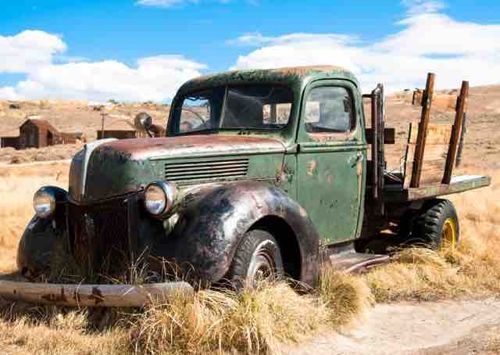
The item is an antique or vintage heavy-duty flatbed truck, likely from the 1940s, based on its styling cues which include a rounded hood, prominent vertical grille slats, and integrated headlights. It appears to be a Chevrolet or similar American manufacturer from that era. The truck is constructed primarily of steel, with a wooden flatbed. Its original color, visible in patches, was a dark green, but the paint has significantly faded, peeled, and rusted over time, revealing the underlying metal. The front fenders, in particular, show heavy black discoloration, possibly from tar or oil, and extensive surface rust. The cab features two doors, and the windows appear to be intact but dirty. The windshield is split into two panes, a common design for trucks of this period. There are visible signs of wear and tear throughout, consistent with prolonged outdoor exposure and abandonment. Notable features include the large, round, chrome-ringed headlights, a prominent vertical chrome or polished metal strip running down the center of the hood, and a series of horizontal louvers on the sides of the engine compartment. The flatbed cargo area has several vertical wooden stakes, indicating it may have been used for hauling logs or similar materials. The tires are large and appear to be inflated, though likely very old and possibly dry-rotted. The wheels are mostly obscured by the tires, but a yellow rim is visible on what appears to be the rear passenger side wheel. The overall condition is heavily weathered and shows significant rust and decay, suggesting it is no longer operational without extensive restoration. The truck is situated in a dry, grassy, and dusty outdoor environment, hinting at an arid climate.
AI Appraisal Report
Based on my visual examination of the image, this Vintage Green Flatbed Truck appears to be an authentic heavy-duty vehicle, consistent with American manufacturers from the 1940s, likely Chevrolet or a similar make, given its characteristic styling cues such as the rounded hood, prominent vertical grille, and split windshield. The extent of rust, fading paint, and general decay strongly indicates a truck that has been exposed to elements for a significant period. Its heavily weathered state confirms it is non-operational and would require a complete, comprehensive restoration.
From a market perspective, non-running vintage trucks in this condition are largely valued for their restorable components or as project vehicles. While 1940s trucks have a stable demand among collectors and restorers, this particular example's extremely poor condition significantly impacts its value. Rarity is not a major factor here, as many such trucks were produced; its value hinges on its potential as a restoration candidate or for parts.
Key factors depressing its value are the extensive rust, likely compromised structural integrity of the flatbed, and unknown mechanical condition. Factors that somewhat mitigate this are its apparent completeness (most major components are present) and its iconic design.
My valuation is limited by the visual nature of the assessment. I cannot verify authenticity beyond shared design characteristics. A full authentication would require in-person examination to inspect the chassis, engine (if present), and VIN plate for matching numbers and manufacturer details. I would also need to assess the extent of frame damage, engine completeness, and drivability, none of which are possible from images alone. Documentation of provenance would also add significant value and verify its history.