AI estimate as of August 9, 2025 · verify with a professional before acting
AI-Generated · Verify before acting
Everything on this page is generated by AI for informational purposes only. AI can make mistakes — the AI may misidentify items or misattribute them (artist, maker, brand, designer, origin, era). This is not an official valuation and should not be used for insurance, sale, tax, estate, legal, or lending purposes — or any decision requiring a certified appraisal. It is not an authoritative claim about any person, brand, or rights holder — do not share or rely on it as a factual statement about a third party. Always consult qualified professionals before making financial decisions.
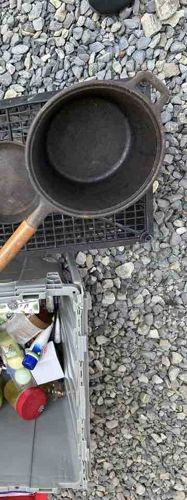
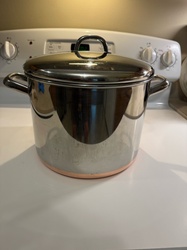
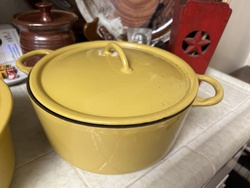
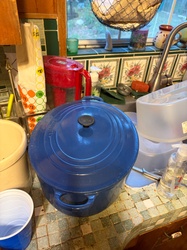
This item is a vintage cast iron pot with a long wooden handle and a smaller helper handle on the opposite side of the main body, indicative of its design for heavy-duty cooking and ease of lifting. The pot itself is dark gray to black, consistent with seasoned cast iron, and appears to be well-used, displaying a developed patina that suggests years of cooking. The interior surface shows some residue, possibly from previous use or a seasoning layer, but no obvious cracks or major structural damage are visible. The wooden handle is a light to medium brown, attached securely to the cast iron body, and exhibits some wear and discoloration consistent with age and frequent handling. The helper handle is an integrated part of the cast iron body, offering a secondary grip. The overall construction appears robust and durable. While no specific maker's marks or stamps are discernible from the image, the style of the pot, particularly the integrated helper handle and sturdy wooden main handle, suggests it could be an older piece, potentially mid-20th century or earlier. Its quality is indicated by the solid cast iron construction, known for excellent heat retention and distribution, making it a functional piece of kitchenware perhaps still in regular use. The visible condition issues are primarily cosmetic, derived from normal wear and tear, and do not appear to compromise its functionality.
AI Appraisal Report
Upon my virtual examination of the Vintage Cast Iron Pot with Wooden Handle, I've assessed its condition and potential value. The pot presents as a robust and well-maintained piece of vintage cookware. The dark patina and seasoned appearance are positive indicators of proper care and consistent use, suggesting good heat retention properties. There are no visible cracks or significant structural damage, which speaks to its durability. The wooden handle, while showing expected wear, appears securely attached.
Authenticity, based on the image alone, points to a genuine vintage cast iron piece. The integrated helper handle and the style of the main wooden handle are consistent with mid-20th century or earlier designs. However, without discernible maker's marks, definitive attribution to a specific manufacturer is impossible. This significantly impacts the potential for a higher-end valuation, as branded vintage cast iron (e.g., Griswold, Wagner Ware) typically commands premium prices.
Market conditions for unbranded vintage cast iron are stable but not rapidly appreciating. Such pieces are valued more for their utility and rustic aesthetic than collectibility, unless they possess unique characteristics or provenance. Comparable items, typically unbranded and sold at antique shops or online marketplaces, range in value based on size, condition, and desirability. Demand is moderate, particularly from home cooks seeking durable, traditional cookware.
Factors significantly impacting value include the lack of visible maker's marks, which limits its appeal to collectors. Its primary value derives from its functionality and decorative potential. For full authentication and a more precise valuation, I would require an in-person examination to search for hidden marks, assess the overall weight and balance, and determine the exact material composition. Provenance documentation, if available, would also add considerable value. Without these, my appraisal is based solely on visual cues and general market knowledge for unbranded vintage items.