AI identification & appraisal estimate

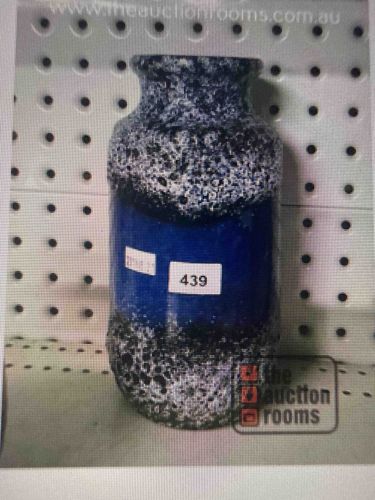
West German Ceramic Fat Lava Vase

Submitted photo of West German Ceramic Fat Lava Vase
Photo submitted by the user — not generated by AI

User's notes

Retro West German vase

These notes were written by the person who submitted this item. Appraiser.AI has not verified them, and the AI's identification and estimate may rely on them.

AI Estimated Value

Not an official valuation

$120-180

AI estimate as of September 25, 2025 · verify with a professional before acting

AI-Generated · Verify before acting

Everything on this page is generated by AI for informational purposes only. AI can make mistakes — the AI may misidentify items or misattribute them (artist, maker, brand, designer, origin, era). This is not an official valuation and should not be used for insurance, sale, tax, estate, legal, or lending purposes — or any decision requiring a certified appraisal. It is not an authoritative claim about any person, brand, or rights holder — do not share or rely on it as a factual statement about a third party. Always consult qualified professionals before making financial decisions.

This analysis also relies on unverified notes provided by the user, which may be incomplete or inaccurate and could affect the result.

Read the full disclaimer

AI Item Analysis

This is a vintage West German ceramic vase, commonly referred to as a 'Fat Lava' vase due to its distinctive glaze texture. The vase exhibits a cylindrical form with a slightly tapered neck leading to a gently flared rim. Its primary colors are a vibrant, glossy cobalt blue that forms a central band around the body, flanked by a highly textured black and white 'lava' glaze at the top (neck and shoulder area) and bottom (base area). This 'fat lava' glaze creates a tactile surface with raised, frothy, and crater-like formations, mimicking volcanic rock. The black portions of the 'lava' glaze appear somewhat matte or less reflective than the glossy blue. The overall construction suggests a robust ceramic material, likely stoneware, characteristic of West German pottery from the mid-20th century. There are no immediate visible cracks, chips, or significant damage, though a closer inspection would be needed to confirm the absence of minor wear or age-related crazing. The piece appears to be in good vintage condition. A white rectangular sticker with the number '439' is adhered to the blue section, likely an inventory or auction lot number, but not a manufacturer's mark. Another smaller, partially obscured white sticker is above it, which is unreadable. The style and glaze work strongly point to a manufacturing period from the late 1960s to the 1970s, a popular era for this type of expressive ceramic art from West Germany. Its unique texture and bold color combination are defining features of this particular artistic movement in ceramics.
AI Appraisal Report

Based on my visual examination of the provided image, this West German ceramic Fat Lava vase presents as an authentic piece from the late 1960s to 1970s. The distinctive combination of a glossy cobalt blue band with highly textured black and white 'lava' glaze, creating raised, frothy formations, is characteristic of the period's production. The cylindrical form with a tapered neck and flared rim aligns with common designs. The ceramic material appears robust, likely stoneware. The item appears to be in good vintage condition, exhibiting no immediate visible chips, cracks, or significant damage. The white rectangular sticker with '439' is likely an inventory mark and not detrimental to value. Market conditions for West German Fat Lava ceramics are stable, with consistent collector interest. Similar vases, particularly those with bold color combinations and pronounced 'lava' glazes, command good prices. Demand for these decorative arts remains moderate to strong among collectors of mid-century design. While not exceedingly rare, this particular colorway and glaze texture are desirable. Factors impacting value positively include the excellent apparent condition and the iconic Fat Lava aesthetic. My assessment of authenticity and condition is based solely on visual examination of the image. For full authentication and to confirm the absence of minor wear, age-related crazing, or repairs, an in-person examination would be essential. Provenance documentation could further solidify authenticity, though it's less critical for these mass-produced yet collectible items. Scientific testing is generally not required for this type of ceramic.

Keep exploring

More decorative arts appraisals

Get your items appraised

Instant AI-powered appraisal estimates from a photo

Browse More Appraisals