These notes were written by the person who submitted this item. Appraiser.AI has not verified them, and the AI's identification and estimate may rely on them.
AI Estimated Value
Not an official valuation
$100-150
AI estimate as of July 20, 2025 · verify with a professional before acting
AI-Generated · Verify before acting
Everything on this page is generated by AI for informational purposes only. AI can make mistakes — the AI may misidentify items or misattribute them (artist, maker, brand, designer, origin, era). This is not an official valuation and should not be used for insurance, sale, tax, estate, legal, or lending purposes — or any decision requiring a certified appraisal. It is not an authoritative claim about any person, brand, or rights holder — do not share or rely on it as a factual statement about a third party. Always consult qualified professionals before making financial decisions.
This analysis also relies on unverified notes provided by the user, which may be incomplete or inaccurate and could affect the result.
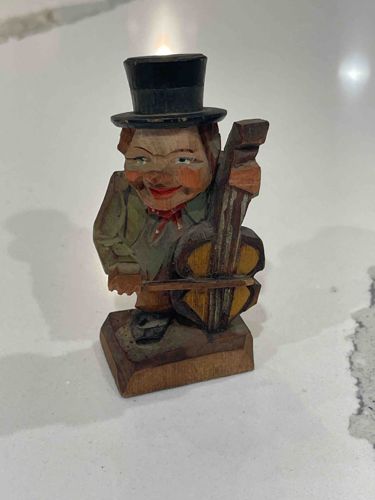
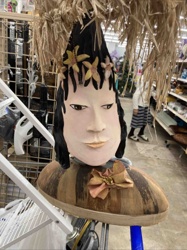
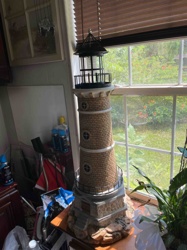
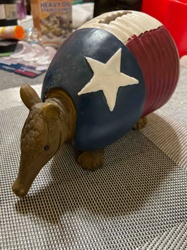
This is a hand-carved wooden figurine, approximately 4 inches tall, depicting a jovial male character playing an upright bass. The figure is likely made of a relatively soft wood, possibly linden or pine, given the visible carving marks and the nature of such folk art. The carving style suggests a European origin, possibly German or Austrian, consistent with Black Forest or similar traditional woodcarving traditions. The character wears a black top hat, a green jacket, and a red bow tie, with the colors applied as painted accents rather than wood stains. His facial features are exaggerated, featuring a wide grin, rosy cheeks, and distinct eyes, contributing to a cheerful and somewhat whimsical expression. The upright bass is carved as part of the total composition, with some details picked out in a yellowish-brown paint, possibly to simulate a lighter wood.
The overall construction is solid, carved from a single piece of wood for the main figure and instrument, then mounted on a separate, rectangular wooden base. The carving demonstrates good craftsmanship, with clean cuts and a well-defined form, though not overly refined, aligning with a folk art aesthetic. There are visible signs of age and wear: the paint has faded and chipped in several areas, particularly on the top hat and the edges of the jacket. The wood itself shows a natural patina consistent with age, and there are no immediate signs of major cracks or repairs, suggesting it has been reasonably well-preserved. There are no discernible maker's marks or signatures visible from the provided image, which is common for this type of vernacular artwork. The piece likely dates to the mid-20th century, possibly earlier, given its style and apparent condition.
AI Appraisal Report
I have carefully examined the provided image and details of the Hand-Carved Wooden Figurine of a Man Playing Upright Bass. Based on my visual assessment, the condition of the piece is consistent with its described age. The painted accents show expected fading and chipping, which is typical for folk art of this period and does not detract significantly from its aesthetic or value, rather, it contributes to its charm and authentic patina. The absence of major cracks or repairs is a positive indicator of its preservation. The carving style strongly suggests a European, likely German or Austrian, origin, aligning with traditional woodcarving. While I cannot definitively authenticate this piece as a specific maker's work without physical examination, its style and apparent age are consistent with vernacular folk art from the mid-20th century or possibly earlier.
From a market perspective, comparable hand-carved folk art pieces, particularly those with a whimsical or musical theme, generally see steady demand among collectors of decorative arts and European folk craftsmanship. While not exceptionally rare, unique and charming pieces like this often find appreciative buyers. Factors positively impacting value include its well-preserved condition for its age, the engaging subject matter, and apparent good craftsmanship within the folk art aesthetic. The primary limitation in full authentication is the reliance on images alone; an in-person examination would allow me to better assess the wood type, feel texture, inspect carving tools marks for specific origin clues, and search for extremely faint maker's marks or labels missed in photographs. Provenance documentation, if available, would significantly enhance its value by confirming its history and origin.