AI estimate as of August 31, 2025 · verify with a professional before acting
AI-Generated · Verify before acting
Everything on this page is generated by AI for informational purposes only. AI can make mistakes — the AI may misidentify items or misattribute them (artist, maker, brand, designer, origin, era). This is not an official valuation and should not be used for insurance, sale, tax, estate, legal, or lending purposes — or any decision requiring a certified appraisal. It is not an authoritative claim about any person, brand, or rights holder — do not share or rely on it as a factual statement about a third party. Always consult qualified professionals before making financial decisions.
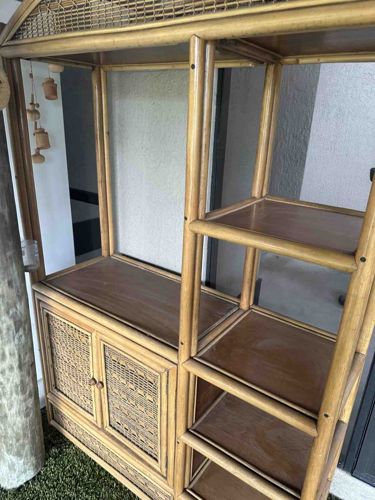
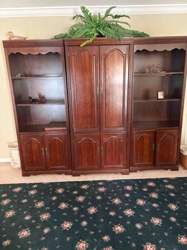
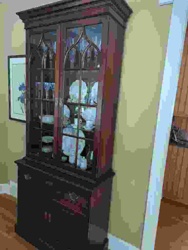
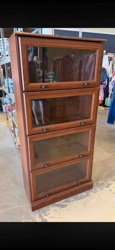
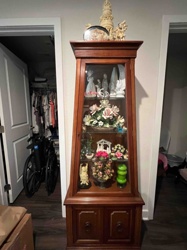
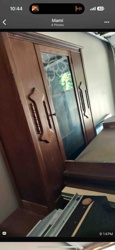
This is a vintage bamboo and rattan etagere or display unit, likely dating from the mid-20th century, possibly the 1970s or 1980s, reflecting a tropical or bohemian aesthetic. The primary material is natural bamboo, characterized by its distinctive golden-yellow hue and naturally segmented form, used for the frame, uprights, and horizontal supports. The unit features a multi-tiered design with both open shelving and enclosed storage. The left section comprises a lower cabinet with two hinged doors, each featuring intricate woven rattan panels with a grid-like pattern, framed by the bamboo. Above this cabinet, there is an open shelf area. The right section of the unit is an open etagere with multiple fixed shelves, appearing to be constructed from a dark-stained wood or wood composite, contrasting with the lighter bamboo. These shelves are supported by the bamboo frame.
Notable features include the arched pediment-style top on the left side, which incorporates a finely woven rattan mesh panel, adding a decorative element. The construction appears to utilize traditional jointing methods for bamboo furniture, possibly including dowels or bindings, although these are not clearly visible. The overall condition shows signs of age and use, with some visible wear and discoloration on the wooden shelves, suggesting a need for cleaning or refinishing. The bamboo itself appears sturdy, with no obvious major breaks or cracks, though some natural variations in color and texture are present. There are no discernible manufacturer's marks or signatures in the visible areas. The craftsmanship suggests a commercially produced piece, characteristic of the era for this style of furniture, combining natural materials with practical storage solutions.
AI Appraisal Report
I have examined the provided image of this vintage bamboo and rattan etagere/display unit. Based on its design elements, material use (natural bamboo and woven rattan), and construction style, it appears to be a commercially produced piece likely from the 1970s or 1980s, aligning with the tropical/bohemian aesthetic popular during that era. The multi-tiered design with a combination of open shelving and enclosed rattan-paneled storage is characteristic. The arched pediment with rattan mesh is a decorative highlight.
From the image, the overall condition appears good with signs of age and use. The bamboo frame seems sturdy with no obvious breaks, though natural variations are present. The enclosed rattan panels appear intact. The dark-stained wooden shelves show visible wear and discoloration, suggesting a need for cleaning or potential refinishing to enhance their appearance. This wear slightly impacts the aesthetic value but is generally expected for vintage furniture of this period.
Market conditions for vintage bamboo and rattan furniture remain fairly strong, driven by renewed interest in natural materials, mid-century modern, and 'grandmillennial' decor trends. Comparable items from this period, particularly those with combined shelving and storage, typically sell in the $400-$800 range depending on condition, size, and specific design appeal. Demand for these pieces is moderate but consistent among decorators and collectors. Rarity is low; these were mass-produced.
Factors impacting value include its good structural integrity, appealing combination of materials, and functional design. The minor cosmetic wear on the shelves is the primary detractor. Without physical examination, I cannot confirm the exact construction methods (e.g., dowels, bindings) or assess any unseen damage, hidden repairs, or structural weaknesses. Authenticity as a period piece is highly probable based on visual cues. Full authentication, including verification of materials, precise age, and any potential hidden manufacturer's marks, would necessitate in-person inspection and possibly provenance documentation. No scientific testing is typically required for such items unless material composition is questionable. My appraisal accounts for the visible condition and typical market performance for such vintage pieces.