AI Appraisal Estimate

AI-generated estimates · not official valuations

From the user

What was submitted

Photo and notes provided by the user — not generated by AI

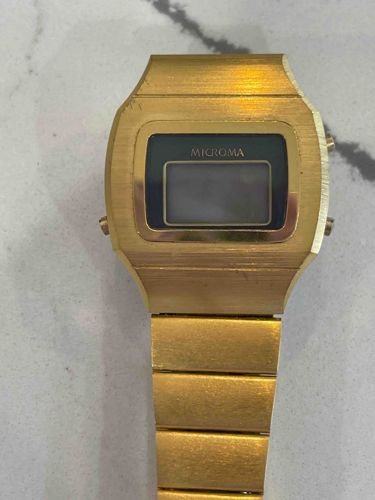
Submitted item photo
Submitted photo · May 27, 2026

User's notes

No additional notes provided.

AI analysis below

AI appraisal

AI analysis & estimate

AI-Generated · Verify before acting

Everything below is generated by AI for informational purposes only. AI can make mistakes — the AI may misidentify items or misattribute them (artist, maker, brand, designer, origin, era). This is not an official valuation and should not be used for insurance, sale, tax, estate, legal, or lending purposes — or any decision requiring a certified appraisal. It is not an authoritative claim about any person, brand, or rights holder — do not share or rely on it as a factual statement about a third party. Always consult qualified professionals before making financial decisions.

Read the full disclaimer

AI Identification

·Not independently authenticated·Verify before acting

Microma Digital Wristwatch

Wristwatch

AI Estimated Value

·Not an official valuation·Verify before acting

$50 - $150

As of May 27, 2026

AI Item Analysis

·AI can make mistakes·Verify before acting
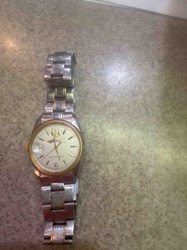
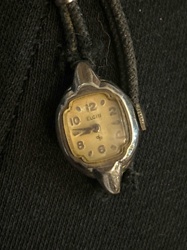
This is a vintage Microma digital wristwatch, likely dating from the 1970s or early 1980s, characteristic of the early digital watch era. The watch features a rectangular gold-tone case with a brushed finish, giving it a satin-like appearance, which is common for gold-plated or gold-tone base metal constructions of the period. The watch face is black with 'MICROMA' printed boldly in white text above the central, rectangular LCD display. The LCD itself appears to be dark, suggesting it is either off, unpowered, or possibly non-functional, as no time or digits are visible. Two small, round pushers are visible on the right side of the case, typical for setting time, date, or activating functions on early digital watches. The watch is fitted with a matching gold-tone metal bracelet, featuring multiple flat, rectangular links that are also brushed to match the case. Condition-wise, there are visible signs of wear consistent with its age. There are several scratches on the brushed surface of the case, particularly noticeable on the upper left corner and minor nicks along the edges, revealing some of the underlying metal in places, which is common for plated items experiencing wear. The overall finish shows some patina and slight discoloration that is generally expected from vintage items. The functionality of the digital display cannot be assessed from the image alone, but its unlit state is a key observable condition. The craftsmanship appears to be standard for mass-produced digital watches of its period, with attention given to the uniform brushed finish and integrated bracelet design, indicative of a mid-range consumer product.
AI Appraisal Report

·AI can make mistakes·Verify before acting
Upon examining the Microma Digital Wristwatch, I assess it to be an authentic example of a 1970s/early 1980s digital timepiece. Its rectangular gold-tone brushed case, integrated bracelet, and visible pushers are consistent with Microma designs from that era. The 'MICROMA' branding also appears authentic. Condition-wise, the watch shows moderate wear, typical for its age. Visible scratches on the case, especially the upper left corner, and minor nicks indicate use and wear to the plating. The unlit LCD display is a significant concern; without power, its functionality cannot be determined, which greatly impacts value. Market conditions for vintage digital watches vary. While some rare or historically significant models fetch high prices, mass-produced examples like this Microma generally command more modest values unless in pristine, fully functional condition. Demand exists among collectors of vintage electronics and 1970s memorabilia, but this particular model isn't considered exceptionally rare. Its mid-range craftsmanship and visible wear limit its appeal to top-tier collectors. The primary factor impacting its value is the uncertain functionality of the display and the cosmetic wear. A fully working display would significantly increase its desirability. Limitations in authenticity verification from images alone exist. While the visual cues suggest authenticity, an in-person examination would allow for inspection of the movement, serial numbers, and internal components to confirm originality. Additionally, provenance documentation (e.g., original box, papers) would provide further authentication. Scientific testing of the plating material could confirm its composition and age, though this is rarely performed for items of this value.

Get your items appraised

Instant estimates of your treasures with AI-powered appraisals

Browse More Appraisals