Mid-Century German Green Cut-to-Clear Pedestal Glass Bowl
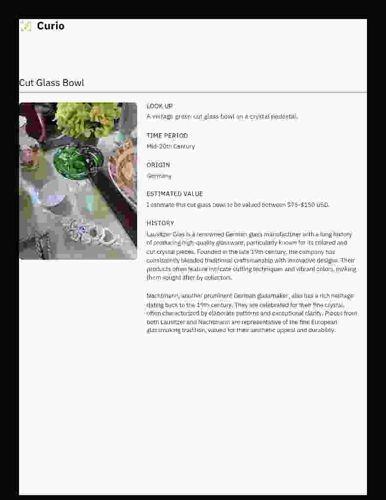
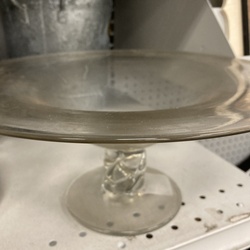
This is a vintage emerald green glass bowl atop a clear crystal pedestal, likely originating from Germany in the mid-20th century. The piece features a 'cut-to-clear' technique where the vibrant green outer layer is intricately carved away to reveal the transparent crystal beneath in a series of geometric and floral-inspired patterns. The bowl exhibits high craftsmanship typical of Renowned makers such as Lausitzer Glas or Nachtmann, known for their precision wheel-cutting and high-lead crystal content which provides significant refractive brilliance. The clear pedestal base is faceted, providing a sturdy and elegant elevation. Regarding condition, there is a noted rough spot on the rim, which may represent a small flea-bite chip or production irregularity common in hand-finished glass. No major cracks or internal clouding are visible from the documentation. The deep green hue is characteristic of Post-War European decorative arts. The item remains a fine example of traditional German glassmaking, combining functional utility with sophisticated decorative appeal. The sharp edges of the cuts indicate that it was hand-cut rather than molded, as seen in the crisp definition of the patterns.
AI-Generated Appraisal Disclaimer
Estimated Value
$125 - $175
Basic Information
Category
Antique and Vintage Glassware
Appraised On
April 1, 2026
Estimated Value
$125 - $175
Additional Details Provided By Owner
User Provided Information
there is a rough spot on the rim
Item Description
This is a vintage emerald green glass bowl atop a clear crystal pedestal, likely originating from Germany in the mid-20th century. The piece features a 'cut-to-clear' technique where the vibrant green outer layer is intricately carved away to reveal the transparent crystal beneath in a series of geometric and floral-inspired patterns. The bowl exhibits high craftsmanship typical of Renowned makers such as Lausitzer Glas or Nachtmann, known for their precision wheel-cutting and high-lead crystal content which provides significant refractive brilliance. The clear pedestal base is faceted, providing a sturdy and elegant elevation. Regarding condition, there is a noted rough spot on the rim, which may represent a small flea-bite chip or production irregularity common in hand-finished glass. No major cracks or internal clouding are visible from the documentation. The deep green hue is characteristic of Post-War European decorative arts. The item remains a fine example of traditional German glassmaking, combining functional utility with sophisticated decorative appeal. The sharp edges of the cuts indicate that it was hand-cut rather than molded, as seen in the crisp definition of the patterns.
Get Your Items Appraised
Instant estimates of your treasures with AI-powered instant appraisals