Japanese Ukiyo-e Woodblock Print of a Kabuki Actor
Fine Art - Asian Art - Prints

Japanese Ukiyo-e Woodblock Print of a Kabuki Actor

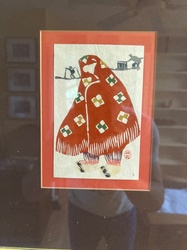
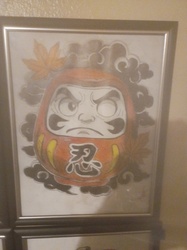
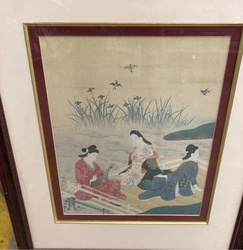
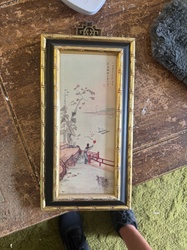
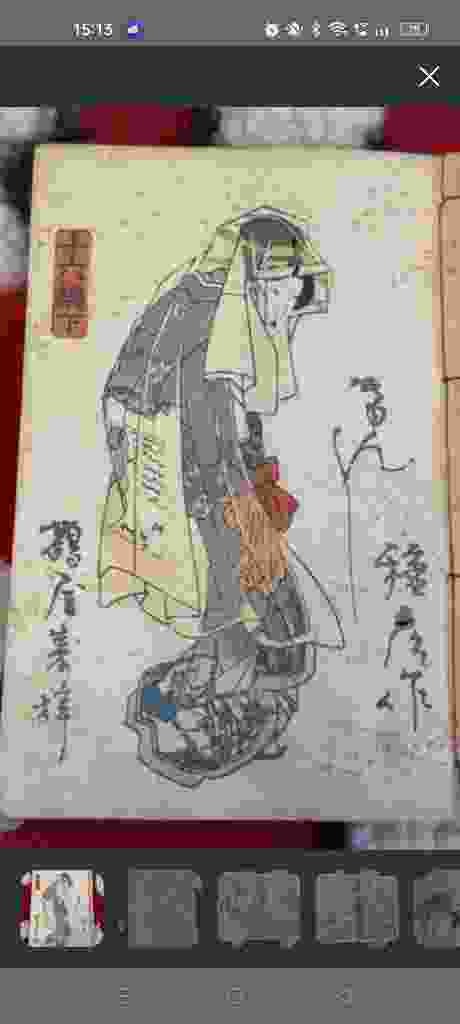
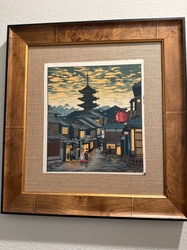
This item is a Japanese ukiyo-e woodblock print, likely a yakusha-e (actor print), depicting a figure in a traditional dramatic pose. The figure is shown wearing long, dark robes with a yellow or cream-colored hood or towel draped over their head and shoulders, a common motif in theatrical or bathhouse scenes from the Edo period. The artwork is characterized by strong rhythmic linework and a muted color palette consisting of grays, blacks, pale yellows, and a touch of red in the cartouche. The composition is vertical (tate-e) and contains several columns of Japanese calligraphy (kanji and kana signatures) on both the left and right sides, alongside a decorative red seal or cartouche in the upper left. This style of printing involves multiple woodblocks, one for the key outline and separate ones for each color application. Measuring approximately 10 by 15 inches standard for chūban or ōban sizes, it exhibits craftsmanship consistent with mid-to-late 19th-century Japanese printing houses. Condition-wise, the paper shows significant signs of age, including overall yellowing/browning (foxing), some blurring of the fine lines due to digital compression or physical rubbing, and potential trimming along the edges. The patina is heavy, suggesting it has been exposed to environmental elements or light for an extended period. Despite the wear, the expressive posture and calligraphic elements remain stylistically significant of the Utagawa school or similar 19th-century movements.
Estimated Value

$450 - $700

Basic Information

Category

Fine Art - Asian Art - Prints

Appraised On

April 9, 2026

Estimated Value

$450 - $700

Item Description

This item is a Japanese ukiyo-e woodblock print, likely a yakusha-e (actor print), depicting a figure in a traditional dramatic pose. The figure is shown wearing long, dark robes with a yellow or cream-colored hood or towel draped over their head and shoulders, a common motif in theatrical or bathhouse scenes from the Edo period. The artwork is characterized by strong rhythmic linework and a muted color palette consisting of grays, blacks, pale yellows, and a touch of red in the cartouche. The composition is vertical (tate-e) and contains several columns of Japanese calligraphy (kanji and kana signatures) on both the left and right sides, alongside a decorative red seal or cartouche in the upper left. This style of printing involves multiple woodblocks, one for the key outline and separate ones for each color application. Measuring approximately 10 by 15 inches standard for chūban or ōban sizes, it exhibits craftsmanship consistent with mid-to-late 19th-century Japanese printing houses. Condition-wise, the paper shows significant signs of age, including overall yellowing/browning (foxing), some blurring of the fine lines due to digital compression or physical rubbing, and potential trimming along the edges. The patina is heavy, suggesting it has been exposed to environmental elements or light for an extended period. Despite the wear, the expressive posture and calligraphic elements remain stylistically significant of the Utagawa school or similar 19th-century movements.
Get Your Items Appraised

Instant estimates of your treasures with AI-powered instant appraisals

Browse More Appraisals