AI estimate as of December 5, 2025 · verify with a professional before acting
AI-Generated · Verify before acting
Everything on this page is generated by AI for informational purposes only. AI can make mistakes — the AI may misidentify items or misattribute them (artist, maker, brand, designer, origin, era). This is not an official valuation and should not be used for insurance, sale, tax, estate, legal, or lending purposes — or any decision requiring a certified appraisal. It is not an authoritative claim about any person, brand, or rights holder — do not share or rely on it as a factual statement about a third party. Always consult qualified professionals before making financial decisions.
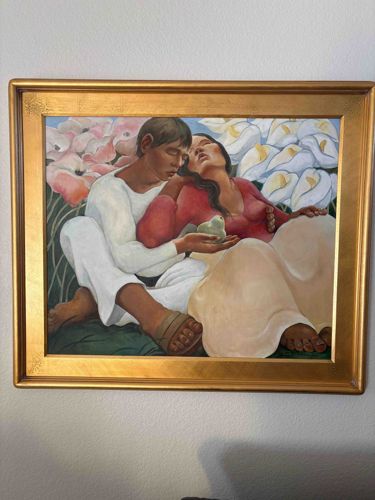
This is a framed oil painting or print depicting a serene, intimate scene of a couple amidst a vibrant field of flowers. The composition features two figures: a male figure on the left, dressed in a simple white tunic and trousers, and a female figure on the right, wearing a flowing reddish-pink dress or shawl. The male has dark hair and closed eyes, resting his head somewhat towards the woman. The female figure has dark hair and her eyes are also closed, with her head tilted back, suggesting a moment of peace or contemplation. She holds a small, light green, pear or fruit-like object in her hands, which are gently clasped together. Both figures appear to have indigenous features, with earthy skin tones. The background is lush with large, stylized flowers; the left side showcases light pink, poppy-like blossoms, while the right side is filled with white calla lilies. The color palette is rich and warm, with prominent earth tones contrasting with the softer pinks, whites, and greens of the foliage. The figures' clothing is rendered with simple folds, emphasizing the forms rather than intricate detail. The painting is housed in a substantial, ornate gold-colored frame, which appears to be made of wood or a composite material with a gilded finish. The frame features decorative details, particularly visible at the corners, adding to its classical aesthetic. The overall condition of the painting and frame appears good, with no obvious signs of significant damage like cracks in the paint, fading, or major chips on the frame from the provided image. The style suggests a possible influence of Mexican muralism or regionalist art, possibly dating from the mid-20th century, though without a signature or more details, this is an estimation. The craftsmanship seems solid, with clear lines and appealing color transitions.
AI Appraisal Report
I have examined the image provided for this framed oil painting or print, depicting a couple in a field of flowers. Visually, the condition of both the artwork and its ornate gold-colored frame appears to be very good, showing no obvious signs of significant damage such as paint cracks, fading, or chips on the frame. The colors are vibrant, and the composition is engaging. The style, with its earthy tones and indigenous features, strongly suggests an influence from Mexican muralism or regionalist art, possibly from the mid-20th century.
Market conditions for works of this stylistic genre, especially without a known artist, are generally stable but can vary. Comparable works by lesser-known artists in similar styles typically range from $300 to $1,500. The rich aesthetic and good condition enhance its market appeal. Demand exists for decorative pieces with a distinctive ethnic or cultural aesthetic, particularly those emanating warmth and serenity, as this one does.
However, it's crucial to acknowledge the limitations of appraising from an image alone. Without direct physical examination, I cannot definitively confirm whether this is an original oil painting or a high-quality print. This distinction significantly impacts value; an original painting would command a higher price. Furthermore, the absence of a visible signature or provenance documentation prevents identification of the artist, which is the primary factor limiting a higher valuation. To fully authenticate and determine its true value, an in-person examination is essential to assess paint texture, medium, and any hidden signatures. Research into provenance records or scientific testing (e.g., pigment analysis) would be necessary for definitive authentication and artist attribution.