AI estimate as of July 24, 2026 · verify with a professional before acting
AI-Generated · Verify before acting
Everything on this page is generated by AI for informational purposes only. AI can make mistakes — the AI may misidentify items or misattribute them (artist, maker, brand, designer, origin, era). This is not an official valuation and should not be used for insurance, sale, tax, estate, legal, or lending purposes — or any decision requiring a certified appraisal. It is not an authoritative claim about any person, brand, or rights holder — do not share or rely on it as a factual statement about a third party. Always consult qualified professionals before making financial decisions.
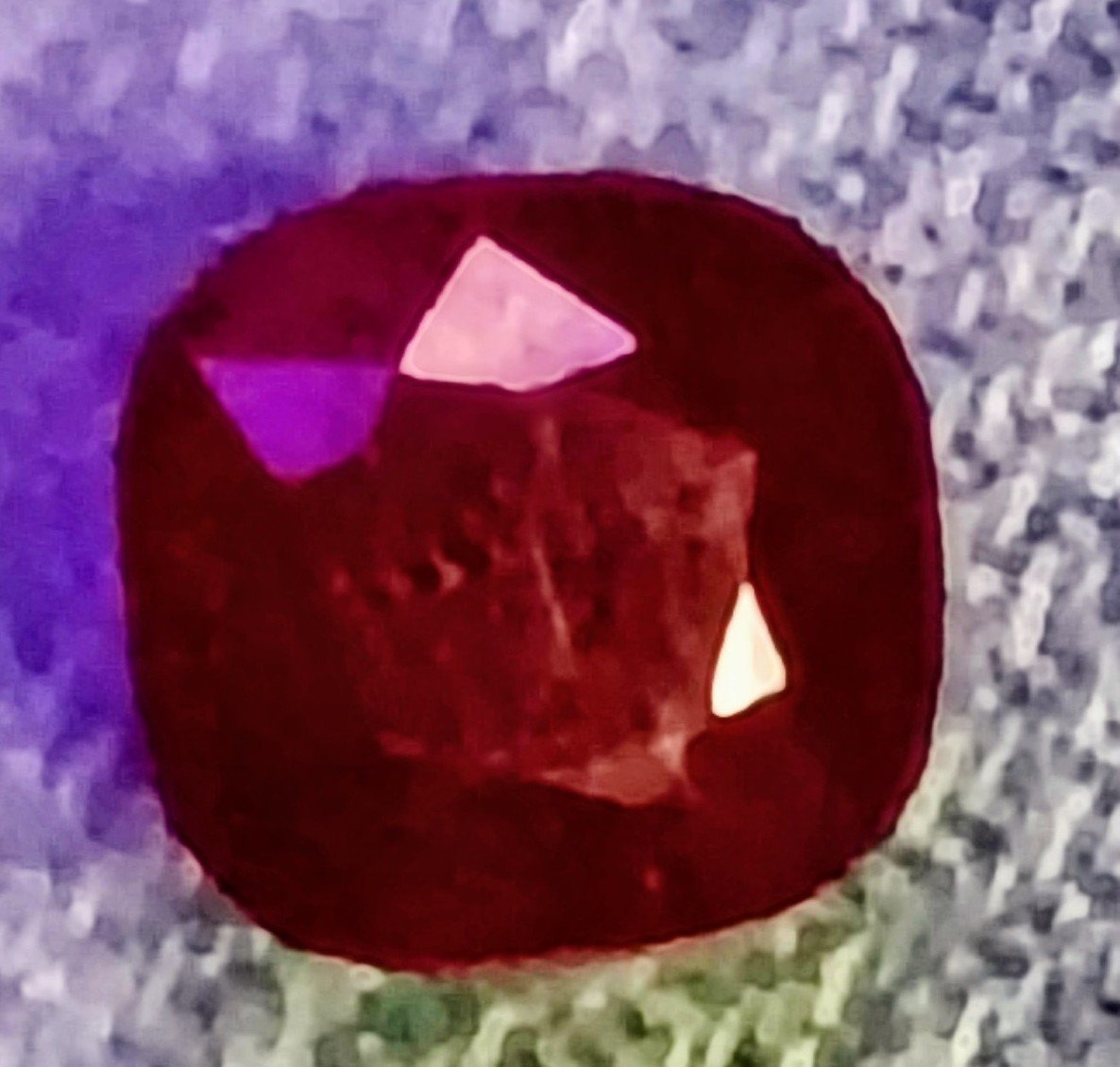
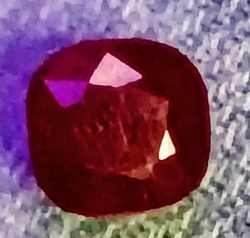
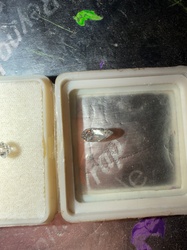
This image displays a loose, faceted cushion-cut gemstone exhibiting a deep red hue with bright pinkish-red and white light reflections on its crown facets. The stone appears to feature a soft rectangular or squarish outline with rounded corners, typical of a classic cushion modification. Visual evidence shows noticeable internal inclusions and body features under magnification, which appear consistent with natural gemstone characteristics, though synthetic materials or glass imitations cannot be ruled out without gemological testing. Hedged terminology is utilized for this identification as visual examination alone through a photograph cannot confirm elemental composition, natural versus synthetic origin, or potential enhancement treatments (such as heat or fracture filling). To determine whether the item is a natural ruby, garnet, red spinelle, or lab-created stone, gemological testing using a refractometer, spectroscope, and advanced laboratory equipment would be required. The gemstone is shown resting against a textured gray background.
AI Appraisal Report
Based on what I can see in the photograph, this item is a loose, faceted cushion-cut red gemstone displaying a deep crimson hue with bright pinkish-red brilliance and visible internal inclusions. Based on visual characteristics alone, the stone appears consistent with red varieties such as ruby, garnet, or red spinel. However, I cannot verify material composition, natural versus synthetic origin, or the presence of clarity or color enhancements from a photo alone; physical inspection and testing with gemological instruments would be required to confirm its exact identity.
Because the identification remains unconfirmed, the estimated market value depends heavily on the actual gemological classification, carat weight, and origin. If physical testing determines this to be a natural, unheated ruby of desirable color, secondary market value could easily reach $1,000 to $3,000 or more depending on its precise weight and quality. If it is a natural garnet or red spinel, values typically range from $100 to $500. Should advanced laboratory testing reveal it to be a synthetic lab-created gem or a glass imitation, the retail or resale value would drop significantly, likely to under $50.
To establish a firm valuation, an in-person gemological examination is necessary. This would include refractive index testing, microscopic analysis of inclusions, spectrographic evaluation, and potentially a full laboratory report from a recognized gemological institute to rule out synthetic origin and treatment. Market demand for high-quality natural red gemstones remains strong, but unverified loose stones carry inherent risk, and unauthenticated pieces of this type typically sell for a fraction of certified examples.