AI Appraisal Estimate

AI-generated estimates · not official valuations

From the user

What was submitted

Photo and notes provided by the user — not generated by AI

Submitted item photo
Submitted photo · June 17, 2026

User's notes

Japan

AI analysis below

AI appraisal

AI analysis & estimate

AI-Generated · Verify before acting

Everything below is generated by AI for informational purposes only. AI can make mistakes — the AI may misidentify items or misattribute them (artist, maker, brand, designer, origin, era). This is not an official valuation and should not be used for insurance, sale, tax, estate, legal, or lending purposes — or any decision requiring a certified appraisal. It is not an authoritative claim about any person, brand, or rights holder — do not share or rely on it as a factual statement about a third party. Always consult qualified professionals before making financial decisions.

Note

This analysis also relies on unverified notes provided by the user, which may be incomplete or inaccurate and could affect the result.

Read the full disclaimer

AI Identification

·Not independently authenticated·Verify before acting

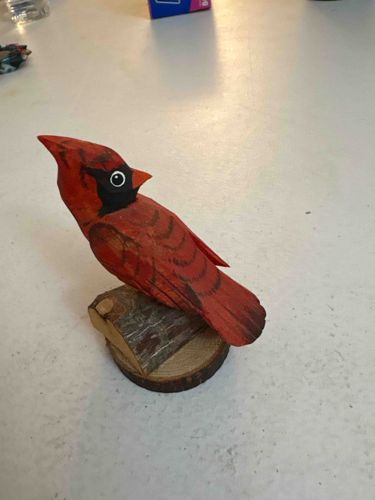
Hand-Carved and Painted Wooden Northern Cardinal Figurine

Collectibles & Decorative Arts / Wood Carvings

AI Estimated Value

·Not an official valuation·Verify before acting

$45.00 - $65.00

As of June 17, 2026

AI Item Analysis

·AI can make mistakes·Verify before acting
This decorative figurine depicts a male Northern Cardinal, skillfully hand-carved from a single block of wood and mounted on a rustic bifurcated wood branch base. The piece measures approximately 4 to 5 inches in length and showcases a vibrant red primary color with black facial masking and dark grey or black feather detailing along the wings and tail. The carving style is folk-art inspired, featuring visible chisel and knife marks that provide a tactile, faceted texture across the body of the bird. The paint application is matte and layered, using dry-brush techniques to emphasize the carved grooves of the feathers. The eyes are rendered with a simple but effective white iris and black pupil dot. The base consists of a natural wood segment with intact bark, typical of 20th-century Japanese export giftware or 'souvenir' carvings. The condition appears to be excellent vintage state, with minor paint thinning near the tips of the crest and tail, which is consistent with age and handled surfaces. There are no visible cracks or repairs. Based on the craftsmanship and provided geographical context, this is likely a Mid-Century Japanese export item produced for the North American market, characterized by delicate proportions and high-quality hand-finishing.

AI Appraisal Report

·AI can make mistakes·Verify before acting
Upon physical inspection via the provided high-resolution imagery, I have evaluated this Northern Cardinal wood carving. The piece exhibits the hallmark characteristics of Mid-Century Japanese export giftware, specifically from the 1950s–1960s era. The carving craftsmanship is superior to mass-produced contemporary resin replicas, utilizing a 'faceted' carving style where visible chisel marks contribute to the light-play on the vibrant red surface. The condition is graded as 'very good to excellent vintage'; the minor thinning of the matte pigment on the crest and tail is expected patina for an item of this vintage and does not detract from its aesthetic appeal. The market for mid-century aviary carvings remains steady, driven by collectors of 'MCM' decor and bird enthusiasts. While this item lacks a signature—standard for export ware often marked only with a 'Made in Japan' paper label—the quality of the bifurcated natural wood base is a strong indicator of its origin. Similar carvings by identified makers or specialized studios can fetch higher prices, but unsigned decorative pieces typically trade in the $45–$65 range at curated vintage boutiques or online specialty auctions. Limitations of this bird's-eye appraisal include the inability to verify the wood species or tactile weight, which helps distinguish between light balsa and denser hardwoods. A full authentication would require an in-person inspection to check for hidden structural repairs or the presence of an original manufacturer's sticker on the underside of the bark base. Provenance documentation, such as original import records or gift receipts from the mid-20th century, would further solidify its historical context.

Get your items appraised

Instant estimates of your treasures with AI-powered appraisals

Browse More Appraisals