Ancient Roman or Byzantine Period Terracotta Oil Lamp
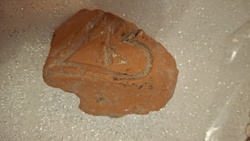
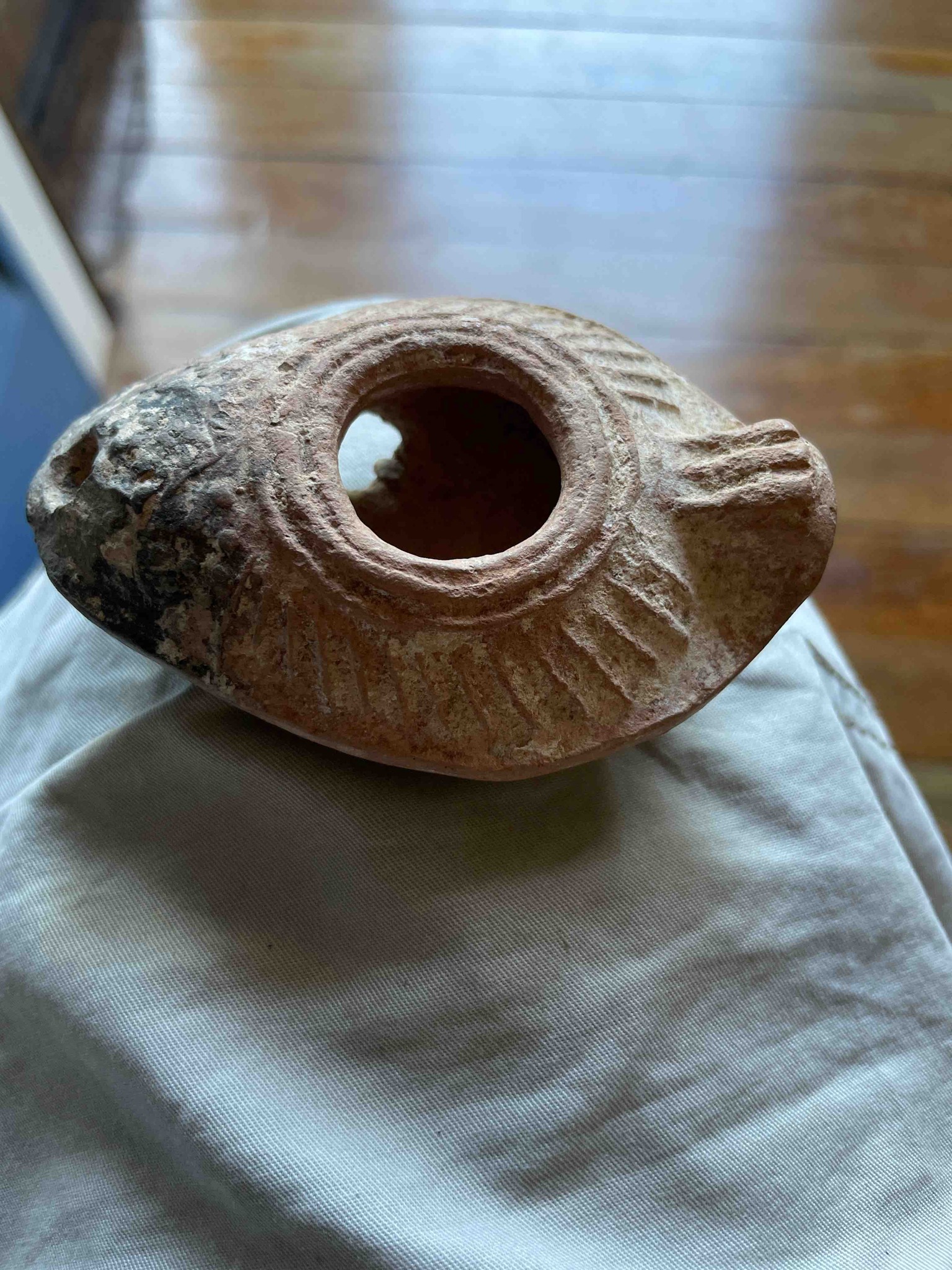
This is an authentic-style terracotta oil lamp, characteristic of the Levantine or Eastern Mediterranean region, likely dating from the late Roman to early Byzantine period (circa 4th to 6th century CE). The lamp is constructed from a coarse, reddish-brown clay and features an ovoid or slipper-shaped body. The central filling hole is surrounded by a raised rim, while the shoulders are decorated with a molded radial linear pattern or 'sunburst' motif. At the rear, there is a small, stub-like unpierced handle. The front nozzle displays significant carbonization and black soot staining, indicating it was heavily used in antiquity. The overall condition shows signs of age-related wear, including surface encrustations, minor pitting, and evidence of earthen burial. There is a visible break or loss on the interior wall of the filling hole. The craftsmanship is typical of mass-produced utilitarian wares of the era, made in two-part molds. No specific potter's marks are visible on the upper surface, though the underside (not fully shown) would typically be flat or slightly concave.
AI-Generated Appraisal Disclaimer
Estimated Value
$150 - $250
Basic Information
Category
Antiquities / Ancient Ceramics
Appraised On
April 10, 2026
Estimated Value
$150 - $250
Item Description
This is an authentic-style terracotta oil lamp, characteristic of the Levantine or Eastern Mediterranean region, likely dating from the late Roman to early Byzantine period (circa 4th to 6th century CE). The lamp is constructed from a coarse, reddish-brown clay and features an ovoid or slipper-shaped body. The central filling hole is surrounded by a raised rim, while the shoulders are decorated with a molded radial linear pattern or 'sunburst' motif. At the rear, there is a small, stub-like unpierced handle. The front nozzle displays significant carbonization and black soot staining, indicating it was heavily used in antiquity. The overall condition shows signs of age-related wear, including surface encrustations, minor pitting, and evidence of earthen burial. There is a visible break or loss on the interior wall of the filling hole. The craftsmanship is typical of mass-produced utilitarian wares of the era, made in two-part molds. No specific potter's marks are visible on the upper surface, though the underside (not fully shown) would typically be flat or slightly concave.
Related Tags
Explore similar items and categories:
Get Your Items Appraised
Instant estimates of your treasures with AI-powered instant appraisals