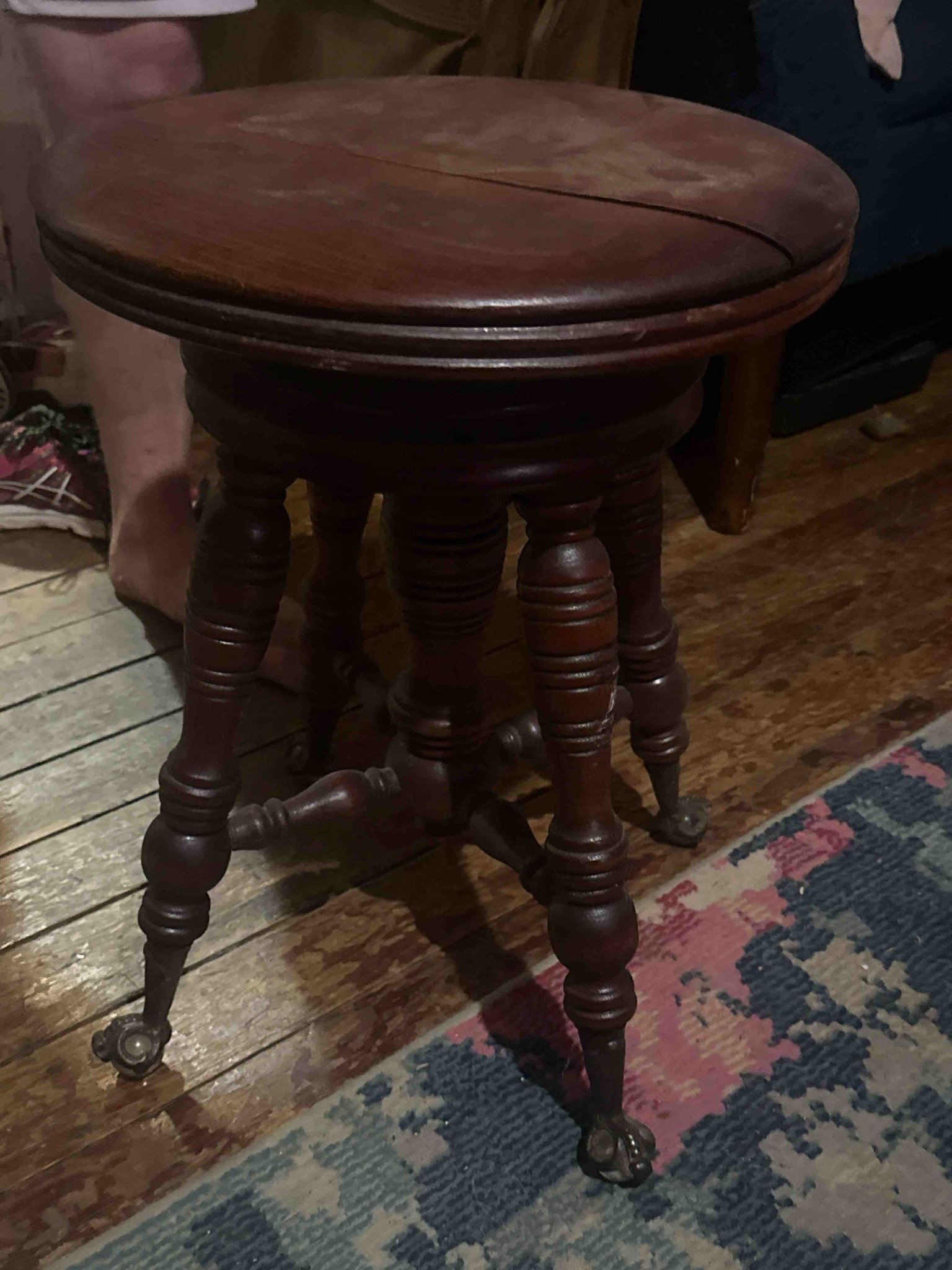
Victorian Adjustable Swivel Piano Stool
Antique Furniture

Victorian Adjustable Swivel Piano Stool

This is a late 19th-century Victorian-style adjustable swivel piano stool, constructed from a dark-stained hardwood, likely mahogany or walnut. The stool features a circular rotating seat with a beveled edge that sits atop a heavy threaded metal screw mechanism, allowing for height adjustment. The base is ornately crafted with four heavily turned and ringed legs, connected by a central turned pedestal and secondary cross-stretchers for stability. A prominent Victorian design element is the cast iron claw-and-ball feet found at the base of each leg, which appear to hold glass or metal orbs. The finish is a deep reddish-brown with a visible aged patina. Regarding condition, there is a significant structural crack running across the top of the wooden seat, indicating wood shrinkage or stress over time. The finish shows signs of wear, surface scratches, and dust accumulation consistent with its age. Some oxidation is present on the metal components of the feet. The craftsmanship is indicative of mass-produced yet high-quality furniture from the late 1800s to early 1900s, common in middle-class parlors of the era.

Estimated Value

$175 - $275

Basic Information

Category

Antique Furniture

Appraised On

April 10, 2026

Estimated Value

$175 - $275

Item Description

This is a late 19th-century Victorian-style adjustable swivel piano stool, constructed from a dark-stained hardwood, likely mahogany or walnut. The stool features a circular rotating seat with a beveled edge that sits atop a heavy threaded metal screw mechanism, allowing for height adjustment. The base is ornately crafted with four heavily turned and ringed legs, connected by a central turned pedestal and secondary cross-stretchers for stability. A prominent Victorian design element is the cast iron claw-and-ball feet found at the base of each leg, which appear to hold glass or metal orbs. The finish is a deep reddish-brown with a visible aged patina. Regarding condition, there is a significant structural crack running across the top of the wooden seat, indicating wood shrinkage or stress over time. The finish shows signs of wear, surface scratches, and dust accumulation consistent with its age. Some oxidation is present on the metal components of the feet. The craftsmanship is indicative of mass-produced yet high-quality furniture from the late 1800s to early 1900s, common in middle-class parlors of the era.

Get Your Items Appraised

Instant estimates of your treasures with AI-powered instant appraisals

Browse More Appraisals