Lower Paleolithic Style Chert Hand Axe Scraper
Prehistoric Artifacts / Lithic Tools

Lower Paleolithic Style Chert Hand Axe Scraper

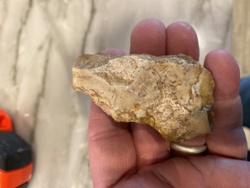
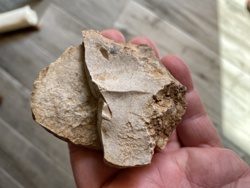
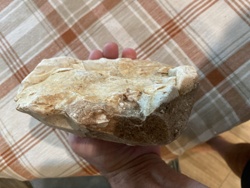
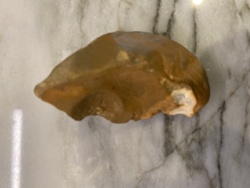
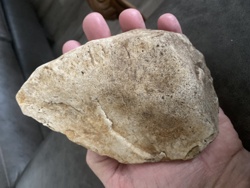
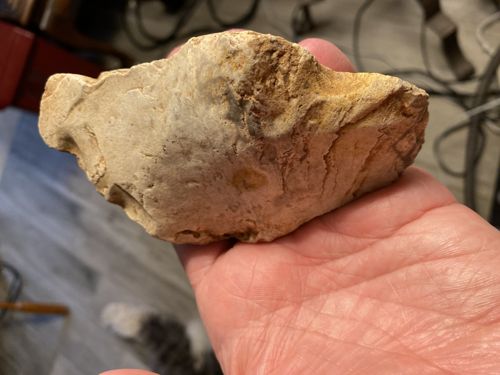
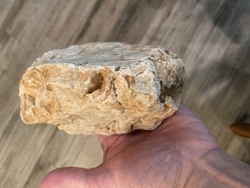
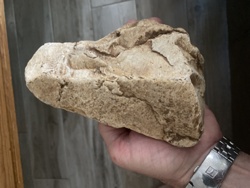
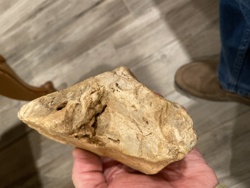
This artifact is identified as a bifacial lithic tool, specifically a hand axe or scraper, measuring approximately 5 inches by 3 inches as held in the hand for scale. It is crafted from a light-colored chert or silicate stone, exhibiting a range of warm earth tones including cream, tan, and ochre-stained ridges. The piece shows evidence of intentional percussion flaking along its edges to create a functional cutting or scraping surface. The material displays a distinct matte, weathered patina consistent with long-term environmental exposure, with significant mineral staining found in the deeper recesses of the flake scars. Physically, the tool features a thick, bulbous grip area that tapers into a thinner, worked edge, suggesting an ergonomic design for handheld use. While the user identifies this as Acheulean, it is important to note that such stone tools found in Guthrie, Oklahoma, typically associate with North American Paleo-Indian or later indigenous cultures, as true Acheulean technology is traditionally associated with the Lower Paleolithic of Africa, Europe, and Western Asia. The craftsmanship shows deliberate thinning and shaping, though the edges have been smoothed over time by natural exfoliation and soil acids. There are no modern saw marks or mechanical grinding visible, supporting its status as a prehistoric stone tool. The overall condition is stable, with no recent fractures or modern damage appearing on the worked surfaces.
Estimated Value

$150 - $250

Basic Information

Category

Prehistoric Artifacts / Lithic Tools

Appraised On

February 28, 2026

Estimated Value

$150 - $250

Additional Details Provided By Owner

User Provided Information

Lower Paleolithic Acheulean chert hand axe scraper tool found in Guthrie OK measuring 5" x 3"

Item Description

This artifact is identified as a bifacial lithic tool, specifically a hand axe or scraper, measuring approximately 5 inches by 3 inches as held in the hand for scale. It is crafted from a light-colored chert or silicate stone, exhibiting a range of warm earth tones including cream, tan, and ochre-stained ridges. The piece shows evidence of intentional percussion flaking along its edges to create a functional cutting or scraping surface. The material displays a distinct matte, weathered patina consistent with long-term environmental exposure, with significant mineral staining found in the deeper recesses of the flake scars. Physically, the tool features a thick, bulbous grip area that tapers into a thinner, worked edge, suggesting an ergonomic design for handheld use. While the user identifies this as Acheulean, it is important to note that such stone tools found in Guthrie, Oklahoma, typically associate with North American Paleo-Indian or later indigenous cultures, as true Acheulean technology is traditionally associated with the Lower Paleolithic of Africa, Europe, and Western Asia. The craftsmanship shows deliberate thinning and shaping, though the edges have been smoothed over time by natural exfoliation and soil acids. There are no modern saw marks or mechanical grinding visible, supporting its status as a prehistoric stone tool. The overall condition is stable, with no recent fractures or modern damage appearing on the worked surfaces.
Get Your Items Appraised

Instant estimates of your treasures with AI-powered instant appraisals

Browse More Appraisals