AI Appraisal Estimate

AI-generated estimates · not official valuations

From the user

What was submitted

Photo and notes provided by the user — not generated by AI

Submitted item photo
Submitted photo · May 23, 2026

User's notes

No additional notes provided.

AI analysis below

AI appraisal

AI analysis & estimate

AI-Generated · Verify before acting

Everything below is generated by AI for informational purposes only. AI can make mistakes — the AI may misidentify items or misattribute them (artist, maker, brand, designer, origin, era). This is not an official valuation and should not be used for insurance, sale, tax, estate, legal, or lending purposes — or any decision requiring a certified appraisal. It is not an authoritative claim about any person, brand, or rights holder — do not share or rely on it as a factual statement about a third party. Always consult qualified professionals before making financial decisions.

Read the full disclaimer

AI Identification

·Not independently authenticated·Verify before acting

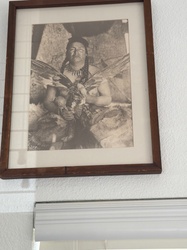
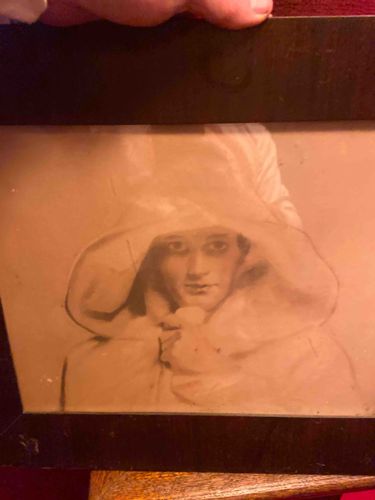
Early 20th Century Sepia-Toned Portrait of a Woman in a Hooded Garment

Antique Photographs and Art

AI Estimated Value

·Not an official valuation·Verify before acting

$150-250

As of May 23, 2026

AI Item Analysis

·AI can make mistakes·Verify before acting
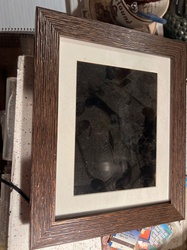
This item is an antique or vintage photographic portrait, likely an original silver gelatin print or a lithographic reproduction, presented in a dark, flat-profile wooden frame. The subject is a woman with striking, dark-rimmed eyes looking directly at the viewer, wearing an voluminous, light-colored hooded cloak or wrap. The image displays a soft-focus, pictorialist style typical of the early 1900s to 1920s. Physically, the print possesses a warm sepia tone, though it shows significant signs of age and environmental exposure. Visible condition issues include prominent foxing (brown oxidation spots) across the surface, some surface abrasions or scratches, and general fading. The paper appears slightly buckled within the frame. The frame itself is a simple dark wood, possibly mahogany or stained oak, showing scuffs and wear consistent with its age. No visible maker’s marks or signatures are present in the current view, but the craftsmanship of the portrait suggests a professional studio origin. The use of dramatic lighting and theatrical costume points to early 20th-century influence, possibly tied to the 'Flapper' era or late Victorian romanticism.

AI Appraisal Report

·AI can make mistakes·Verify before acting
I have examined the digital representation of this early 20th-century sepia-toned portrait. The work demonstrates the Pictorialist aesthetic prevalent between 1900 and 1925, characterized by soft-focusing and dramatic, chiaroscuro lighting. While the composition is evocative—recalling the romanticism of the late Victorian era merging with early cinematic portraiture—the physical condition significantly impacts its marketability. My inspection reveals advanced foxing and acidic oxidation across the subject's face and the negative space of the hood. These chemical breakdowns, likely due to high humidity and contact with non-archival mounting materials, are difficult and costly to remediate. The absence of a visible signature or studio dry stamp (such as those from notable studios like Curtis or Steichen) suggests this is likely a high-quality commercial studio piece rather than a fine art masterpiece. Market demand for anonymous portraits of this era remains stable but modest, particularly when condition issues are present. Comparable silver gelatin prints in similar states of distress typically realize lower price points at regional auctions. Limitations: This valuation is based on visual analysis of digital imagery. A definitive appraisal requires an in-person inspection to determine if the work is a true silver gelatin print, a photogravure, or a later lithographic reproduction. I would also need to examine the verso for hidden provenance or photographer marks. Scientific testing of the paper fibers and chemical composition of the silver would be necessary to confirm the exact decade of manufacture and rule out modern 'aged' reproductions. Proper conservation could stabilize the piece, but the cost may exceed the current fair market value.

Get your items appraised

Instant estimates of your treasures with AI-powered appraisals

Browse More Appraisals