AI Appraisal Estimate

AI-generated estimates · not official valuations

From the user

What was submitted

Photo and notes provided by the user — not generated by AI

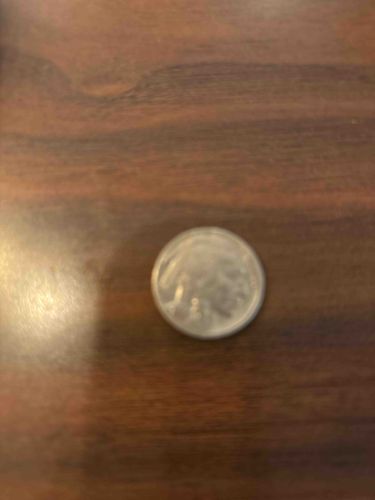
Submitted item photo
Submitted photo · May 25, 2026

User's notes

Indian head nickel

AI analysis below

AI appraisal

AI analysis & estimate

AI-Generated · Verify before acting

Everything below is generated by AI for informational purposes only. AI can make mistakes — the AI may misidentify items or misattribute them (artist, maker, brand, designer, origin, era). This is not an official valuation and should not be used for insurance, sale, tax, estate, legal, or lending purposes — or any decision requiring a certified appraisal. It is not an authoritative claim about any person, brand, or rights holder — do not share or rely on it as a factual statement about a third party. Always consult qualified professionals before making financial decisions.

Note

This analysis also relies on unverified notes provided by the user, which may be incomplete or inaccurate and could affect the result.

Read the full disclaimer

AI Identification

·Not independently authenticated·Verify before acting

Indian Head Nickel (Buffalo Nickel)

Coin

AI Estimated Value

·Not an official valuation·Verify before acting

$0.50 - $2.00

As of May 25, 2026

AI Item Analysis

·AI can make mistakes·Verify before acting
The item is identified as an Indian Head Nickel, also widely known as a Buffalo Nickel, which is a United States five-cent coin. The coin appears to be made of a cupronickel alloy, typical for this denomination, and exhibits a silvery-gray metallic sheen. Physically, it is circular with a reeded or plain edge (not clearly discernible from the provided image). The obverse side is visible, depicting the profile of a Native American chief, facing right. Due to the image's blurriness and distance, specific details of the chief's headdress or facial features are indistinct, but the overall silhouette is recognizable. There are no clear visible markings such as a mint mark or date. The coin shows signs of circulation; its surface appears somewhat dulled and there is a general lack of sharp detail, suggesting moderate to heavy wear. No significant damage like deep scratches, dents, or repairs are clearly visible, but the overall condition indicates it is not in 'uncirculated' grade. This type of coin was minted from 1913 to 1938, placing its estimated age within that range. The design is known for its artistic merit and historical significance in American coinage, though the specific quality of craftsmanship on this particular specimen is hard to assess without sharper detail. Its unique aspect lies in its historical representation of Native American culture.

AI Appraisal Report

·AI can make mistakes·Verify before acting
I have examined the provided image and description of this Indian Head Nickel, also known as a Buffalo Nickel. Visually, the coin appears to be an authentic example of this U.S. five-cent denomination. The obverse depicts the characteristic profile of a Native American chief, consistent with designs minted between 1913 and 1938. The grayish-silver hue suggests it is composed of the typical cupronickel alloy. Based on the blurry image, the condition is clearly circulated, exhibiting significant wear. Details on the chief's portrait are indistinct, and the overall surface shows a lack of sharpness, typical of a 'Good' (G) to 'Very Good' (VG) grade. Without a clear view of the date and mint mark, specific rarity or key-date status cannot be determined, which greatly impacts value. Most common date Buffalo Nickels in this circulated condition historically trade at or slightly above face value to a few dollars, contingent on the specific date and mint mark. Market conditions for common, heavily circulated Buffalo Nickels are stable but modest. Demand exists primarily among beginner collectors or those seeking type coins. Rarity is low for common dates in this condition. Factors impacting value significantly are the indeterminate date and mint mark, which are critical for an accurate appraisal; a rare date or mint mark could elevate its value substantially. Limitations in authenticity verification are significant. Without a clear view of the date, mint mark, and reverse, I cannot ascertain if it's a valuable variety or if it has been altered. Furthermore, a physical examination is required to verify alloy composition, detect potential tooling or environmental damage not visible in the image, and accurately determine its grade. An in-person inspection would also allow for precise identification of the mint mark and date, which are crucial for a more definitive valuation.

Get your items appraised

Instant estimates of your treasures with AI-powered appraisals

Browse More Appraisals