AI Appraisal Estimate

AI-generated estimates · not official valuations

From the user

What was submitted

Photo and notes provided by the user — not generated by AI

Submitted item photo
Submitted photo · May 28, 2026

User's notes

No additional notes provided.

AI analysis below

AI appraisal

AI analysis & estimate

AI-Generated · Verify before acting

Everything below is generated by AI for informational purposes only. AI can make mistakes — the AI may misidentify items or misattribute them (artist, maker, brand, designer, origin, era). This is not an official valuation and should not be used for insurance, sale, tax, estate, legal, or lending purposes — or any decision requiring a certified appraisal. It is not an authoritative claim about any person, brand, or rights holder — do not share or rely on it as a factual statement about a third party. Always consult qualified professionals before making financial decisions.

Read the full disclaimer

AI Identification

·Not independently authenticated·Verify before acting

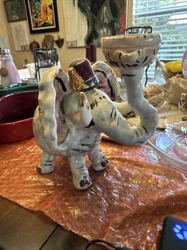
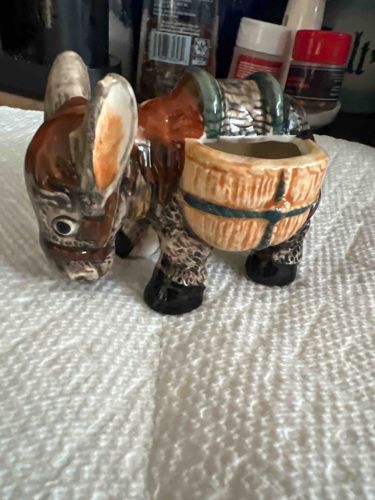
Vintage Ceramic Donkey Pack-Mule Planter

Vintage Ceramics and Collectibles

AI Estimated Value

·Not an official valuation·Verify before acting

$15.00 - $25.00

As of May 28, 2026

AI Item Analysis

·AI can make mistakes·Verify before acting
Small-scale ceramic figurine depicting a burden-carrying donkey or pack-mule. This piece is a typical example of mid-20th-century figurative pottery, possibly manufactured in Japan during the postwar 'Occupied Japan' era (late 1940s to early 1950s), though it lacks visible underside marks in this view. The donkey features a rich brown and black glazed body with mottled, sponge-like textures on the legs. It carries a dual basket (pannier) on its back meant to hold toothpicks, matches, or small succulents. The baskets are rendered in a cream/yellow glaze with teal or green vertical and horizontal bands representing ropes. The donkey's face includes hand-painted black and white eyes. Measuring approximately 3-4 inches in height, the item displays a high-gloss lead-glaze finish. Condition appears generally good with no visible structural cracks or major chips, though typical age-related crazing (fine surface cracking in the glaze) and minor shelf wear on the feet are to be expected. The style is mid-century kitsch, characterized by whimsical animal subjects intended for kitchen or tabletop decor. The craftsmanship shows standard mass-produced mold work with manual glaze application, resulting in slight variations in color intensity across the body.
AI Appraisal Report

·AI can make mistakes·Verify before acting
I have virtually examined this mid-century ceramic pack-mule planter. The piece is a quintessential example of post-WWII novelty exports, likely originating from Japan or California-based potteries like Napco or Freeman-McFarlin. The glaze exhibits characteristic 'mottled' texturing and hand-painted accents consistent with mass-produced decorative giftware of the 1950s. The condition is assessed as 'very good,' showing minor shelf wear and expected age-related crazing, which does not significantly detract from its display value. The market for mid-century kitsch remains stable, though price points for small-scale figurines have softened. Comparables for unbranded donkey planters in this size range routinely sell at thrift, antique malls, and online platforms (e.g., Etsy, eBay) within the $12 to $30 range. Rarity is low, as these items were manufactured in high volumes; however, the teal-on-cream basket contrast adds slight aesthetic appeal compared to monochromatic versions. Factors limiting value include the absence of a distinct maker’s mark or 'Occupied Japan' stamp, as well as its small scale, which limits its utility to toothpicks or air plants. This appraisal is based solely on visual evidence. To confirm authenticity and refine this valuation, an in-person inspection is required to check for hidden structural repairs or professional restorations under UV light. Scientific testing for lead content in the glaze would be necessary to confirm safety for modern use, though not required for decorative valuation. Provenance documentation, such as original manufacturer packaging or trade catalog entries, would further solidify its origin.

Get your items appraised

Instant estimates of your treasures with AI-powered appraisals

Browse More Appraisals