AI Appraisal Estimate

AI-generated estimates · not official valuations

From the user

What was submitted

Photo and notes provided by the user — not generated by AI

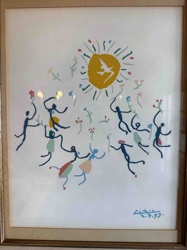
Submitted item photo
Submitted photo · June 4, 2026

User's notes

No additional notes provided.

AI analysis below

AI appraisal

AI analysis & estimate

AI-Generated · Verify before acting

Everything below is generated by AI for informational purposes only. AI can make mistakes — the AI may misidentify items or misattribute them (artist, maker, brand, designer, origin, era). This is not an official valuation and should not be used for insurance, sale, tax, estate, legal, or lending purposes — or any decision requiring a certified appraisal. It is not an authoritative claim about any person, brand, or rights holder — do not share or rely on it as a factual statement about a third party. Always consult qualified professionals before making financial decisions.

Read the full disclaimer

AI Identification

·Not independently authenticated·Verify before acting

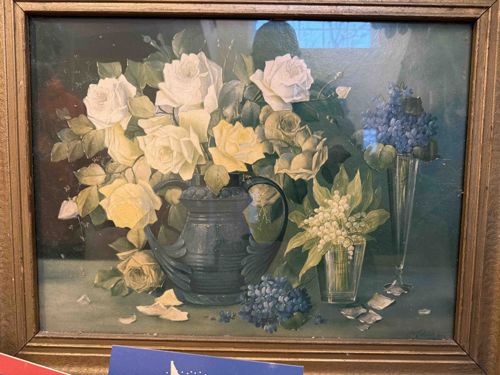
Vintage Still Life Print of Roses, Lilacs, and Lily of the Valley in a Silver-Plated Jug

Fine Art - Prints & Lithographs

AI Estimated Value

·Not an official valuation·Verify before acting

$40-$75

As of June 4, 2026

AI Item Analysis

·AI can make mistakes·Verify before acting
This is a mid-20th-century framed still life print depicting a lush floral arrangement. The central focus is a large bouquet of cream and white roses held within a dark, decorative silver-plated or pewter-style handled jug featuring shell-like motif handles. Accompanying the roses are sprigs of blue lilacs in a slender glass flute and a small cluster of lily of the valley in a simple faceted glass. The color palette is dominated by muted greens, soft creams, and deep blues against a atmospheric, dark teal background. The piece is housed in a simple, beveled rectangular wooden frame with a metallic gold or bronze finish. The artwork exhibits characteristics of mid-century commercial interior art, likely dating from the 1940s to 1960s. Regarding condition, there is visible surface wear to the frame, including scuffs and potential loss of finish at the corners. The image itself shows some possible signs of environmental aging or slight foxing, although reflections on the glass make a definitive assessment of the paper's surface difficult. The printing quality shows a soft, painterly quality common in lithographic reproductions of the era. No signature is overtly visible in this view, suggesting it may be a mass-produced decorative print styled after classical 19th-century floral still life paintings.
AI Appraisal Report

·AI can make mistakes·Verify before acting
Based on my visual examination of this mid-20th-century floral still life, I have identified it as a mass-produced offset lithographic print rather than an original painting or limited edition hand-pulled lithograph. The composition, featuring roses and lilacs in a silver-plated jug, is emblematic of decorative 'sofa art' popular in the 1950s and 60s. The frame exhibits a beveled profile with a metallic bronze finish characteristic of the period, though it shows notable wear, including surface scuffs and loss of finish at the corners. The print itself appears darkened, possibly due to acidic matting or light exposure, though the glass reflections hinder a conclusive assessment of the paper's integrity. Market demand for these unsigned, commercial reproductions remains modest, driven primarily by vintage decor enthusiasts rather than fine art collectors. Comparables on the secondary market frequently sell in the sub-$100 range at estate sales and antique malls. The value is primarily held in the 'shabby chic' aesthetic appeal rather than rarity or artistic provenance. Final authentication is limited by digital image resolution; an in-person inspection would be required to examine the paper grain for a halftone dot pattern, which would confirm its reproduction status. To increase valuation, provenance documenting a specific known illustrator or proof of an earlier 19th-century origin would be necessary, though unlikely given the frame construction and printing style observed. Scientific testing of the pigments and paper acidity would further clarify the age and conservation needs.

Get your items appraised

Instant estimates of your treasures with AI-powered appraisals

Browse More Appraisals