AI estimate as of June 20, 2025 · verify with a professional before acting
AI-Generated · Verify before acting
Everything on this page is generated by AI for informational purposes only. AI can make mistakes — the AI may misidentify items or misattribute them (artist, maker, brand, designer, origin, era). This is not an official valuation and should not be used for insurance, sale, tax, estate, legal, or lending purposes — or any decision requiring a certified appraisal. It is not an authoritative claim about any person, brand, or rights holder — do not share or rely on it as a factual statement about a third party. Always consult qualified professionals before making financial decisions.
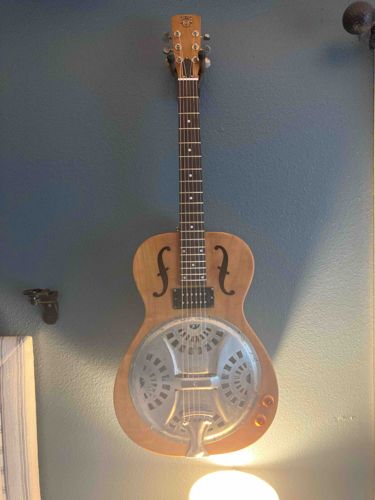
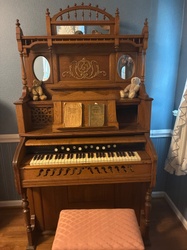
The item is a resonator guitar, characterized by its natural wood finish, likely spruce or mahogany, giving it a warm, earthy tone. Its body features f-holes on either side of the neck, typical of jazz or archtop guitars, which suggests a modern design influence. The most prominent feature is the large, circular metal resonator cone, intricately perforated with a decorative pattern, which serves to amplify the sound "" creating a distinctive, metallic, and often loud sound. The guitar is equipped with an electronic pickup located at the neck position, indicating it's an acoustic-electric model designed for amplification through an external sound system. It has a standard six-string configuration with a dark fretboard, possibly rosewood or ebony, adorned with white dot inlays that serve as fret markers. The headstock is traditional, fitted with six individual tuning pegs. The instrument appears to be in good condition with no apparent major damage or significant wear, maintaining its original luster. Its construction integrates elements of both acoustic and electric guitars, making it versatile for various musical genres, particularly blues, bluegrass, and folk. The craftsmanship appears solid, with clean lines and a well-maintained appearance. The absence of a visible brand name or model number makes specific manufacturing details difficult to ascertain from the image alone, however, the overall aesthetic suggests a contemporary production. The style blends classic parlor guitar aesthetics with the unique amplification mechanism of a resonator.
AI Appraisal Report
I have examined the provided image of this resonator guitar. Based on its appearance, it presents in good condition with no visible major damage or significant wear, which suggests it has been well-maintained. The natural wood finish, f-holes, and prominently featured metal resonator cone are characteristic features of such instruments. The inclusion of an electronic pickup at the neck position indicates it's an acoustic-electric model, enhancing its versatility and appeal for amplified performances. The craftsmanship appears solid and contemporary.However, I must note the inherent limitations of appraising an instrument solely from an image. Authenticity, specific wood types (e.g., spruce vs. mahogany for the body, rosewood vs. ebony for the fretboard), and internal structural integrity cannot be definitively determined without a physical inspection. The absence of a visible brand name or model number makes assessing specific manufacturing details and, by extension, precise market comparables, challenging.Without physical inspection, I cannot verify the authenticity of components, the quality of internal bracing, or the exact materials used, which all significantly impact value. For full authentication, I would require an in-person examination to assess playability, sound quality, structural soundness, and hardware integrity. Provenance documentation, such as original sales receipts or manufacturer's certificates, would also be crucial for confirming its origin and make.Despite these limitations, the overall aesthetic suggests a contemporary production. Resonator guitars, particularly acoustic-electric models, generally have a steady demand within niche markets like blues, bluegrass, and folk music. While not exceedingly rare, a well-maintained example with an electronic pickup is more desirable.The market for modern, unbranded resonator guitars in good condition typically ranges from entry-level to mid-range pricing. Without brand authentication, it's challenging to confidently place it within higher-tier valuations. Market comparables for similar unbranded or lesser-known brand acoustic-electric resonator guitars in good condition currently range. Due to the lack of identifying marks and the inability to conduct a physical inspection, which would reveal much about the instrument's quality and origins, I am providing a conservative valuation.Factors impacting value include its good condition, the acoustic-electric functionality, and the general demand for resonator guitars. Conversely, the lack of branding and the inability to physically inspect it are significant limiting factors.