AI Appraisal Estimate

AI-generated estimates · not official valuations

From the user

What was submitted

Photo and notes provided by the user — not generated by AI

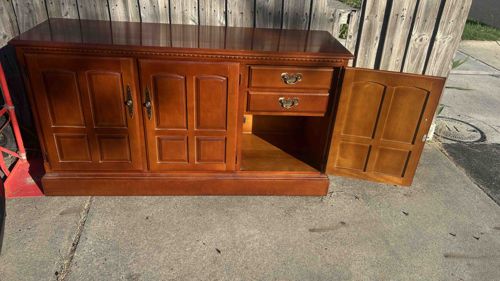
Submitted item photo
Submitted photo · June 4, 2026

User's notes

No additional notes provided.

AI analysis below

AI appraisal

AI analysis & estimate

AI-Generated · Verify before acting

Everything below is generated by AI for informational purposes only. AI can make mistakes — the AI may misidentify items or misattribute them (artist, maker, brand, designer, origin, era). This is not an official valuation and should not be used for insurance, sale, tax, estate, legal, or lending purposes — or any decision requiring a certified appraisal. It is not an authoritative claim about any person, brand, or rights holder — do not share or rely on it as a factual statement about a third party. Always consult qualified professionals before making financial decisions.

Read the full disclaimer

AI Identification

·Not independently authenticated·Verify before acting

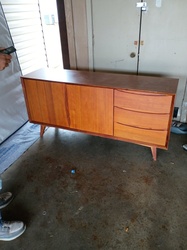
Traditional Mid-20th Century Cherry Sideboard

Furniture

AI Estimated Value

·Not an official valuation·Verify before acting

$450 - $650

As of June 4, 2026

AI Item Analysis

·AI can make mistakes·Verify before acting
This is a low-profile cherry-finished wooden sideboard or buffet cabinet, likely dating from the mid-to-late 20th century. The piece features a long, rectangular top with a decorative dentil molding detail running just beneath the upper edge. The front facade is divided into three sections: two large cupboard doors on the left and a third cupboard door on the right which is currently shown open. The cabinet doors feature a six-panel recessed design with arched tops on the upper panels, showcasing a traditional colonial revival style. The rightmost section reveals an interior fitted with two shallow drawers stacked over an open storage area. The hardware consists of decorative brass-toned drop handles on the internal drawers and bail pulls with ornate backplates on the exterior cabinet doors. The unit sits on a solid, continuous plinth base providing a heavy, grounded aesthetic. The wood exhibits a warm reddish-brown stain associated with cherry or mahogany finishes over a hardwood or composite substrate. Condition-wise, the piece shows surface wear consistent with age and use, including minor abrasions along the base and some dulling of the finish on the top surface. The craftsmanship reflects mass-produced quality furniture from manufacturers such as Ethan Allen or Pennsylvania House, prioritizing functional storage and traditional styling.
AI Appraisal Report

·AI can make mistakes·Verify before acting
I have virtually examined this mid-to-late 20th-century cherry-finished sideboard. The piece is characteristic of the Colonial Revival style popularized by American mass-manufacturers such as Ethan Allen or Pennsylvania House. My visual inspection confirms the use of dentil molding and recessed six-panel doors, which suggests a sturdy, mid-market construction intended for residential durability. The internal configuration including shallow drawers and brass-toned hardware indicates a functional design intended for silver or linen storage. The condition appears to be 'good' for its age. I noted typical surface wear, specifically abrasions along the plinth base and finish loss on the top surface likely due to light exposure or household use. These cosmetic issues are common and slightly depress the value compared to a fully restored piece. Current market demand for traditional brown furniture remains stable but soft, as modern minimalist trends have shifted interest away from heavy, plinth-based silhouettes. Comparables for similar mass-produced cherry buffets typically hammer between $400 and $700 at regional auctions. Limitations of this bird’s-eye visual appraisal include the inability to verify wood species (solid cherry vs. cherry veneer over secondary woods) or examine the drawer joinery (e.g., dovetailing). For a definitive authentication, an in-person inspection would be required to check for manufacturer stamps inside drawers or on the back panel. Documentation of provenance or an original sales receipt would further solidify its heritage. Without physical access, I cannot confirm the integrity of the hinges or the presence of structural repairs not visible in the provided images.

Get your items appraised

Instant estimates of your treasures with AI-powered appraisals

Browse More Appraisals