AI Appraisal Estimate

AI-generated estimates · not official valuations

From the user

What was submitted

Photo and notes provided by the user — not generated by AI

Submitted item photo
Submitted photo · May 18, 2026

User's notes

No additional notes provided.

AI analysis below

AI appraisal

AI analysis & estimate

AI-Generated · Verify before acting

Everything below is generated by AI for informational purposes only. AI can make mistakes — the AI may misidentify items or misattribute them (artist, maker, brand, designer, origin, era). This is not an official valuation and should not be used for insurance, sale, tax, estate, legal, or lending purposes — or any decision requiring a certified appraisal. It is not an authoritative claim about any person, brand, or rights holder — do not share or rely on it as a factual statement about a third party. Always consult qualified professionals before making financial decisions.

Read the full disclaimer

AI Identification

·Not independently authenticated·Verify before acting

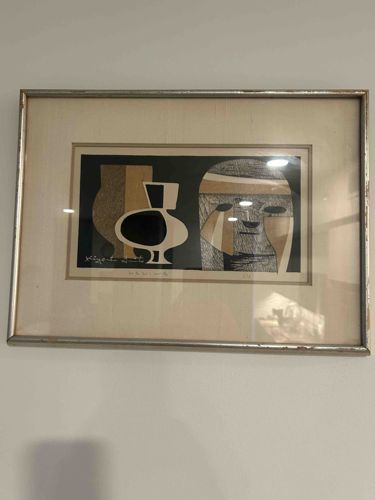
Kiyoshi Saito Woodblock Print 'Two Vases and a Face' (Maiko)

Fine Art - Japanese Woodblock Prints (Sōsaku-hanga)

AI Estimated Value

·Not an official valuation·Verify before acting

$2,500 - $3,500

As of May 18, 2026

AI Item Analysis

·AI can make mistakes·Verify before acting
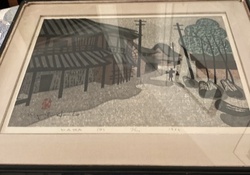
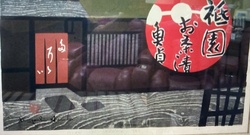
This is a mid-century modern woodblock print by the renowned Japanese artist Kiyoshi Saito (1907-1997). The artwork features a horizontal composition on a black ground, depicting two stylized ceramic vessels to the left and a haniwa-style or Maiko head on the right. The color palette is characteristic of Saito's Sōsaku-hanga style, utilizing earthy ochre, warm browns, cream, and deep black. The print exhibits intricate wood grain textures, particularly visible in the large vase and the striped facial details, which were achieved through the artist's masterful use of the wood block's natural surface. This piece is signed 'Kiyoshi Saito' in white ink on the lower left of the print surface, with additional pencil notations for the title and edition number (appearing to be 5/50) in the lower margin. The print is housed in a contemporary silver-toned metal frame with a wide, off-white fabric-textured mat. Condition-wise, the frame shows some visible surface scuffing and minor oxidation. The matting appears original but exhibits some light vertical toning consistent with age. The print itself appears to be in good stable condition with vibrant ink saturation, though it has not been examined out of the frame for potential foxing or adhesive residue on the reverse. This work likely dates from the 1950s or 1960s, reflecting the post-war Japanese print movement's blend of traditional techniques and modern abstraction.
AI Appraisal Report

·AI can make mistakes·Verify before acting
Based on my visual examination of the digital images provided, I conclude that this work is a characteristic mid-century Sōsaku-hanga woodblock print by Kiyoshi Saito. The piece exhibits the hallmark techniques of the artist: the masterful integration of natural wood grain into the composition and a sophisticated use of a muted, earthy color palette. The signature appears consistent with Saito’s established hand for the period. The low edition number (5/50) significantly enhances its marketability, as smaller runs from the 1950s and 60s are highly sought after by collectors of Japanese modernism. The Sōsaku-hanga market remains robust, with Saito considered its most commercially successful figure. Similar compositions featuring ceramics and haniwa figures have recently achieved strong results at auction. However, the current valuation reflects the visible condition issues: the matting shows vertical toning (acid transfer), and the frame is scuffed. While the print's ink saturation remains excellent, the presence of mat burn suggests the print may have been exposed to acidic materials for decades. Important Note on Authenticity: This appraisal is based solely on visual analysis of images. A full authentication requires an out-of-frame inspection to verify the paper type (typically kōzo), check for watermarks, and inspect the verso for foxing, adhesive residue, or thinning (skinning). Scientific testing of pigments or paper fibers is rarely necessary for Saito, but provenance documentation from a reputable gallery would be required to reach a definitive 'Fair Market Value' for insurance or tax purposes. Without a physical inspection to check for edge-trimming or light-fading, this valuation represents a professional estimate of the current retail range.

Get your items appraised

Instant estimates of your treasures with AI-powered appraisals

Browse More Appraisals