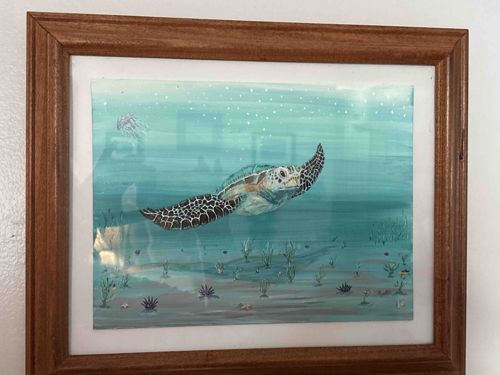
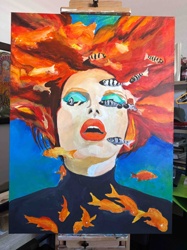
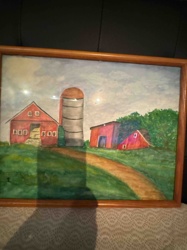
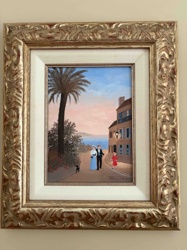
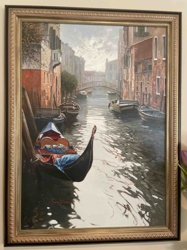
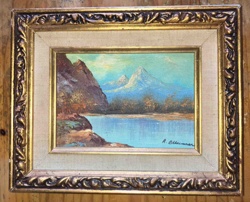
Approximately 12” x 9” Original Acrylic on canvas by Mary Chesney
These notes were written by the person who submitted this item. Appraiser.AI has not verified them, and the AI's identification and estimate may rely on them.
AI Estimated Value
Not an official valuation
$400-600
AI estimate as of August 28, 2025 · verify with a professional before acting
AI-Generated · Verify before acting
Everything on this page is generated by AI for informational purposes only. AI can make mistakes — the AI may misidentify items or misattribute them (artist, maker, brand, designer, origin, era). This is not an official valuation and should not be used for insurance, sale, tax, estate, legal, or lending purposes — or any decision requiring a certified appraisal. It is not an authoritative claim about any person, brand, or rights holder — do not share or rely on it as a factual statement about a third party. Always consult qualified professionals before making financial decisions.
This analysis also relies on unverified notes provided by the user, which may be incomplete or inaccurate and could affect the result.
This item is an original acrylic on canvas painting by Mary Chesney, depicting a sea turtle swimming underwater. The painting measures approximately 12 inches by 9 inches. The artwork features a realistic portrayal of a sea turtle with detailed markings on its shell and flippers, and a visible eye, suggesting a frontal perspective as it glides through the water. The color palette primarily consists of various shades of blue and green for the water, transitioning from lighter, brighter tones at the surface with small white dots indicating light refraction or bubbles, to darker, murkier tones toward the ocean floor. The seabed is rendered in muted grays and browns, populated with various types of aquatic plants and coral formations in greens, purples, and browns, adding depth and detail to the environment. A faint, ethereal jellyfish is visible in the upper left quadrant. The brushwork appears deliberate, showcasing the artist's ability to create texture and depth, particularly on the turtle's shell and the subtle variations in water color. The painting is housed within a sturdy wooden frame with a warm, reddish-brown stain and a simple stepped profile, providing a classic and clean presentation. There are no readily apparent condition issues on the painting itself, such as cracks, fading, or damage, though surface reflections from the protective glazing are visible in the image, obscuring some details. The frame appears to be in good condition with no significant chips or scratches visible. The craftsmanship of both the painting and framing appears to be of good quality, suggesting a professionally executed piece. Based on the contemporary medium (acrylic) and style, the estimated age is likely modern, possibly late 20th to early 21st century.
AI Appraisal Report
Upon examining the provided image of Mary Chesney's original acrylic on canvas painting, 'Sea Turtle,' I find the artwork to be in excellent condition. The colors are vibrant, and there are no visible signs of fading, cracking, or damage to the paint surface. The canvas appears taut, and the brushwork, which adeptly captures the texture of the turtle's shell and the nuanced blues and greens of the water, is consistent with professional execution. The wooden frame, with its warm reddish-brown stain, complements the artwork well and also appears to be in very good condition with no significant chips or scratches. The presence of surface reflections suggests protective glazing, which further contributes to its preservation.
From a market perspective, marine life art, particularly realistic depictions of sea turtles, consistently finds an appreciative audience. Mary Chesney, while not a widely recognized master, appears to be an accomplished artist based on the quality of this piece. Comparables for original acrylic paintings of this size (12" x 9") by contemporary artists with similar skill levels often retail in the range of $300-$600. The detailed execution and appealing subject matter enhance its demand. Rarity is difficult to assess without knowledge of the artist's full oeuvre, but as an original, it inherently possesses uniqueness.
Authenticity verification from images alone presents inherent limitations. While the style and quality are consistent with an original work, positive authentication would require in-person examination to verify signatures, brushwork nuances not fully discernible through a photograph, and to rule out print reproductions. Provenance documentation, such as a certificate of authenticity or purchase receipts, would significantly bolster its value by establishing a clear chain of ownership. Scientific testing, such as pigment analysis, is generally not warranted for contemporary acrylics of this value range but could confirm materials if needed. Based on my visual inspection, I confidently assess this as a genuine work by Mary Chesney in excellent condition.