AI Appraisal Estimate

AI-generated estimates · not official valuations

From the user

What was submitted

Photo and notes provided by the user — not generated by AI

Submitted item photo
Submitted photo · June 6, 2026

User's notes

No additional notes provided.

AI analysis below

AI appraisal

AI analysis & estimate

AI-Generated · Verify before acting

Everything below is generated by AI for informational purposes only. AI can make mistakes — the AI may misidentify items or misattribute them (artist, maker, brand, designer, origin, era). This is not an official valuation and should not be used for insurance, sale, tax, estate, legal, or lending purposes — or any decision requiring a certified appraisal. It is not an authoritative claim about any person, brand, or rights holder — do not share or rely on it as a factual statement about a third party. Always consult qualified professionals before making financial decisions.

Read the full disclaimer

AI Identification

·Not independently authenticated·Verify before acting

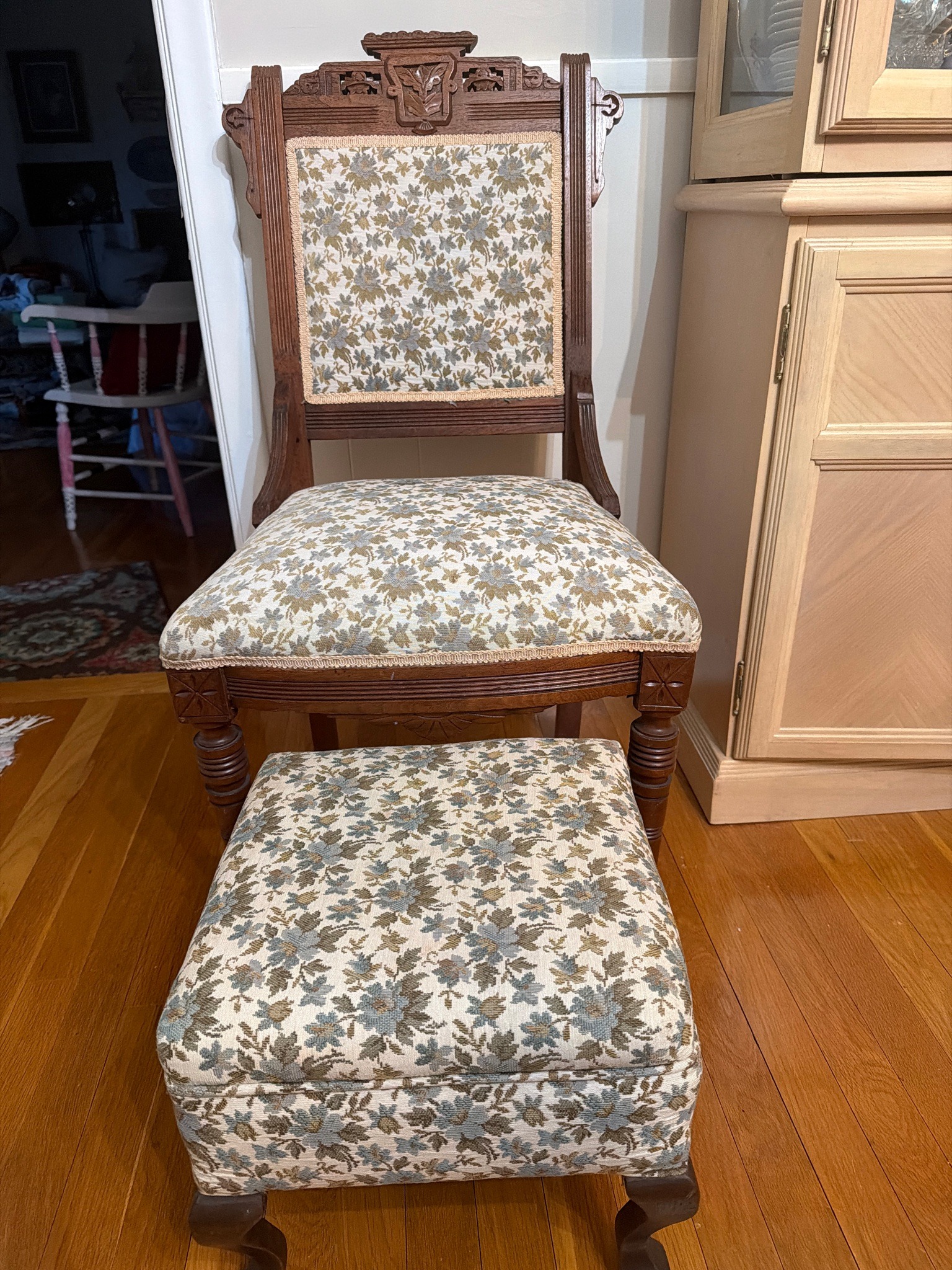
Victorian Eastlake Style Prie-Dieu (Prayer Chair) with Matching Footstool

Antique Furniture

AI Estimated Value

·Not an official valuation·Verify before acting

$450 - $650

As of June 6, 2026

AI Item Analysis

·AI can make mistakes·Verify before acting
This is a fine example of a late 19th-century Victorian Prie-Dieu, a type of chair specifically designed for prayer, characterized by its low seat and tall, upright back used for kneeling. The piece is crafted from solid wood, appearing to be oak or walnut, featuring the distinct geometric and incised carving associated with the its Eastlake (Aesthetic Movement) style. The crest rail is heavily architectural with a central floral medallion and fretwork. The back and seat are upholstered in a matching floral tapestry fabric featuring muted shades of sage green, dusty blue, and tan on a cream ground, finished with a traditional decorative gimp trim. The chair rests on turned front legs with incised rings and block joinery featuring carved floral motifs. It is accompanied by a matching upholstered footstool or kneeler which sits on cabriole-style feet. Though the upholstery is likely a later addition, the solid construction and intricate woodwork suggest a fabrication date circa 1880-1890. The wood shows a rich, dark patina typical of the period, with minor surface scuffing and edge wear consistent with its age. There are no readily visible maker's marks, which is common for furniture of this era produced by high-quality regional craftsmen.
AI Appraisal Report

·AI can make mistakes·Verify before acting
Upon visual examination of this Victorian Eastlake Prie-Dieu and matching footstool, I find it to be an authentic example of late 19th-century liturgical-style domestic furniture, circa 1880. The geometric incised carvings and architectural crest rail are hallmarks of the Eastlake movement's rejection of over-ornate Rococo curves. The walnut wood displays a desirable aged patina. The upholstery, while sympathetic in design, is a 20th-century replacement; however, the presence of the matching footstool significantly bolsters the set's decorative appeal, as these pieces are frequently separated over time. The current market for Victorian furniture remains soft compared to mid-century modern trends, yet Eastlake pieces maintain a steady niche due to their 'modern' rectilinear lines. Comparables for standalone prayer chairs range from $200 to $400, but the inclusion of the coordinated footstool and the excellent condition of the joinery justify a premium. The lack of a maker’s mark is expected for this era and does not diminish value, as the quality of the fretwork indicates a skilled regional workshop. Significantly, the value is limited by the non-original upholstery and minor surface scuffing. My assessment is based solely on high-resolution imagery. For full authentication, an in-person inspection is required to examine the underside for original horsehair stuffing or secondary woods, which would confirm geographic origin. A UV light test of the finish would also determine if the patina is original or a later restoration. Documentation such as a bill of sale or family provenance would further solidify its historical standing.

Get your items appraised

Instant estimates of your treasures with AI-powered appraisals

Browse More Appraisals