AI estimate as of August 20, 2025 · verify with a professional before acting
AI-Generated · Verify before acting
Everything on this page is generated by AI for informational purposes only. AI can make mistakes — the AI may misidentify items or misattribute them (artist, maker, brand, designer, origin, era). This is not an official valuation and should not be used for insurance, sale, tax, estate, legal, or lending purposes — or any decision requiring a certified appraisal. It is not an authoritative claim about any person, brand, or rights holder — do not share or rely on it as a factual statement about a third party. Always consult qualified professionals before making financial decisions.
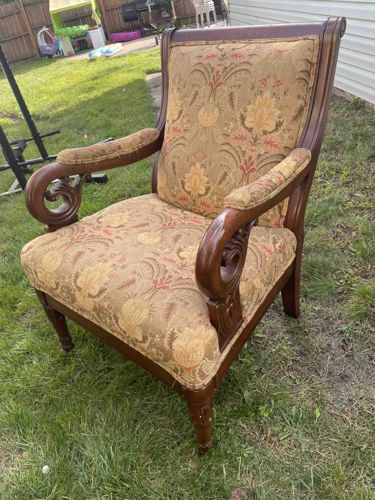
This is an antique or vintage armchair, likely a parlor or library chair, characterized by its sturdy dark-stained wooden frame and elaborate upholstery. The wood appears to be a rich mahogany or similar hardwood, exhibiting a deep reddish-brown hue and a noticeable sheen, suggesting a polished finish. The frame features intricate carvings, particularly visible on the arms which curve outwards and terminate in volute or scroll motifs, and also subtly on the legs. The back of the chair is integrated into the frame, with a visible wooden border surrounding the upholstered panel. The upholstery features a brocade or damask pattern with a predominant olive-gold or sage-green background adorned with large, stylized floral and leafy motifs in shades of muted gold, crimson, and green. The pattern suggests an opulent, traditional design. The seat cushion and backrest are well-padded, indicating comfort. The armrests also have padded sections for comfort, matching the main upholstery fabric. The overall condition appears fair to good for its age; there is some visible wear on the wooden armrests, suggesting use over time, and possibly some fading or light staining on the fabric, consistent with typical antique furniture. No obvious tears or significant damage are visible, though a more detailed inspection would be needed. The craftsmanship indicates a piece made with attention to detail and traditional construction methods, likely solid wood joinery. Given the style, particularly the scrolled arms and carved details, it could date from the late 19th to early 20th century, possibly adhering to Victorian, Edwardian, or early Colonial Revival aesthetics. Its design suggests it was intended as a statement piece in a formal setting.
AI Appraisal Report
I have carefully examined the provided image of this Antique/Vintage Upholstered Armchair. My assessment indicates a piece of likely late 19th to early 20th-century origin, consistent with Victorian, Edwardian, or Colonial Revival styles, given its ornate carved dark-stained wooden frame, possibly mahogany, and elaborate brocade-like upholstery. The carving on the arms and subtle detailing on the legs, along with the integrated wooden back border, speaks to traditional craftsmanship.
From the visual evidence, the chair appears to be in fair to good condition for its age. I note visible wear on the wooden armrests, which is typical of use over decades, and potential minor fading or staining on the fabric, though no overt tears or significant structural damage are apparent. The well-padded nature of the seat, backrest, and arm sections suggests it was a comfortable and substantial piece.
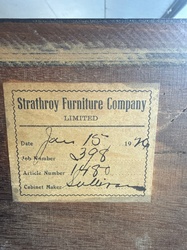
Regarding authenticity, based solely on the image, the style, construction details, and apparent age align with the period. However, without a physical examination, I cannot definitively confirm the wood species, methods of joinery, or the exact age of the fabric beyond its aesthetic compatibility. In-person inspection would allow me to check for specific maker's marks, assess the integrity of the frame, examine the upholstery for original condition versus later reupholstery, and identify any repairs or restorations. Provenance documentation, if available, would significantly aid in verifying its history and origin.
Market conditions for such pieces are generally stable, with demand for well-preserved, aesthetically pleasing antique furniture. Comparables would include similar period armchairs from reputable antique dealers or auction houses. Factors impacting value include the quality and originality of the upholstery, the specific wood type, the intricacy and condition of the carvings, and the overall structural integrity. Rarer, more unique designs or documented provenance fetch higher prices. This piece, while attractive, appears to be a good example of its type rather than exceedingly rare.
Limitations on authenticity verification are significant without physical inspection. I cannot confirm the wood's authenticity (species, age, lack of modern veneer), the originality of the upholstery, or the presence of any hidden repairs or restorations. A hands-on examination, UV light textile analysis, and potentially wood dating would be crucial for full authentication and a more precise value.
Considering these factors, I provide the following appraisal value.