AI estimate as of October 4, 2025 · verify with a professional before acting
AI-Generated · Verify before acting
Everything on this page is generated by AI for informational purposes only. AI can make mistakes — the AI may misidentify items or misattribute them (artist, maker, brand, designer, origin, era). This is not an official valuation and should not be used for insurance, sale, tax, estate, legal, or lending purposes — or any decision requiring a certified appraisal. It is not an authoritative claim about any person, brand, or rights holder — do not share or rely on it as a factual statement about a third party. Always consult qualified professionals before making financial decisions.
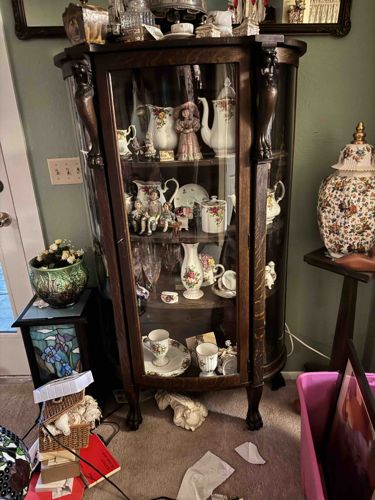
This appears to be an antique bow-front curio cabinet, likely constructed from stained oak or a similar hardwood, exhibiting a rich, dark brown finish. The cabinet features a distinctive curved or 'bow' front, which is a common design element from the late 19th to early 20th centuries, often associated with the Victorian or Edwardian eras. The front door is fully glazed, allowing for the display of items within, and appears to be framed by narrow wooden stiles. The side panels also appear to be glazed, contributing to a comprehensive view of the contents.
Notable decorative features include heavily carved columns or pilasters on either side of the front door, terminating in claw feet at the base. These carvings add a significant element of embellishment and suggest quality craftsmanship. The top of the cabinet also shows some decorative molding or carving, though it is partially obscured by items placed on it.
Inside, there are multiple glass shelves, designed for displaying collectibles such as the porcelain pitchers, cups, and figurines currently housed within. The construction suggests dovetail or mortise and tenon joinery, typical for cabinets of this period, though these details are not explicitly visible.
The overall condition appears to be good for its age, though minor surface wear, scratches, or nicks to the wood finish would be expected. There are no immediately obvious signs of major structural damage, cracks in the glass, or significant repairs, though a detailed inspection would be required to confirm. The patina on the wood suggests age and regular use. The design indicates a piece meant for domestic display, emphasizing aesthetic appeal over purely utilitarian function. The style period would likely be late 19th or early 20th Century, possibly Art Nouveau or Arts and Crafts influenced, given the ornate carvings and general form.
AI Appraisal Report
Based on my visual examination of the provided image, this antique bow-front curio cabinet appears to be a well-preserved piece, likely dating from the late 19th to early 20th century. The dark-stained hardwood, possibly oak, and the distinctive bowed front are consistent with Victorian or Edwardian design, potentially showing influences of Art Nouveau or Arts and Crafts movements due to the ornate carvings. The fully glazed front and sides, along with interior glass shelves, confirm its function as a display cabinet.
The condition appears to be good for its age. I observe no overt signs of major structural damage, cracked glass, or significant, poorly executed repairs. The wood exhibits a desirable patina, suggesting age and regular use. The heavily carved columns/pilasters and claw feet are significant decorative elements that enhance its aesthetic appeal and value, indicating quality craftsmanship typical of the period.
Market demand for antique display cabinets remains steady, particularly for pieces with unique design elements like a bow front and intricate carvings. While not exceptionally rare, good quality, well-preserved examples are always sought after. The presence of glass shelves for display is a practical feature that adds to its desirability.
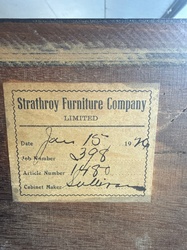
Factors impacting value positively include its apparent good condition, attractive design, and functional display capabilities. Without a physical inspection, however, I cannot definitively assess the internal joinery (e.g., dovetail, mortise and tenon), the extent of minor surface wear, scratches, or nicks, or verify if any components are later replacements. A hands-on examination would also be needed to confirm wood species, check for structural integrity beyond surface appearance, and identify any hidden repairs or restorations. True authentication of the period and origin would ideally involve provenance documentation or a detailed in-person inspection of construction techniques.