AI Appraisal Estimate

AI-generated estimates · not official valuations

From the user

What was submitted

Photo and notes provided by the user — not generated by AI

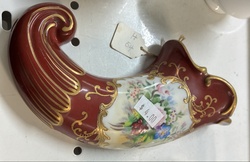
Submitted item photo
Submitted photo · May 26, 2026

User's notes

No additional notes provided.

AI analysis below

AI appraisal

AI analysis & estimate

AI-Generated · Verify before acting

Everything below is generated by AI for informational purposes only. AI can make mistakes — the AI may misidentify items or misattribute them (artist, maker, brand, designer, origin, era). This is not an official valuation and should not be used for insurance, sale, tax, estate, legal, or lending purposes — or any decision requiring a certified appraisal. It is not an authoritative claim about any person, brand, or rights holder — do not share or rely on it as a factual statement about a third party. Always consult qualified professionals before making financial decisions.

Read the full disclaimer

AI Identification

·Not independently authenticated·Verify before acting

Japanese 'Tomei Bijutsu' Ceramic Vessel Base

Ceramics

AI Estimated Value

·Not an official valuation·Verify before acting

$30 - $70

As of May 26, 2026

AI Item Analysis

·AI can make mistakes·Verify before acting
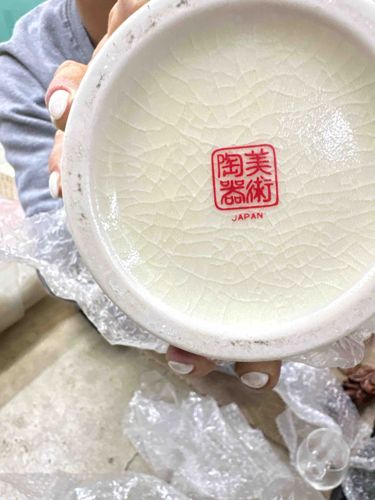
The item is the base of a ceramic vessel, likely a vase, pot, or similar decorative container, characterized by its off-white, crackled glaze. The base itself is circular and appears to be made of sturdy porcelain or stoneware. The most prominent feature is a red, rectangular manufacturer's mark stamped centrally on the unglazed footring. This mark contains Japanese characters, which translate to 'Tomei Bijutsu' (陶美美術), indicating 'Tomei Art Pottery' or similar, with the word 'JAPAN' printed in English below the Japanese characters. The crackle glaze, sometimes referred to as 'ice crackle' or 'crackleware,' is intentionally created during the firing process to achieve an antique or rustic aesthetic. The surface shows a network of fine fissures across the entire visible area of the base. The outer edge of the footring, which would rest on a surface, exhibits some minor dark scuffing and discoloration, consistent with normal wear and tear from use or handling over time. The craftsmanship suggests a commercially produced item, likely from the mid-20th century, given the dual language mark (Japanese characters and English 'JAPAN' often seen on export goods from that period). The unglazed footring indicates it was likely fired resting on its base. There are no visible chips, cracks (beyond the intentional crackle), or significant repairs, though only the base is shown. The overall condition of the visible surface area of the base, excluding the footring wear, appears good.
AI Appraisal Report

·AI can make mistakes·Verify before acting
I have examined the image provided for this Japanese 'Tomei Bijutsu' Ceramic Vessel Base. The condition of the visible ceramic surface, apart from the footring, appears good, showing no chips or significant damage beyond the intentional crackle glaze. The crackle, a decorative feature known as 'ice crackle,' is evenly distributed. The unglazed footring shows minor scuffing and discoloration, consistent with typical wear. The authenticity of the 'Tomei Bijutsu' (陶美美術) mark with 'JAPAN' beneath strongly suggests a commercially produced item from the mid-20th century, likely intended for export. This dual-language marking was common during the post-WWII era for Japanese ceramics. Given that this is only the base of a vessel, its value as a standalone piece is significantly diminished. If it were part of a complete, attractive vessel, the value would be higher. Comparables for similar mid-century Japanese export ceramics with manufacturer's marks, even complete vessels, generally fall into the modest range unless they possess exceptional design, artistic merit, or historical significance which is not evident here. Demand for a base alone is minimal, and rarity is not a factor for what appears to be a mass-produced item. The primary factor influencing value here is its incompleteness. Without a physical inspection, I cannot confirm the exact material composition or precisely date the piece, nor can I rule out any unseen damage on the rest of the vessel which is not pictured. Provenance documentation could provide a more precise history, but for this type of item, it's rarely available or impactful on value.

Get your items appraised

Instant estimates of your treasures with AI-powered appraisals

Browse More Appraisals