AI Appraisal Estimate

AI-generated estimates · not official valuations

From the user

What was submitted

Photo and notes provided by the user — not generated by AI

Submitted item photo
Submitted photo · June 8, 2026

User's notes

Japan

AI analysis below

AI appraisal

AI analysis & estimate

AI-Generated · Verify before acting

Everything below is generated by AI for informational purposes only. AI can make mistakes — the AI may misidentify items or misattribute them (artist, maker, brand, designer, origin, era). This is not an official valuation and should not be used for insurance, sale, tax, estate, legal, or lending purposes — or any decision requiring a certified appraisal. It is not an authoritative claim about any person, brand, or rights holder — do not share or rely on it as a factual statement about a third party. Always consult qualified professionals before making financial decisions.

Note

This analysis also relies on unverified notes provided by the user, which may be incomplete or inaccurate and could affect the result.

Read the full disclaimer

AI Identification

·Not independently authenticated·Verify before acting

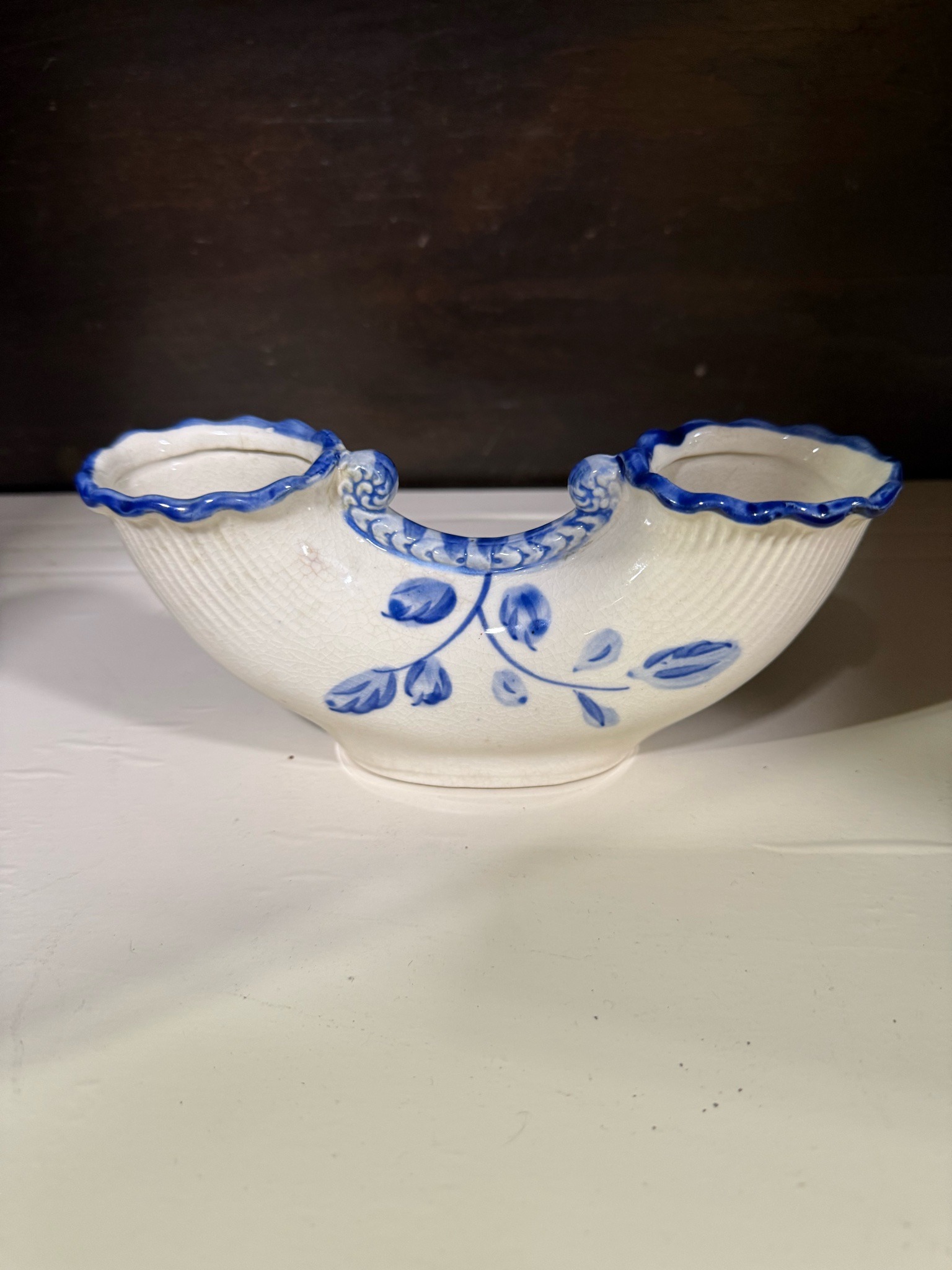
Japanese Blue and White Double-Cornucopia Ceramic Vase

Vintage Japanese Ceramics & Pottery

AI Estimated Value

·Not an official valuation·Verify before acting

$45.00-$65.00

As of June 8, 2026

AI Item Analysis

·AI can make mistakes·Verify before acting
This is a decorative ceramic vessel produced in Japan, featuring a double-well 'double cornucopia' or 'crescent moon' shape. The item is constructed from a creamy, off-white glazed earthenware or ironstone, characterized by a scalloped and fluted texture on the exterior body. The piece features hand-painted cobalt blue underglaze decoration, consisting of a central trailing vine with stylized leaves and ruffled rims highlighted in a darker blue ink. The mid-section connects the two basins with a scrolled, relief-molded bridge accented with circular patterns. Regarding condition, the piece shows significant all-over 'crazing' (fine cracking) in the glaze, which is typical for vintage Japanese pottery of this type and suggests an age from the mid-20th century, likely between 1940 and 1960. There are faint brownish stains or 'foxing' spots visible beneath the glaze near the top-left basin, though no major chips or structural repairs are immediately evident. The craftsmanship is indicative of mass-produced Japanese export-ware from the post-war era, imitating Western Victorian or Rococo-revival styles. It likely bore a 'Made in Japan' or 'Occupied Japan' stamp on the base originally.

AI Appraisal Report

·AI can make mistakes·Verify before acting
I have carefully examined the provided images and descriptions of this Japanese double-cornucopia ceramic vase. The piece exhibits characteristic traits of mid-20th-century Japanese export-ware, specifically mimicking European Rococo-revival styles popular in the 1940s and 1950s. The cobalt blue underglaze application shows typical stenciled and hand-finished qualities of post-war 'Occupied Japan' or 'Made in Japan' era ceramics. My visual assessment confirms extensive crazing across the glaze and visible foxing near the rim, which is expected for earthenware of this vintage but does slightly diminish the value compared to a 'mint' example. The double-basin form is less common than standard bud vases, providing some boost to its decorative appeal. The current market for mid-century Japanese ceramics of this grade is highly saturated. These items were mass-produced for the Western market and are frequently found at estate sales and online vintage marketplaces. Comparables for similar blue-and-white porcelain from this period typically sell in the $30 to $80 range depending on size and specific markings. The lack of visible chips or structural cracks helps maintain the mid-range value. Note: This appraisal is based solely on digital images. A definitive valuation and authentication would require a physical inspection to check for hidden repairs, UV-light testing for restoration, and a verification of the manufacturer's mark on the underside. In-person examination would also confirm if the 'foxing' is superficial or indicative of deeper structural porosity. Professional provenance or original sales documentation would be required to elevate this item beyond decorative status into a collector's category.

Get your items appraised

Instant estimates of your treasures with AI-powered appraisals

Browse More Appraisals