AI Appraisal Estimate

AI-generated estimates · not official valuations

From the user

What was submitted

Photo and notes provided by the user — not generated by AI

Submitted item photo
Submitted photo · May 24, 2026

User's notes

No additional notes provided.

AI analysis below

AI appraisal

AI analysis & estimate

AI-Generated · Verify before acting

Everything below is generated by AI for informational purposes only. AI can make mistakes — the AI may misidentify items or misattribute them (artist, maker, brand, designer, origin, era). This is not an official valuation and should not be used for insurance, sale, tax, estate, legal, or lending purposes — or any decision requiring a certified appraisal. It is not an authoritative claim about any person, brand, or rights holder — do not share or rely on it as a factual statement about a third party. Always consult qualified professionals before making financial decisions.

Read the full disclaimer

AI Identification

·Not independently authenticated·Verify before acting

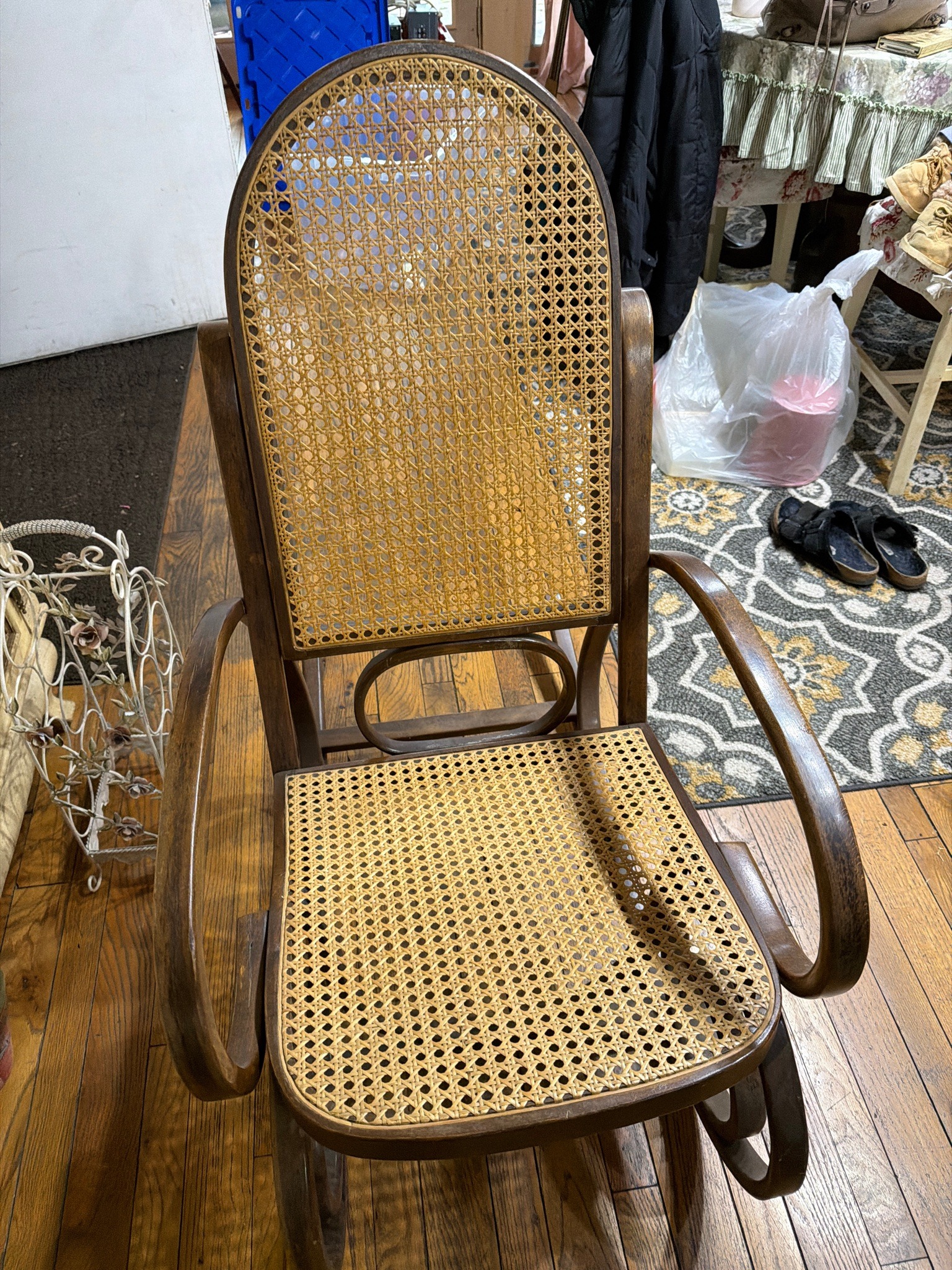
Bentwood Caned Rocking Chair in the Thonet Style

Antique Furniture

AI Estimated Value

·Not an official valuation·Verify before acting

$450 - $650

As of May 24, 2026

AI Item Analysis

·AI can make mistakes·Verify before acting
This is a classic bentwood rocking chair featuring a distinctive high, arched backrest and integral swept arms. The piece is constructed from steam-bent wood, likely beech, finished in a dark walnut or mahogany stain. The backrest and seat are inset with hand-woven natural cane in a traditional octagonal 'six-way' weave pattern. The backrest design includes a rounded top rail and a smaller decorative oval bentwood loop positioned between the seat and the backrest for structural support and aesthetic flair. The curvilinear armrests flow seamlessly from the back posts down to the rockers, exemplifying the Art Nouveau or Secessionist influence common in late 19th to early 20th-century furniture. Physically, the chair shows a well-earned patina with minor abrasions and finish wear along the high-contact areas of the arms and rockers. The caning appears to be in remarkably good condition, tight and without visible breaks, suggesting it may have been professionally replaced or exceptionally well-maintained. The joinery uses exposed screws and wood plugs, consistent with mass-produced but high-quality European furniture from approximately 1890-1920. While no specific maker's mark is visible in the photograph, the silhouette is heavily influenced by the iconic Gebrüder Thonet designs.
AI Appraisal Report

·AI can make mistakes·Verify before acting
I have conducted a visual inspection of this Thonet-style bentwood rocker. The chair exhibits the classic steam-bent beechwood construction and 'six-way' hand-caning characteristic of the late 19th to early 20th-century aesthetic. The condition is commendable; the wood retains a warm patina with authentic finish wear consistent with age, and the caning appears exceptionally taut, suggesting a professional restoration that adds to its functional utility. These chairs were production-line items but of high artisanal quality. The current market for bentwood furniture remains stable, though prices for anonymous (unmarked) pieces are significantly lower than those bearing the original Gebrüder Thonet burnt-in stamps or paper labels. Comparables for similar rockers in high-quality condition typically sell at auction and in antique mall settings within the $400-$700 range. Its value is bolstered by the intact caning, as professional re-caning can often cost $200-$300 alone. Limitations: This appraisal is based on photographic evidence. Without a physical inspection, I cannot verify the presence of a maker’s mark on the underside of the seat rail, which would increase the value by 20-40%. I also cannot confirm the structural integrity of the joinery or if the screws are original periods or modern replacements. To achieve a full, certified authentication, an in-person examination is required to check for microscopic 'fossilization' of the wood grain, examine the underside for obscured labels, and perform a UV-light test on the finish to check for modern synthetic coatings. Provenance, such as a bill of sale or family history, would further solidify its investment-grade status.

Get your items appraised

Instant estimates of your treasures with AI-powered appraisals

Browse More Appraisals