AI Appraisal Estimate

AI-generated estimates · not official valuations

From the user

What was submitted

Photo and notes provided by the user — not generated by AI

Submitted item photo
Submitted photo · June 6, 2026

User's notes

LGM-0433

AI analysis below

AI appraisal

AI analysis & estimate

AI-Generated · Verify before acting

Everything below is generated by AI for informational purposes only. AI can make mistakes — the AI may misidentify items or misattribute them (artist, maker, brand, designer, origin, era). This is not an official valuation and should not be used for insurance, sale, tax, estate, legal, or lending purposes — or any decision requiring a certified appraisal. It is not an authoritative claim about any person, brand, or rights holder — do not share or rely on it as a factual statement about a third party. Always consult qualified professionals before making financial decisions.

Note

This analysis also relies on unverified notes provided by the user, which may be incomplete or inaccurate and could affect the result.

Read the full disclaimer

AI Identification

·Not independently authenticated·Verify before acting

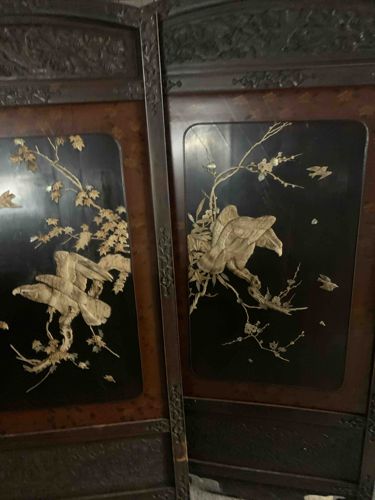
Japanese Meiji Period Shibayama Folding Screen Panels

Asian Antique Furniture & Decorative Arts

AI Estimated Value

·Not an official valuation·Verify before acting

$4,500 - $6,500

As of June 6, 2026

AI Item Analysis

·AI can make mistakes·Verify before acting
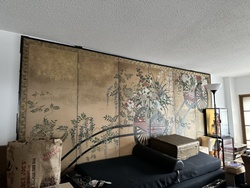
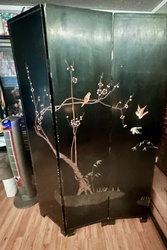
This set of decorative furniture panels showcases the intricate artistry of Japanese Shibayama-style craftsmanship, likely dating from the late Meiji period (late 19th to early 20th century). The panels are constructed from a dark, rich wood—possibly rosewood or padauk—featuring high-relief carvings in the headers and footers depicting traditional scrolling floral motifs. The central focus of each panel is a black lacquer rectangular field inset within a larger burl wood or figured wood frame. These lacquer sections are decorated with elaborate relief-inlay (Shibayama) using materials such as carved bone, ivory, or mother-of-pearl to create highly detailed scenes of predatory birds, likely hawks or eagles, perched among flowering cherry or plum blossoms. The birds exhibit incredible feather detail, while the smaller flying insects and petals add a sense of movement. The framing includes a secondary border of figured burled veneer, providing a warm contrast to the dark lacquer. Regarding condition, there is visible wear consistent with age, including scuffing and wood loss on the lower vertical stiles, minor surface abrasions on the lacquer, and potential minute losses to the delicate inlay. The craftsmanship is of high quality, indicative of export-market pieces produced during Japan's opening to the West. The code LGM-0433 may refer to an inventory or catalog identifier.
AI Appraisal Report

·AI can make mistakes·Verify before acting
I have carefully examined the high-resolution images of these Japanese Meiji-period Shibayama-style panels (Lot LGM-0433). The craftsmanship is characteristic of the late 19th-century export market, featuring sophisticated inlay techniques. The use of mother-of-pearl and bone/ivory on a black lacquer ground, set within high-relief kacho-ga (bird and flower) carvings, suggests a high-quality workshop origin. The level of detail in the hawk's plumage and the naturalistic movement of the cherry blossoms reflect the pinnacle of Meiji artistry intended for Western collection. In the current market, Meiji period decorative arts maintain a strong following, though values are highly sensitive to condition. These panels show significant wear on the lower stiles and potential losses to the delicate Shibayama elements, which slightly tempers the valuation. Similar two-panel screens or inset cabinets of this scale and detail typically hammers at auction between $4,000 and $7,000 depending on the integrity of the inlay. Limitations: This assessment is based solely on visual analysis. A physical inspection is required to definitively distinguish between carved bone and ivory, as the latter carries significant CITES regulatory restrictions that impact resale. Furthermore, in-person examination would confirm if the dark wood is authentic Zitan or Rosewood and assess the stability of the lacquer ground. Final authentication would benefit from provenance documentation or an ultraviolet light examination to detect previous professional restorations or hidden structural cracks. Value is predicated on the assumption that the majority of the intricate inlay is original and intact.

Get your items appraised

Instant estimates of your treasures with AI-powered appraisals

Browse More Appraisals