Vintage Chinese Oxblood Glaze Junware-Style Porcelain Bowl
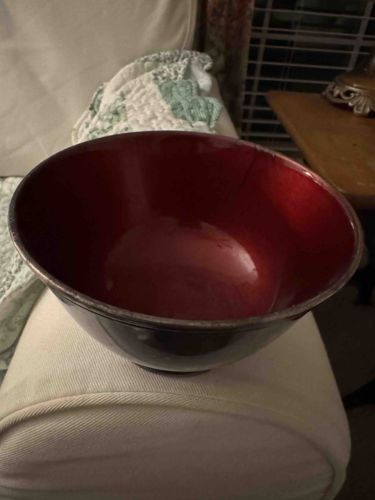
This is a medium-sized circular porcelain bowl featuring a rich, deep red flambe or 'oxblood' (sang de boeuf) glaze on the interior and likely the exterior, though the outer wall appears darker in this lighting. The glaze is characterized by its high-gloss finish and subtle variations in tonal depth, typical of copper-red reduction firing techniques. The bowl has a classic conical or flared shape resting on a small, recessed circular foot rim. Physically, the item shows significant signs of age and use, most notably heavy wear and chipping along the top rim, where the glaze has been lost to reveal the white or grey ceramic 'biscuit' body beneath. There are visible surface scratches and some dulling of the glaze in the interior well, suggesting it may have been functional or handled frequently. While specific maker's marks are not visible from this angle, the style is reminiscent of late Qing Dynasty to early 20th-century Chinese monochrome wares or European Art Pottery interpretations (such as those by Royal Lancastrian or Ruskin) from the early 1900s. The craftsmanship is evident in the even distribution of the difficult-to-achieve red glaze, despite the structural rim damage that impacts its overall condition grade.
AI-Generated Appraisal Disclaimer
Estimated Value
$150 - $250
Basic Information
Category
Antique Ceramics and Pottery
Appraised On
February 27, 2026
Estimated Value
$150 - $250
Item Description
This is a medium-sized circular porcelain bowl featuring a rich, deep red flambe or 'oxblood' (sang de boeuf) glaze on the interior and likely the exterior, though the outer wall appears darker in this lighting. The glaze is characterized by its high-gloss finish and subtle variations in tonal depth, typical of copper-red reduction firing techniques. The bowl has a classic conical or flared shape resting on a small, recessed circular foot rim. Physically, the item shows significant signs of age and use, most notably heavy wear and chipping along the top rim, where the glaze has been lost to reveal the white or grey ceramic 'biscuit' body beneath. There are visible surface scratches and some dulling of the glaze in the interior well, suggesting it may have been functional or handled frequently. While specific maker's marks are not visible from this angle, the style is reminiscent of late Qing Dynasty to early 20th-century Chinese monochrome wares or European Art Pottery interpretations (such as those by Royal Lancastrian or Ruskin) from the early 1900s. The craftsmanship is evident in the even distribution of the difficult-to-achieve red glaze, despite the structural rim damage that impacts its overall condition grade.
Related Tags
Explore similar items and categories:
Get Your Items Appraised
Instant estimates of your treasures with AI-powered instant appraisals