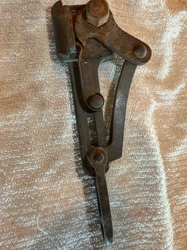
Plumbing Faucet Nut Wrench / Socket Specialty Tool
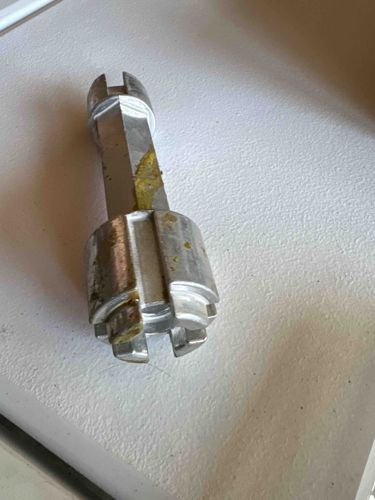
This is a specialized plumbing hand tool, commonly referred to as a basin wrench extension or a faucet nut socket. It is constructed from cast or forged metal, likely aluminum or a zinc alloy, exhibiting a silver-metallic finish. The tool features a dual-ended design: one end has a narrow cylindrical head with two deep notches (slotted), while the other end is a larger, wider octagonal or multi-notched socket head designed to fit over specific mounting nuts under a sink. The central shaft is hexagonal, allowing for the application of leverage via a standard wrench. Physically, the item shows significant signs of industrial use, including substantial deposits of yellow-brown plumbers' putty or adhesive residue along the shaft and within the grooves. There are visible surface abrasions, minor pitting, and dark oxidation spots consistent with exposure to moisture and metallic friction. No manufacturer stamps or model numbers are visible on this side of the tool, though its design suggests a modern mechanical era (late 20th century to present). The craftsmanship is rugged and utilitarian, prioritizing function over aesthetic finish, typical of specialty trade tools used for reaching hardware in confined spaces.
AI-Generated Appraisal Disclaimer
Estimated Value
$5.00 - $12.00
Basic Information
Category
Tools & Industrial Hardware
Appraised On
March 29, 2026
Estimated Value
$5.00 - $12.00
Item Description
This is a specialized plumbing hand tool, commonly referred to as a basin wrench extension or a faucet nut socket. It is constructed from cast or forged metal, likely aluminum or a zinc alloy, exhibiting a silver-metallic finish. The tool features a dual-ended design: one end has a narrow cylindrical head with two deep notches (slotted), while the other end is a larger, wider octagonal or multi-notched socket head designed to fit over specific mounting nuts under a sink. The central shaft is hexagonal, allowing for the application of leverage via a standard wrench. Physically, the item shows significant signs of industrial use, including substantial deposits of yellow-brown plumbers' putty or adhesive residue along the shaft and within the grooves. There are visible surface abrasions, minor pitting, and dark oxidation spots consistent with exposure to moisture and metallic friction. No manufacturer stamps or model numbers are visible on this side of the tool, though its design suggests a modern mechanical era (late 20th century to present). The craftsmanship is rugged and utilitarian, prioritizing function over aesthetic finish, typical of specialty trade tools used for reaching hardware in confined spaces.
Get Your Items Appraised
Instant estimates of your treasures with AI-powered instant appraisals