AI estimate as of October 7, 2025 · verify with a professional before acting
AI-Generated · Verify before acting
Everything on this page is generated by AI for informational purposes only. AI can make mistakes — the AI may misidentify items or misattribute them (artist, maker, brand, designer, origin, era). This is not an official valuation and should not be used for insurance, sale, tax, estate, legal, or lending purposes — or any decision requiring a certified appraisal. It is not an authoritative claim about any person, brand, or rights holder — do not share or rely on it as a factual statement about a third party. Always consult qualified professionals before making financial decisions.
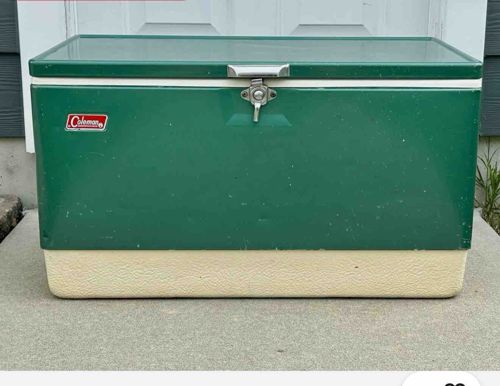
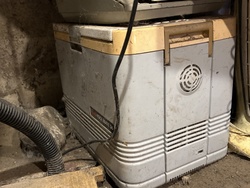
This item is a vintage Coleman cooler, characterized by its classic two-tone coloration: an emerald green body and lid, contrasting with a lighter cream or beige base. The cooler appears to be constructed primarily of metal, likely steel, with a painted finish for the green upper section, and a molded plastic or similar synthetic material for the cream base. The overall shape is rectangular with gently rounded corners on the lid and body. A prominent feature is the single, centrally mounted metal latch on the front, which secures the lid. Slightly above and to the left of the latch, a red rectangular 'Coleman' logo with white serif lettering is affixed, indicating the manufacturer. The lid has a white trim band just above the green body.
Observable condition issues include general surface wear consistent with age and use, such as minor scuffs, scratches, and potentially some areas of paint loss or fading on the green surfaces. The metal latch mechanism appears intact but might show some tarnishing or minor rust commensurate with its age and material. The cream base exhibits texture and some minor discoloration or dirt accumulation in its crevices, though no major cracks or structural damage are visible from this perspective. The construction suggests a robust design typical of vintage coolers, prioritizing durability and insulation. It likely dates from the mid-20th century, possibly the 1950s to 1970s, based on its design aesthetic and the prevalent branding style of Coleman during that era. The craftsmanship is utilitarian but solid, reflecting a period when items were built to last.
AI Appraisal Report
Based on my visual examination of the provided image, this vintage Coleman cooler, with its distinctive emerald green and cream coloration, appears to be an authentic product from the mid-20th century, likely dating from the 1950s to 1970s. The 'Coleman' logo with serif lettering is consistent with branding used during that era, and the overall construction, featuring a metal body and lid with a contrasting plastic or synthetic base, aligns with typical manufacturing practices for coolers of that period.
The condition, as observable from the image, shows general surface wear including minor scuffs, scratches, and potential paint loss or fading, which is expected for an item of this age and use. The metal latch seems intact, though I anticipate some tarnishing or minor rust upon closer inspection. The cream base exhibits expected discoloration but no visible major cracks. These factors place it in good, original vintage condition, not restored.
The market for vintage Coleman coolers is steady, driven by nostalgia, their robust construction, and aesthetic appeal for retro decor or functional use. Comparable sales for similar green and cream Coleman coolers in good, unrestored condition typically range from $75 to $150, depending on the exact model, size, and specific condition. Demand is moderate, appealing to collectors of vintage Americana, camping enthusiasts, and those seeking unique decorative items. Rarity is not exceptionally high for this particular model, but well-preserved examples do command interest.
Key factors impacting value include the iconic branding, classic color scheme, and the overall completeness and originality of the component parts. While the visual assessment allows for a strong authenticity determination, an in-person examination would be crucial to verify the integrity of the insulation, inspect for internal rust or odors, assess the functionality of the latch mechanism more thoroughly, and confirm the absence of major structural issues not visible in the image. Provenance documentation, while not usually available for such items, would further solidify its history. Without physical inspection, I cannot comment on internal condition or precise functional integrity.