AI Appraisal Estimate

AI-generated estimates · not official valuations

From the user

What was submitted

Photo and notes provided by the user — not generated by AI

Submitted item photo
Submitted photo · June 26, 2026

User's notes

No additional notes provided.

AI analysis below

AI appraisal

AI analysis & estimate

AI-Generated · Verify before acting

Everything below is generated by AI for informational purposes only. AI can make mistakes — the AI may misidentify items or misattribute them (artist, maker, brand, designer, origin, era). This is not an official valuation and should not be used for insurance, sale, tax, estate, legal, or lending purposes — or any decision requiring a certified appraisal. It is not an authoritative claim about any person, brand, or rights holder — do not share or rely on it as a factual statement about a third party. Always consult qualified professionals before making financial decisions.

Read the full disclaimer

AI Identification

·Not independently authenticated·Verify before acting

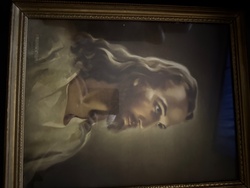
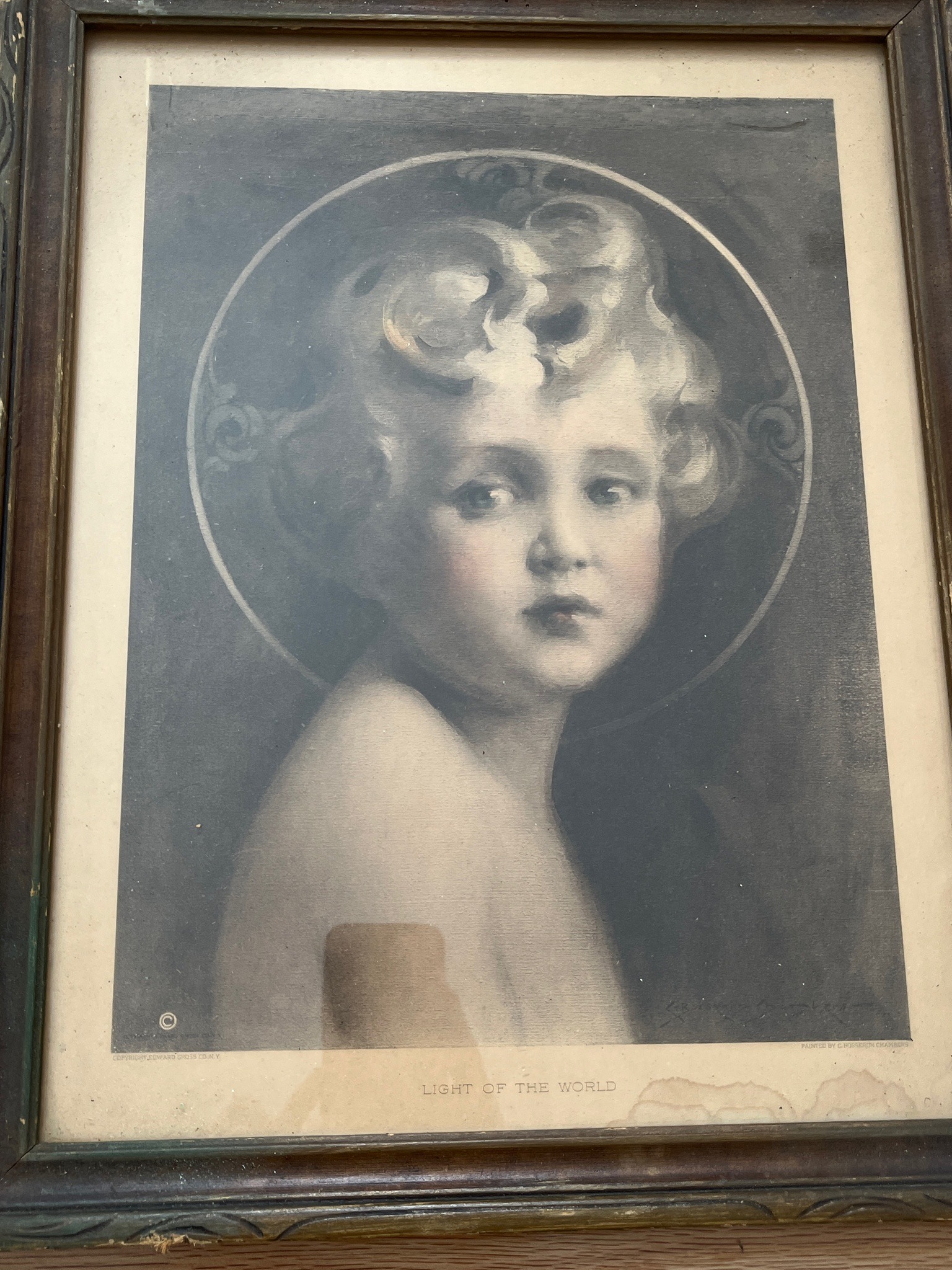
Edward Gross Co. 'Light of the World' Framed Print by C. Bosseron Chambers

Antique and Vintage Religious Prints

AI Estimated Value

·Not an official valuation·Verify before acting

$45 - $65

As of June 26, 2026

AI Item Analysis

·AI can make mistakes·Verify before acting
This is a vintage lithographic print titled 'Light of the World', depicting a cherubic young Christ figure with soft blonde curls and a subtle circular halo. The artwork was originally painted by Charles Bosseron Chambers (1882-1964), a well-known illustrator of religious subjects. The print features a monochromatic palette of grays and blacks, accented by delicate pink flushing on the child's cheeks. Notable markings include the copyright symbol and 'COPYRIGHT EDWARD GROSS CO. N.Y.' in the lower-left corner, and 'PAINTED BY C. BOSSERON CHAMBERS' in the lower-right. A facsimile signature of the artist is also visible within the image field. The piece is housed in a period-appropriate dark wood frame with a decorative carved inner border. Regarding condition, there is significant rectangular staining or discoloration on the lower portion of the image, likely from moisture or adhesive. The surrounding paper margin shows foxing, yellowing, and prominent water damage along the bottom edge. Such prints were popular in American homes during the early to mid-20th century, specifically the 1920s to 1940s, serving as accessible devotional art.
AI Appraisal Report

·AI can make mistakes·Verify before acting
Based on my visual examination of the provided imagery, I have assessed this vintage lithograph produced by the Edward Gross Company. The work is a legitimate mid-20th-century production of C. Bosseron Chambers' iconic 'Light of the World.' The lithographic quality and period-correct typography in the margins confirm its origin as a mass-produced devotional print from the 1920s-1940s. While these prints were once ubiquitous in Catholic households, their market value today is driven primarily by aesthetic appeal and condition. Unfortunately, this specific example exhibits significant condition issues that negatively impact its value. I observed prominent tide lines and moisture staining along the lower third of the image, as well as visible foxing and acid burning in the margins. These defects suggest the print has been exposed to high humidity, which can lead to mold growth and permanent cellulose degradation. The frame appears to be a period-appropriate wood molding with some gilt loss. Comparatively, examples in 'near-mint' condition typically fetch between $125 and $175 in retail antique settings; however, the localized water damage here necessitates a significant devaluation. The market for religious lithography remains steady but discerning, favoring pieces requiring no restoration. Limitation of Assessment: This appraisal is based solely on digital images. A physical inspection is required to check for additional frame damage, examine the reverse for hidden mold, and verify if the print has been trimmed or glued to a backing board. Definitive authentication of the print's age would require observing the paper's fiber structure and ink patterns under magnification to distinguish it from later 20th-century reproductions.

Get your items appraised

Instant estimates of your treasures with AI-powered appraisals

Browse More Appraisals