AI Appraisal Estimate

AI-generated estimates · not official valuations

From the user

What was submitted

Photo and notes provided by the user — not generated by AI

Submitted item photo
Submitted photo · June 20, 2026

User's notes

Myrano

AI analysis below

AI appraisal

AI analysis & estimate

AI-Generated · Verify before acting

Everything below is generated by AI for informational purposes only. AI can make mistakes — the AI may misidentify items or misattribute them (artist, maker, brand, designer, origin, era). This is not an official valuation and should not be used for insurance, sale, tax, estate, legal, or lending purposes — or any decision requiring a certified appraisal. It is not an authoritative claim about any person, brand, or rights holder — do not share or rely on it as a factual statement about a third party. Always consult qualified professionals before making financial decisions.

Note

This analysis also relies on unverified notes provided by the user, which may be incomplete or inaccurate and could affect the result.

Read the full disclaimer

AI Identification

·Not independently authenticated·Verify before acting

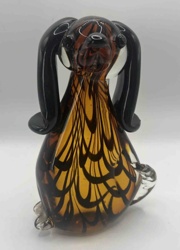
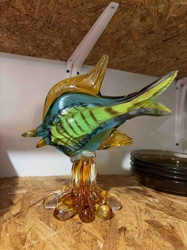
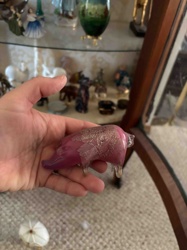
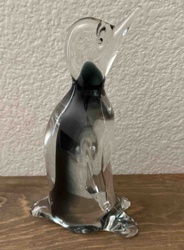
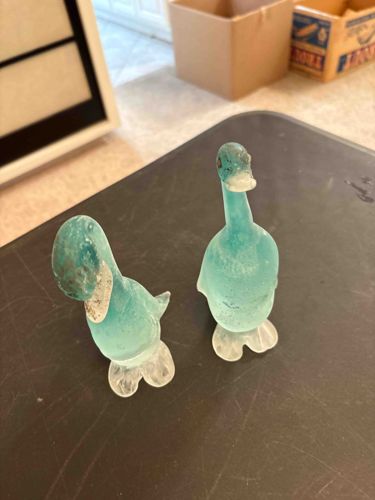
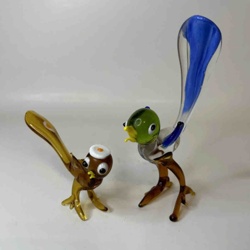
Pair of Vintage Murano Scavo Glass Duck Figurines

Art Glass / Collectible Figurines

AI Estimated Value

·Not an official valuation·Verify before acting

$150 - $250

As of June 20, 2026

AI Item Analysis

·AI can make mistakes·Verify before acting
A pair of hand-blown Italian glass duck figurines, likely originating from Murano and created using the 'Scavo' (excavated) technique. This specific process involves applying a corrosive substance to the hot glass surface to mimic the iridescent, weathered, and frosted appearance of ancient Roman glass unearthed from archaeological sites. The figurines are crafted in a vibrant turquoise or aqua-blue glass with contrasting clear, frosted glass webbed feet and beaks. Each duck features a long, elegant neck and rounded body, standing approximately 4 to 6 inches in height. The surface exhibits a characteristic pitted and matte texture typical of the mid-20th-century Murano revival styles, popularized by studios like Seguso or Cenedese. Notable features include the artisanal application of the feet and the variations in color density within the glass. Regarding condition, there is visible surface residue or possible calcification on the beak of the left-most duck, which may be a manufacturing artifact of the Scavo process or later environmental wear. There are no immediate signs of major fractures, though the 'weathered' nature of this glass style often hides small surface flakes. These pieces likely date from the 1950s to the 1970s and demonstrate high-quality lampwork craftsmanship.
AI Appraisal Report

·AI can make mistakes·Verify before acting
Based on my visual examination of this pair of vintage glass duck figurines, I can confidently identify them as Italian Murano glass, specifically utilizing the 'Scavo' technique. The execution of this technique—chemically treating the hot glass to achieve a weathered, archaeological finish reminiscent of ancient Roman artifacts—is characteristic of mid-20th-century artisanal production, likely between the 1950s and 1970s. The vibrant turquoise body contrasting with the applied clear, frosted appendages is a strong stylistic indicator of major houses like Cenedese or Seguso Vetri d'Arte, though definitive attribution to a specific maestro is difficult without a signature or original label. The condition appears generally good for the age, with no obvious structural chips or cracks visible in the provided images. The noted residue on the beak is consistent with the Scavo process, which intentionally leaves surface irregularities, although it could also indicate minor calcification from storage. The artisanal quality of the hand-blown shapes and applied features speaks to skilled craftsmanship. The market for Murano Scavo glass remains stable, though softer than peak mid-century modern collecting periods. Unsigned figural pieces like these typically realize prices in the $150 to $250 range at auction or specialist retail. While I suspect these are authentic Murano productions based on the specific color palette and texture, full authentication would require physical inspection to feel the weight (Scavo glass can be deceptively heavy) and check for pontil marks that align with specific studio practices. Without a maker's mark or provenance papers, they are evaluated primarily on their aesthetic merit and decorative appeal as high-quality vintage Italian glass.

Get your items appraised

Instant estimates of your treasures with AI-powered appraisals

Browse More Appraisals