AI Appraisal Estimate

AI-generated estimates · not official valuations

From the user

What was submitted

Photo and notes provided by the user — not generated by AI

Submitted item photo
Submitted photo · May 30, 2026

User's notes

Foreign 15 saucer

AI analysis below

AI appraisal

AI analysis & estimate

AI-Generated · Verify before acting

Everything below is generated by AI for informational purposes only. AI can make mistakes — the AI may misidentify items or misattribute them (artist, maker, brand, designer, origin, era). This is not an official valuation and should not be used for insurance, sale, tax, estate, legal, or lending purposes — or any decision requiring a certified appraisal. It is not an authoritative claim about any person, brand, or rights holder — do not share or rely on it as a factual statement about a third party. Always consult qualified professionals before making financial decisions.

Note

This analysis also relies on unverified notes provided by the user, which may be incomplete or inaccurate and could affect the result.

Read the full disclaimer

AI Identification

·Not independently authenticated·Verify before acting

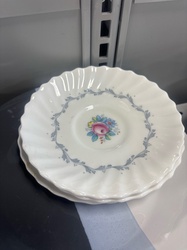
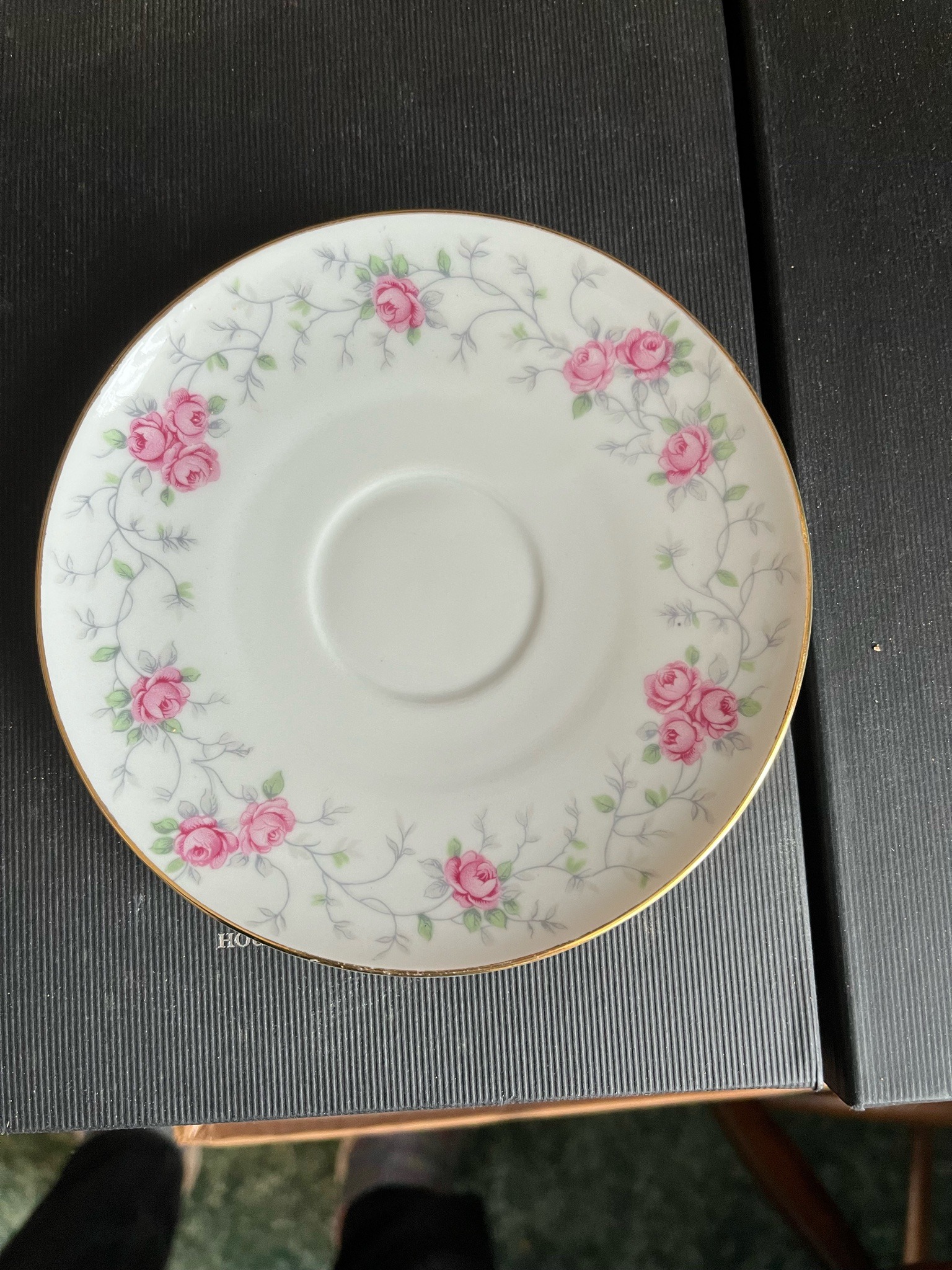
Pink Rose Garland Porcelain Saucer with Gilt Edge

Fine Dining & Ceramics

AI Estimated Value

·Not an official valuation·Verify before acting

$10 - $20

As of May 30, 2026

AI Item Analysis

·AI can make mistakes·Verify before acting
This is a circular porcelain saucer featuring a delicate floral motif, likely intended for a teacup as evidenced by the central recessed well. The primary decoration consists of a repeating garland of pink rosebuds and fully bloomed roses connected by slender, scrolling grey-toned vines and small pale green leaves. The pattern is applied as a transferware decal over a smooth, bright white glaze. The rim is finished with a thin line of hand-applied or machine-gilded gold, which adds a formal, classic aesthetic to the piece. The porcelain is thin and translucent, indicative of fine bone china or high-quality porcelain consistent with mid-20th-century production (circa 1950s-1970s). Based on the context provided, the piece may carry a 'Foreign 15' mark on the reverse, which was a common import classification used for ceramics produced in Japan or Germany for the Western market. The condition appears to be excellent; the gilding on the edge remains largely intact without significant rubbing, the white surface shows no visible crazing or staining, and the floral motifs retain vibrant pink hues. There are no chips or cracks visible in the top-down view. The craftsmanship demonstrates high-quality commercial standards of the mid-century period, with precise alignment of the floral decals and a clean, uniform glaze finish.
AI Appraisal Report

·AI can make mistakes·Verify before acting
Based on my examination of the provided imagery and documentation, this is a mid-century porcelain saucer featuring a transferware rose garland and a gilded rim. The 'Foreign 15' mark is a critical indicator; this numerical designation was an import code used primarily by Japan during the post-WWII occupation and recovery era (circa 1950s) to identify specific factories for Western export markets. The saucer displays high-quality commercial craftsmanship, with a clean white glaze and well-preserved gilding. My visual inspection suggests the condition is 'Excellent,' showing no visible crazing, chips, or significant gilding wear, which is common in pieces of this age. The market for mid-century Japanese 'Foreign' marked floral china is currently soft, as these items were mass-produced in large quantities for the American and European middle classes. They are typically valued as 'replacement' pieces rather than high-end collectibles. Comparables for single saucers from this era generally sell at the lower end of the ceramic market, usually to collectors completing sets. Factors affecting this value include the loss of the original matching teacup, which reduces the set's desirability to most buyers. While the images indicate a high degree of authenticity regarding its period, a physical inspection is required to confirm the 'sound' of the porcelain (checking for hairline cracks not visible to the eye) and the weight, which differentiates fine bone china from standard porcelain. Without provable provenance to a specific renowned manufacturer or the presence of a matching cup, the value remains modest and is based on its utility and aesthetic appeal for period-correct dining.

Get your items appraised

Instant estimates of your treasures with AI-powered appraisals

Browse More Appraisals