Weathered Quartz Conglomerate River Stone
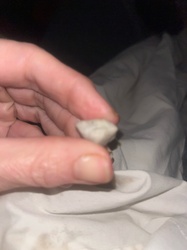
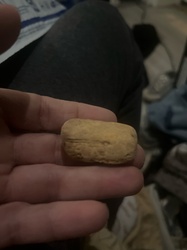
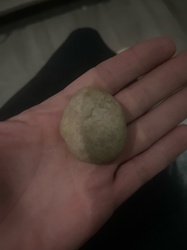
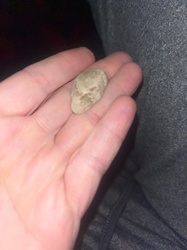
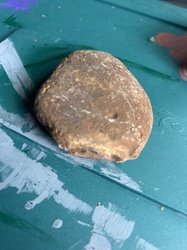
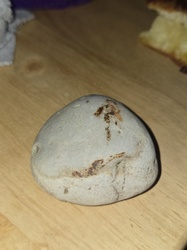
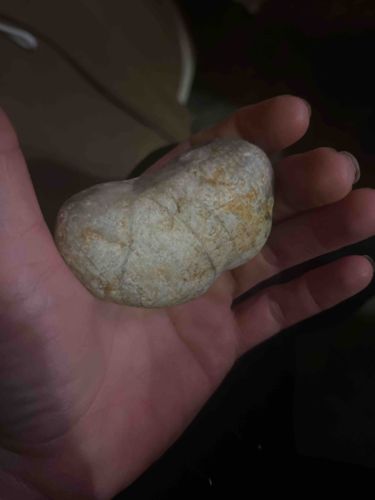
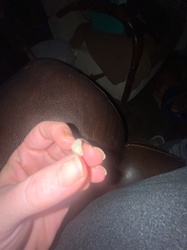
This item is a naturally occurring geological specimen, specifically a river-worn stone that displays characteristics of a quartz-rich conglomerate or quartzite. Physically, the object is approximately 3 to 4 inches in length, featuring an irregular, rounded, kidney-like shape that has been smoothed by fluvial erosion (water action). Its color palette is primarily off-white and pale grey, with distinct areas of yellowish-brown and ochre oxidation, likely caused by iron staining from mineral deposits in its environment. The surface texture is granular and coarse, typical of a sedimentary rock that has undergone slight metamorphic pressure. Notable features include a network of faint, intersecting diagonal lines or surface fractures that may represent natural quartz veining or structural stress points within the rock. No maker's marks or stamps are present as this is a natural object. The condition appears stable with significant natural weathering, surface abrasions, and pitting consistent with a stone sourced from a riverbed or coastal area. In terms of age, this specimen is geologically ancient, likely millions of years old, though its current shape is the result of more recent environmental exposure. Its value in an appraisal context remains primarily as a decorative garden stone or a geological curiosity rather than a refined artifact.
AI-Generated Appraisal Disclaimer
Estimated Value
$5.00 - $15.00
Basic Information
Category
Geological Specimens / Natural Collectibles
Appraised On
April 4, 2026
Estimated Value
$5.00 - $15.00
Item Description
This item is a naturally occurring geological specimen, specifically a river-worn stone that displays characteristics of a quartz-rich conglomerate or quartzite. Physically, the object is approximately 3 to 4 inches in length, featuring an irregular, rounded, kidney-like shape that has been smoothed by fluvial erosion (water action). Its color palette is primarily off-white and pale grey, with distinct areas of yellowish-brown and ochre oxidation, likely caused by iron staining from mineral deposits in its environment. The surface texture is granular and coarse, typical of a sedimentary rock that has undergone slight metamorphic pressure. Notable features include a network of faint, intersecting diagonal lines or surface fractures that may represent natural quartz veining or structural stress points within the rock. No maker's marks or stamps are present as this is a natural object. The condition appears stable with significant natural weathering, surface abrasions, and pitting consistent with a stone sourced from a riverbed or coastal area. In terms of age, this specimen is geologically ancient, likely millions of years old, though its current shape is the result of more recent environmental exposure. Its value in an appraisal context remains primarily as a decorative garden stone or a geological curiosity rather than a refined artifact.
Get Your Items Appraised
Instant estimates of your treasures with AI-powered instant appraisals