AI estimate as of October 26, 2025 · verify with a professional before acting
AI-Generated · Verify before acting
Everything on this page is generated by AI for informational purposes only. AI can make mistakes — the AI may misidentify items or misattribute them (artist, maker, brand, designer, origin, era). This is not an official valuation and should not be used for insurance, sale, tax, estate, legal, or lending purposes — or any decision requiring a certified appraisal. It is not an authoritative claim about any person, brand, or rights holder — do not share or rely on it as a factual statement about a third party. Always consult qualified professionals before making financial decisions.
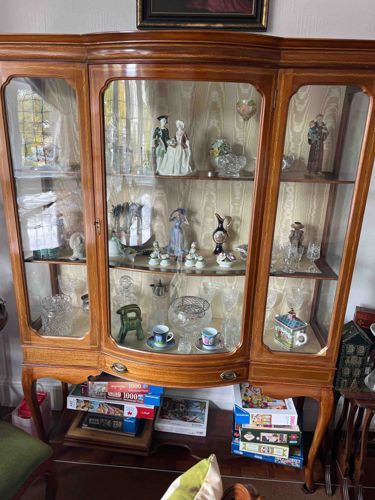
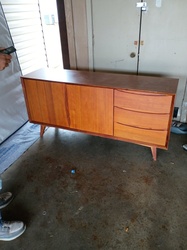
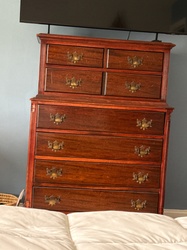
This is a vintage French Provincial style curio cabinet, likely from the mid-20th century, crafted from a warm-toned wood, possibly walnut or mahogany, with a polished, glossy finish. The cabinet features a distinctive serpentine-shaped top and base, adding to its elegant, curvilinear aesthetic. It comprises three sections: a central larger section flanked by two narrower ones, all enclosed by glass doors. The glass doors have ornate, curved frames, typical of the French Provincial style, and are visible in the top portion of each section. The interior of the display sections is lined with a light-colored, possibly fabric or decorative paper, backing that appears to have a subtle textured or patterned design, intended to highlight the displayed items. Each section has multiple glass shelves, allowing for the arrangement of various decorative objects, as seen with the collection of porcelain figurines, crystal glassware, and small teacups currently displayed. Below the glass display sections, the cabinet features two small drawers, each with a brass-colored metal pull handle, indicating a functional storage element. The cabinet stands on elegant cabriole legs at the front, contributing to its graceful and classic appearance. The overall condition appears good with a consistent sheen, though minor surface wear commensurate with age and use is expected but not clearly discernible from the image. The construction quality seems decent with well-fitted panels and joints, suggesting a mass-produced but well-made piece of furniture from its era. The curvature of the glass and wood frames showcases a certain level of craftsmanship associated with period furniture.
AI Appraisal Report
Upon visual examination of the provided image, I assess this French Provincial style curio cabinet to be a mid-20th century piece. The warm-toned wood, distinct serpentine top and base, and characteristic ornate, curved glass door frames are all consistent with the style. The overall condition appears good, with a consistent sheen suggesting it has been well-maintained. While minor surface wear commensurate with age and use is expected, it is not clearly discernible from the image. The construction quality, evidenced by the well-fitted panels and joints, indicates a mass-produced but well-made item typical of its era.
Market conditions for vintage French Provincial furniture are steady, with a moderate demand for display pieces like this. Comparables in similar condition and style typically retail in the $600-$1000 range. This piece's three-section design and functional drawers add to its appeal. Rarity is not a significant factor here, as many such cabinets were produced during the mid-century. Factors positively impacting value include the elegant design, apparent good condition, and functional display capabilities. The visual display of porcelain and crystal inside enhances its presentation.
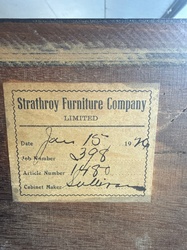
It is crucial to note the limitations of authenticating solely from images. Without in-person examination, I cannot definitively verify the wood species (e.g., walnut vs. mahogany), the exact construction methods beyond visual assessment, or the presence of any hidden damages or repairs. A physical inspection would allow me to check for structural integrity, examine all surfaces for scratches, dings, or veneer lifting, and confirm the material quality and craftsmanship of internal components. Provenance documentation, though unlikely for an item of this type unless custom-made, would also add value. Scientific testing is typically not applied to furniture of this nature for authentication purposes.