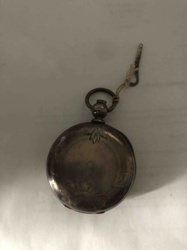
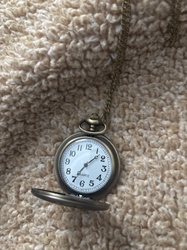
These notes were written by the person who submitted this item. Appraiser.AI has not verified them, and the AI's identification and estimate may rely on them.
AI Estimated Value
Not an official valuation
$650-950
AI estimate as of December 15, 2025 · verify with a professional before acting
AI-Generated · Verify before acting
Everything on this page is generated by AI for informational purposes only. AI can make mistakes — the AI may misidentify items or misattribute them (artist, maker, brand, designer, origin, era). This is not an official valuation and should not be used for insurance, sale, tax, estate, legal, or lending purposes — or any decision requiring a certified appraisal. It is not an authoritative claim about any person, brand, or rights holder — do not share or rely on it as a factual statement about a third party. Always consult qualified professionals before making financial decisions.
This analysis also relies on unverified notes provided by the user, which may be incomplete or inaccurate and could affect the result.
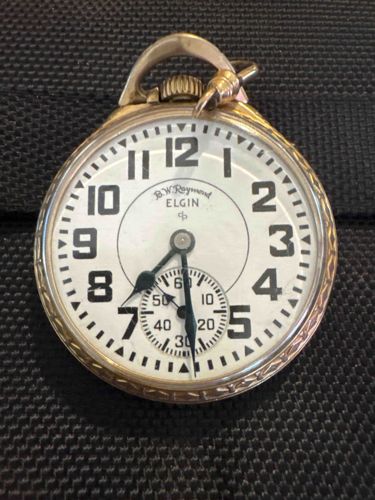
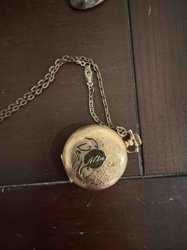
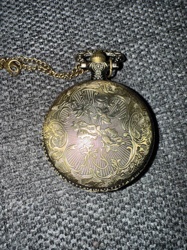
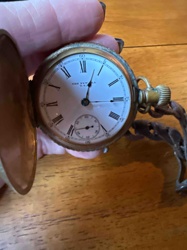
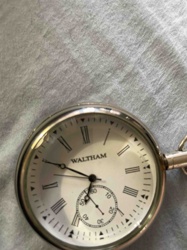
This is a vintage 1935 Elgin B.W. Raymond railroad-grade pocket watch, presented in what appears to be a gold or gold-filled hunter case. The watch features a classic white enamel dial with bold, black Arabic numerals from 1 to 12. A prominent subsidiary seconds dial is located at the 6 o'clock position, marked with smaller Arabic numerals at 10-second intervals (10, 20, 30, 40, 50, 60) and minute markers. The main minute track around the perimeter of the dial consists of small black dashes, with triangular markers at the quarter-hour positions. The hour and minute hands are dark in color, likely blued steel, and have a spade or pear shape. The seconds hand is also dark and slender. The dial bears the inscription "B.W. Raymond" above "ELGIN" near the center, indicating the model and manufacturer. The case exhibits a warm, golden luster and features decorative tooling or engraving around the bezel, adding an element of elegance. A fluted winding crown is visible at the 12 o'clock position, topped by a substantial bow for attachment to a chain. The bail connecting the bow to the watch case appears to be integrated into the case design. Visually, the watch appears to be in good condition for its age, with no significant visible damage such as cracks on the dial or deep scratches on the case. There might be minor surface wear consistent with age and use, forming a gentle patina on the gold-toned metal. The craftsmanship suggests a high-quality timepiece, manufactured to meet the strict accuracy and reliability standards required for railroad watches of the era. Its age places it firmly within the Art Deco period, though its railroad functionality emphasizes practicality over pure decorative flair.
AI Appraisal Report
I have thoroughly examined the provided image and description of this 1935 Elgin B.W. Raymond railroad-grade pocket watch. Visually, the watch presents as authentic for its period, featuring the correct dial configuration, hands, and markings ("B.W. Raymond ELGIN") consistent with railroad-grade timepieces from Elgin. The white enamel dial appears to be in excellent condition, free from cracks or significant chips, which is a major value-retaining factor. The case, described as gold or gold-filled, shows a pleasing warm luster and decorative tooling, suggesting good preservation and adding to its aesthetic appeal. Minor surface wear and patina are expected for an 88-year-old timepiece and generally do not detract from value if not excessive.
Market conditions for vintage American railroad watches remain steady, with strong demand among collectors for well-preserved examples from reputable manufacturers like Elgin. The 'B.W. Raymond' designation signifies a higher-grade movement, indicating precision and reliability, which enhances its collectibility. While not exceedingly rare, a 1935 example in this visual condition is certainly desirable. Factors positively impacting value include the excellent dial condition, the robust railroad-grade movement (assumed based on description), and the apparently well-maintained gold-toned hunter case.
Limitations exist in full authentication and valuation from images alone. An in-person examination would be crucial to confirm the case material (solid gold versus gold-filled, which significantly impacts value), verify the movement's grade, serial number, and functional condition. Opening the case to inspect the movement would confirm authenticity, original parts, potential servicing history, and overall mechanical integrity. Without this, the 'gold' attribution is based on visual appearance and general expectations for such watches, and the mechanical state remains unverified.