AI estimate as of August 17, 2025 · verify with a professional before acting
AI-Generated · Verify before acting
Everything on this page is generated by AI for informational purposes only. AI can make mistakes — the AI may misidentify items or misattribute them (artist, maker, brand, designer, origin, era). This is not an official valuation and should not be used for insurance, sale, tax, estate, legal, or lending purposes — or any decision requiring a certified appraisal. It is not an authoritative claim about any person, brand, or rights holder — do not share or rely on it as a factual statement about a third party. Always consult qualified professionals before making financial decisions.
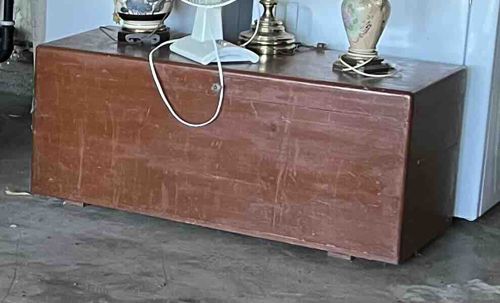
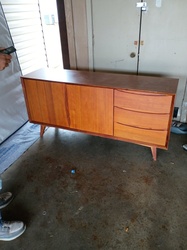
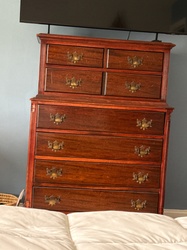
This item is a rectangular wooden storage chest, often referred to as a blanket chest or hope chest. It appears to be constructed from solid wood planks, stained a reddish-brown or mahogany tone. The finish is worn, exhibiting numerous scuffs, scratches, and areas of discoloration, particularly on the top surface and front panel, indicating significant use and age. The chest features a simple, unadorned design with straight lines and unornamented panels, suggesting a mid-20th century or possibly earlier rustic or utilitarian style. There are no visible decorative carvings, inlays, or elaborate hardware. The top lid appears to be hinged, and a small keyhole is visible on the front near the top edge, indicating it can be locked. The base of the chest is slightly raised, resting on what appear to be integrated or very low feet, common on storage chests to keep them slightly off the floor. The craftsmanship seems solid and functional, with visible wood grain, though the exact joinery methods are not discernible from the image. Its current condition suggests it has been stored or used in a high-traffic area, accumulating a considerable amount of wear and patina over time. There are no obvious signs of major repair or significant structural damage, although the surface wear is extensive. The quality appears to be that of a sturdy, functional piece of furniture designed for storage.
AI Appraisal Report
Upon visual examination of the provided image, I assess this wooden storage chest to be a utilitarian piece, likely from the mid-20th century, consistent with its simple, unadorned design. The construction appears solid, with visible wood grain, though specific joinery methods cannot be determined without closer inspection. The condition is fair to poor, characterized by significant surface wear including numerous scuffs, scratches, and discoloration, particularly on the top and front panel. This wear suggests extensive use and age, contributing to a strong patina rather than major structural damage. The presence of a keyhole indicates a functional locking mechanism, though its operation is unverified.
In terms of market conditions, chests of this nature are commonly available. While a genuine antique or highly ornamented piece would command a premium, this chest lacks the decorative elements or historical provenance that would elevate its rarity or demand significantly within the broader antique furniture market. Its value lies primarily in its utility as a storage item, or potentially as a restoration project for someone seeking a rustic aesthetic. Comparables in similar condition typically fall within the lower range of period furniture.
Factors impacting value dramatically are its lack of distinctiveness, extensive surface wear, and the absence of any notable craftsmanship or materials that would make it unique. Demand is moderate for functional storage, but low for collectors of fine period furniture.
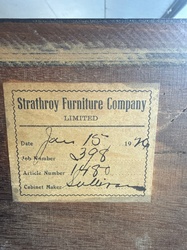
It is crucial to note the limitations of image-based appraisal. Authenticity of wood type, precise age, and structural integrity cannot be fully verified without in-person examination. Physical inspection would allow me to assess actual wood species, examine joinery for age-appropriate techniques, verify hinge and lock functionality, and detect any subtle repairs or structural weaknesses not visible in the image. Provenance documentation could potentially elevate value by establishing a unique history or maker; scientific testing, such as dendrochronology, would be necessary for precise dating if a higher valuation were sought.