AI Appraisal Estimate

AI-generated estimates · not official valuations

From the user

What was submitted

Photo and notes provided by the user — not generated by AI

Submitted item photo
Submitted photo · June 6, 2026

User's notes

Japan

AI analysis below

AI appraisal

AI analysis & estimate

AI-Generated · Verify before acting

Everything below is generated by AI for informational purposes only. AI can make mistakes — the AI may misidentify items or misattribute them (artist, maker, brand, designer, origin, era). This is not an official valuation and should not be used for insurance, sale, tax, estate, legal, or lending purposes — or any decision requiring a certified appraisal. It is not an authoritative claim about any person, brand, or rights holder — do not share or rely on it as a factual statement about a third party. Always consult qualified professionals before making financial decisions.

Note

This analysis also relies on unverified notes provided by the user, which may be incomplete or inaccurate and could affect the result.

Read the full disclaimer

AI Identification

·Not independently authenticated·Verify before acting

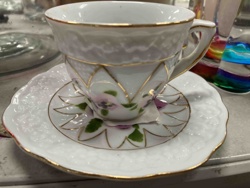
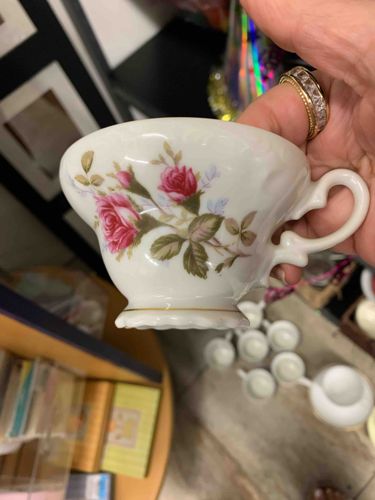
Miniature Floral Porcelain Teacup

Dinnerware/Tea Ware

AI Estimated Value

·Not an official valuation·Verify before acting

$3-8

As of June 6, 2026

AI Item Analysis

·AI can make mistakes·Verify before acting
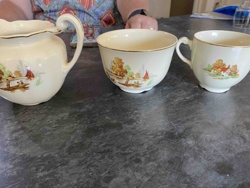
This item is a decorative porcelain or ceramic teacup, likely part of a miniature tea set or a child's tea set given its small scale relative to the human hand holding it. The cup is predominantly white with a glossy finish. It features a floral motif, specifically well-rendered pink and red roses with green leaves and subtle blue accents, painted around its body. The design has a classic, somewhat vintage aesthetic. The shape of the cup is notable; it has gently fluted or scalloped sides that extend outwards towards the rim, creating a subtle wave-like form. The base of the cup is also fluted or scalloped, mirroring the upper design, and is accented with what appears to be a thin gold or gilt band. The handle is a simple, closed loop, also likely white with no visible decoration, and appears proportionally sized for the small cup. There are no visible chips, cracks, or significant wear on the exterior of the cup, suggesting it is in good to excellent condition given its age. The painting appears vibrant without significant fading. While no direct manufacturer's marks are visible, the style of decoration and the 'Japan' context provided suggest it might be a Japanese-made porcelain piece from the mid-20th century, a period when many decorative tea sets were produced for export. The craftsmanship appears to be of decent quality, with clear, detailed floral painting and well-formed porcelain.
AI Appraisal Report

·AI can make mistakes·Verify before acting
Upon examining the provided image of this miniature floral porcelain teacup, I assess it to be a Japanese export piece, likely dating from the mid-20th century (c. 1940s-1960s). The floral rose motif and scalloped, fluted shape are characteristic of decorative porcelain produced in Japan for the Western market during this era. Based on the visuals, the item appears to be in excellent condition, with no visible chips, cracks, or crazing. The painted decoration remains vibrant and the gilt accent on the base appears intact. The market for individual, unmarked Japanese export miniature teacups is generally modest. These were mass-produced and are not considered rare. While charming, they lack the high demand associated with well-known European or earlier Japanese manufacturers (such as Meiji-period Satsuma or pre-war Noritake). The primary value driver is its decorative appeal as a collectible curio or part of a larger set. A single, unmarked cup of this type typically has a low resale value. However, this assessment is based solely on a digital image. A definitive valuation and authentication would require a physical, in-person examination. This would allow me to inspect for a manufacturer's mark (backstamp) on the underside, which could significantly alter its value. I would also need to feel the weight and quality of the porcelain and use a loupe to examine the painting technique and any signs of wear or repair not visible in the photograph. Without a maker's mark or provenance, its origin remains presumed rather than confirmed.

Get your items appraised

Instant estimates of your treasures with AI-powered appraisals

Browse More Appraisals