AI Appraisal Estimate

AI-generated estimates · not official valuations

From the user

What was submitted

Photo and notes provided by the user — not generated by AI

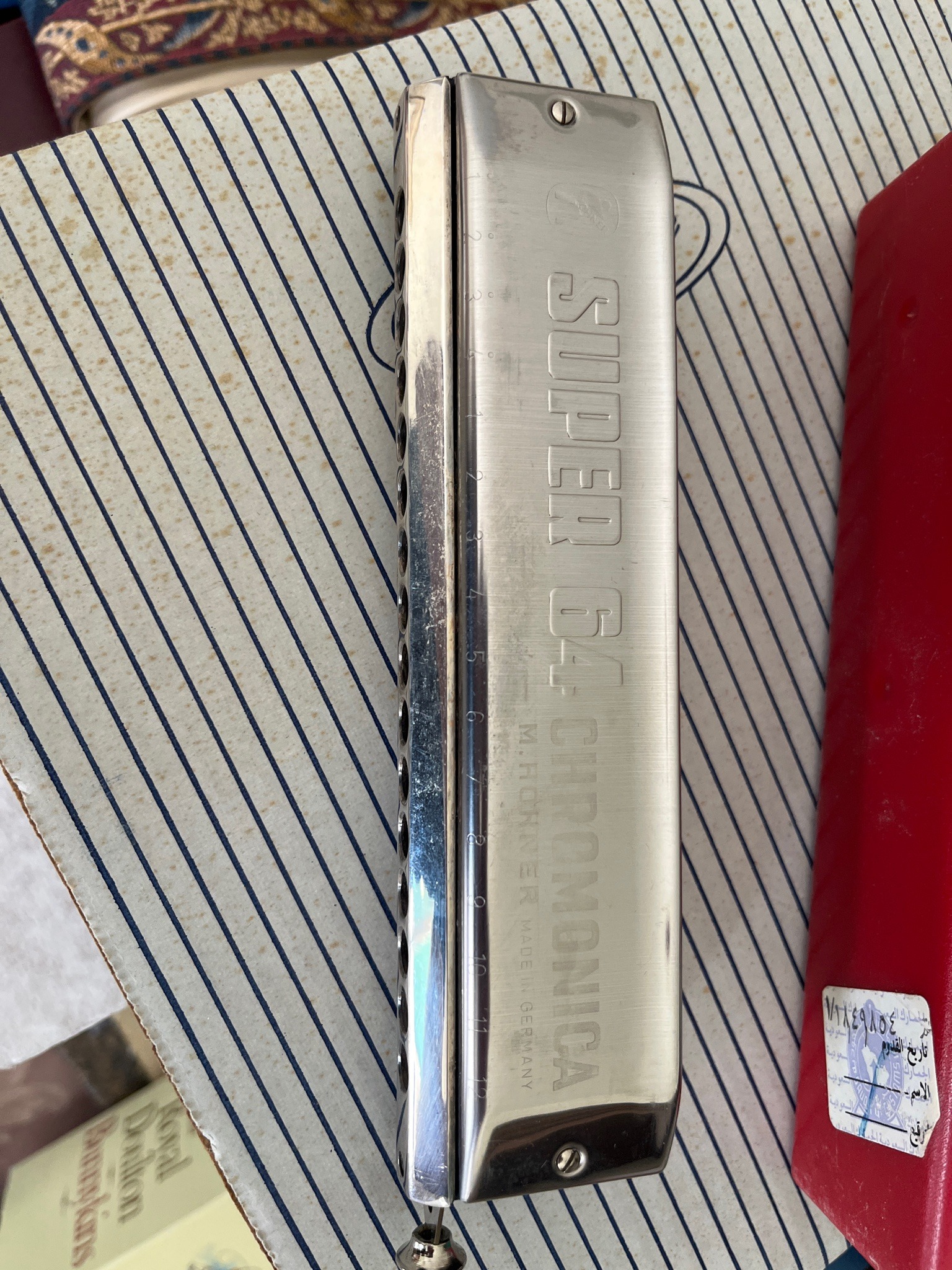
Submitted item photo
Submitted photo · May 28, 2026

User's notes

30 year-old super 64 chroma M.Horner harmonica

AI analysis below

AI appraisal

AI analysis & estimate

AI-Generated · Verify before acting

Everything below is generated by AI for informational purposes only. AI can make mistakes — the AI may misidentify items or misattribute them (artist, maker, brand, designer, origin, era). This is not an official valuation and should not be used for insurance, sale, tax, estate, legal, or lending purposes — or any decision requiring a certified appraisal. It is not an authoritative claim about any person, brand, or rights holder — do not share or rely on it as a factual statement about a third party. Always consult qualified professionals before making financial decisions.

Note

This analysis also relies on unverified notes provided by the user, which may be incomplete or inaccurate and could affect the result.

Read the full disclaimer

AI Identification

·Not independently authenticated·Verify before acting

Hohner Super 64 Chromonica Harmonica

Musical Instruments - Wind

AI Estimated Value

·Not an official valuation·Verify before acting

$100.00 - $175.00

As of May 28, 2026

AI Item Analysis

·AI can make mistakes·Verify before acting
This is a vintage Hohner Super 64 Chromonica, a professional-grade 16-hole chromatic harmonica manufactured in Germany. Based on the provided context and the 'Made in Germany' stamp, this unit dates to the early 1990s. The instrument features a set of stainless steel cover plates with a brushed finish on the top and a polished chrome finish on the mouthpiece assembly. The top cover is deeply embossed with the 'SUPER 64 CHROMONICA' branding alongside the 'M. Hohner' name and the manufacturer's crest. It includes numerical hole markers 1 through 12 visible along the edge. The construction typically utilizes a plastic (ABS) comb, brass reed plates, and 64 brass reeds, allowing for a four-octave range. Noted condition issues include significant surface oxidation, 'pitting,' and patina along the polished mouthpiece section, which is common for an instrument of this age that has been played. There is also moderate surface scratching and wear on the brushed steel cover plates. The slide button mechanism is visible at the bottom, though its mechanical functionality cannot be determined from the image. The craftsmanship is high-quality, typical of Hohner's German production line, designed for professional soloists and orchestral players.
AI Appraisal Report

·AI can make mistakes·Verify before acting
I have examined the images and descriptions of the Hohner Super 64 Chromonica, a 16-hole professional-grade instrument. This specific unit, dating from the early 1990s, bears the authentic 'Made in Germany' stamp and traditional embossing synonymous with Hohner’s Trossingen production. The primary value-driving factor of this vintage is its playability; however, I observed significant surface oxidation, pitting on the mouthpiece, and accumulated patina. These signs of heavy use suggest that the internal brass reeds and windsavers (valves) may require professional servicing or replacement, as saliva and moisture typically degrade performance over thirty years. The market for vintage Super 64s is steady but sensitive to hygiene and mechanical condition. A mint-condition vintage unit might fetch $250.00, whereas the observed wear on this specimen places it in a secondary 'player's grade' category. Comparables on the secondary market show that buyers discount heavily for mouthpiece pitting due to comfort and sanitation concerns. While visual cues confirm the era and authenticity, this appraisal is limited by the lack of auditory and mechanical testing. A physical inspection is required to verify the slide mechanism’s integrity, the airtightness of the ABS comb, and the pitch accuracy of all 64 reeds. Scientific testing of the metal alloys is unnecessary, but a full breakdown would be needed to ensure there are no cracks in the reed plates. For a definitive valuation, I recommend a 'blow-test' of each note and the slide transition to confirm the instrument is not 'leaky' or out of tune.

Get your items appraised

Instant estimates of your treasures with AI-powered appraisals

Browse More Appraisals