AI Appraisal Estimate

AI-generated estimates · not official valuations

From the user

What was submitted

Photo and notes provided by the user — not generated by AI

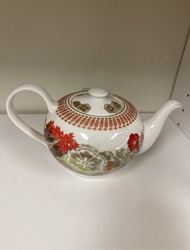
Submitted item photo
Submitted photo · June 6, 2026

User's notes

Hand painted gold trim

AI analysis below

AI appraisal

AI analysis & estimate

AI-Generated · Verify before acting

Everything below is generated by AI for informational purposes only. AI can make mistakes — the AI may misidentify items or misattribute them (artist, maker, brand, designer, origin, era). This is not an official valuation and should not be used for insurance, sale, tax, estate, legal, or lending purposes — or any decision requiring a certified appraisal. It is not an authoritative claim about any person, brand, or rights holder — do not share or rely on it as a factual statement about a third party. Always consult qualified professionals before making financial decisions.

Note

This analysis also relies on unverified notes provided by the user, which may be incomplete or inaccurate and could affect the result.

Read the full disclaimer

AI Identification

·Not independently authenticated·Verify before acting

Japanese Hand-Painted Porcelain Teapot

Teaware

AI Estimated Value

·Not an official valuation·Verify before acting

$15-25

As of June 6, 2026

AI Item Analysis

·AI can make mistakes·Verify before acting
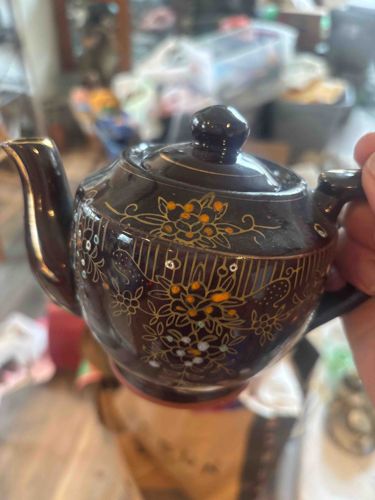
This is a small, decorative Japanese porcelain teapot, likely intended for individual servings or as part of a miniature tea set, possibly a toy or souvenir piece. The teapot features a dark, possibly navy or black, glazed body that provides a striking contrast to its extensive hand-painted gold trim and polychrome floral decorations. The gold trim is evident along the rim of the spout, the handle, and outlining various floral motifs on the body. The primary decoration consists of stylized floral clusters in shades of yellow-orange and white, outlined with fine gold lines. These floral patterns appear symmetrical around the body of the teapot. The lid is also dark-glazed with a small, rounded finial. The overall shape is traditional, with a rounded body, curved spout, and a simple loop handle. No significant visible damage such as chips or cracks is immediately apparent, though wear to the gold trim, a common sign of age and use, can be seen in some areas, particularly on the handle and spout rim. The quality of the hand painting appears precise, indicating a degree of craftsmanship, though the small scale might suggest mass production for the tourist market. Based on the style of decoration and common manufacturing trends, this teapot likely dates from the mid-20th century, possibly post-WWII to the 1970s, a period when 'Made in Japan' ceramics were widely exported. The lack of discernible maker's marks from the image prevents more precise manufacturing attribution.
AI Appraisal Report

·AI can make mistakes·Verify before acting
Upon examining the images provided, this Japanese hand-painted porcelain teapot presents as a charming mid-20th century export item, likely dating from the post-WWII era (c. 1950s-1970s). My assessment is based on its stylistic characteristics: the dark glaze with heavy gold trim and polychrome floral motifs is typical of decorative ceramics produced for the Western market during this period. The 'Made in Japan' designation was common for mass-produced but often well-crafted export wares. The teapot appears to be in good condition for its age, with no visible chips or cracks. Minor wear to the gold trim, especially on the handle and spout, is present, which is consistent with age and gentle use and does not significantly detract from its value. The current market for such mid-century Japanese ceramics is modest. Pieces like this are generally considered decorative collectibles rather than high-value antiques. Comparables on online marketplaces and auction sites for similar small, unmarked Japanese teapots from this era typically sell for low prices. The demand is primarily driven by collectors of Japanese exportware or those seeking decorative items with a vintage aesthetic. The primary factor limiting the value is its likely mass-production for the tourist or export market, rather than being a piece from a renowned kiln or artist. Without a maker's mark, attribution is difficult. For a definitive authentication and valuation, a physical examination would be necessary to check for subtle maker's marks, assess the quality of the porcelain and glaze up close, and rule out any hairline cracks not visible in the photographs. Lacking specific provenance or maker identification, its value lies in its decorative quality.

Get your items appraised

Instant estimates of your treasures with AI-powered appraisals

Browse More Appraisals