AI estimate as of August 1, 2025 · verify with a professional before acting
AI-Generated · Verify before acting
Everything on this page is generated by AI for informational purposes only. AI can make mistakes — the AI may misidentify items or misattribute them (artist, maker, brand, designer, origin, era). This is not an official valuation and should not be used for insurance, sale, tax, estate, legal, or lending purposes — or any decision requiring a certified appraisal. It is not an authoritative claim about any person, brand, or rights holder — do not share or rely on it as a factual statement about a third party. Always consult qualified professionals before making financial decisions.
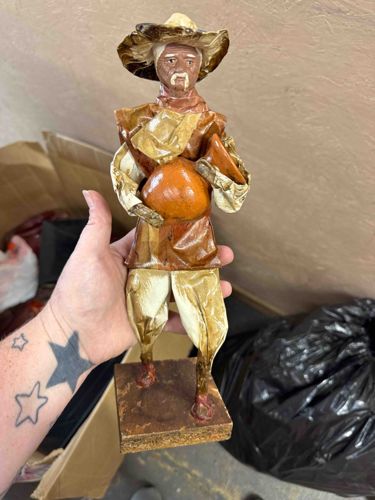
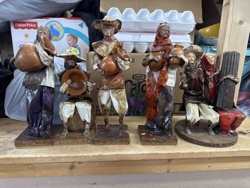
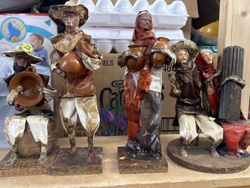
This item is a decorative figurine depicting a male figure, likely a peasant or laborer, holding what appears to be a clay pot or canteen. The figure stands approximately 10-12 inches tall, supported by a square, dark brown wooden base measuring approximately 3x3 inches. The primary material appears to be paper mache, or a similar pulp-based composite, given its textured and somewhat crinkled appearance, particularly on the clothing and hat. The colors are predominantly earthy tones: brown, beige, and a warm reddish-orange for the pot. The figure's skin tone is a dark brown, with white paint used for the mustache and eyebrows, indicating an elder or a stylized portrayal. The eyes are small black dots. His attire consists of a brown shirt or tunic with lighter, possibly beige, material draped over his shoulders and around his arms, forming voluminous sleeves or layers. His pants are a light beige, appearing baggy or gathered. The hat is a wide-brimmed sombrero-style hat, brown with lighter accents on the crown. The construction is somewhat crude but consistent with folk art or handcrafted items, showing visible seams and texture from the paper layering. The figure is securely attached to the wooden base with what appears to be a reddish-brown adhesive or a continuation of the figure's brown material, visible at the 'feet' area. There are no readily apparent maker's marks or signatures visible in the provided images. The overall condition suggests some age; there is a visible patina on the materials, and the paper elements show minor creases and slight discoloration consistent with handling and time. No significant damage like breaks or large tears are immediately obvious. The craftsmanship, while not highly refined, indicates a handmade quality, typical of regional or cultural artisan work, likely dating from the mid to late 20th century.
AI Appraisal Report
Upon examining the provided image of the Paper Mache Peasant Figure with Pot, I assess its condition as good, consistent with its likely age. The paper mache elements show expected minor creasing and some discoloration, indicating handling and time rather than significant damage. Authenticity, based solely on visual inspection, appears consistent with a handcrafted folk art piece; the 'crude but consistent' construction, visible seams, and texture align with traditional paper mache techniques. However, without a physical examination, I cannot definitively rule out modern reproductions or assess the true nature of the materials' aging. An in-person inspection would allow for tactile assessment of material integrity, closer examination for repairs, and a search for obscured maker's marks.
The market for folk art, particularly handcrafted figurines, is generally stable but dependent on regional interest, artist recognition, and unique aesthetic appeal. This piece, while charming, does not exhibit the refinement or distinct characteristics often associated with highly collectible artists or specific cultural movements that command top prices. Comparables in the broader folk art market for unmarked, handcrafted paper mache figures of this scale typically range from $40-$150, depending on detail, condition, and origin. Demand for general peasant figures is modest unless tied to a specific sought-after artist or cultural provenance.
Factors impacting value include its handmade quality, age, and decorative appeal. The lack of an identifiable artist or precise origin, coupled with its generic 'peasant' theme, limits its collectible ceiling. Rarity is difficult to ascertain without provenance; while unique, it's not likely 'rare' in the sense of being one of only a few produced by a renowned artisan. For full authentication and to potentially uncover hidden value, I would require a physical examination to identify materials, search for obscured marks, and determine if any associated provenance documentation (e.g., origin, artist history) exists. Without this, the appraisal remains conservative.