Chert Bifacial Scraper or Hand Tool
Archeological Artifacts / Prehistoric Stone Tools

Chert Bifacial Scraper or Hand Tool

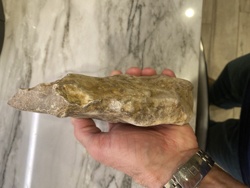
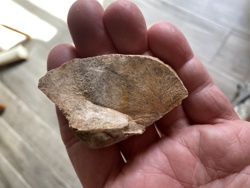
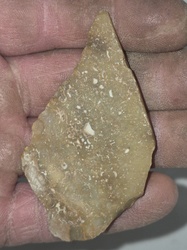
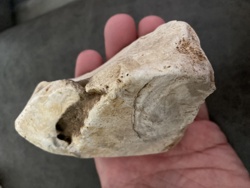
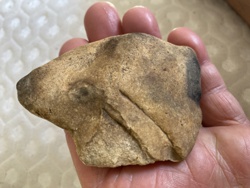
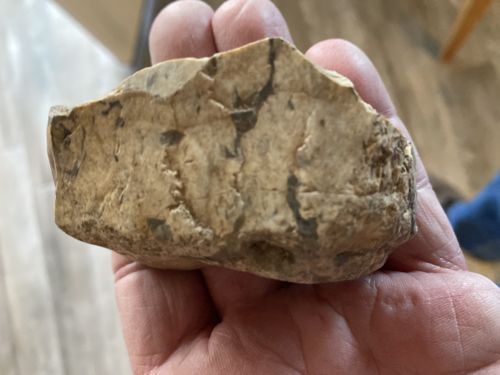
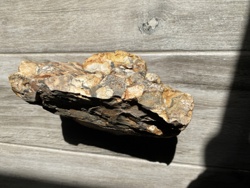
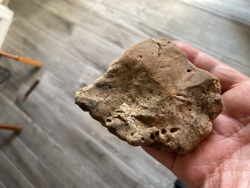
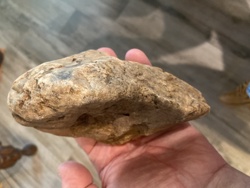
This item is a lithic artifact measuring approximately 3 inches by 1.75 inches, identified as a bifacial scraper or small hand tool. It is constructed from chert, displaying a characteristic tan or light brown coloration with dark manganese spotting and inclusions typical of weathered silicate stone. The object features evidence of deliberate percussion flaking along its edges to create a functional working margin, though it retains a somewhat chunky, asymmetrical profile. Its surfaces show a heavy patina and significant weathering, suggesting a prehistoric age. While the provided context mentions 'Acheulean,' it is important to note that this specific archaeological culture is typically associated with the Lower Paleolithic of Africa, Europe, and Western Asia (vaguely 1.7 million to 130,000 years ago), whereas this item was recovered in Guthrie, Oklahoma. In a North American context, such a tool would more likely belong to a Paleo-Indian or Archaic period hunter-gatherer culture. The craftsmanship shows opportunistic flaking rather than high-precision pressure retouching. There are no visible maker's marks, as it is a hand-knapped lithic tool. Its condition appears stable with expected edge wear and rounded surfaces from environmental exposure over millennia.
Estimated Value

$45 - $75

Basic Information

Category

Archeological Artifacts / Prehistoric Stone Tools

Appraised On

February 23, 2026

Estimated Value

$45 - $75

Additional Details Provided By Owner

User Provided Information

Acheulean chert bi face hand axe scraper tool found in Guthrie, OK measuring 3" x 1.75"

Item Description

This item is a lithic artifact measuring approximately 3 inches by 1.75 inches, identified as a bifacial scraper or small hand tool. It is constructed from chert, displaying a characteristic tan or light brown coloration with dark manganese spotting and inclusions typical of weathered silicate stone. The object features evidence of deliberate percussion flaking along its edges to create a functional working margin, though it retains a somewhat chunky, asymmetrical profile. Its surfaces show a heavy patina and significant weathering, suggesting a prehistoric age. While the provided context mentions 'Acheulean,' it is important to note that this specific archaeological culture is typically associated with the Lower Paleolithic of Africa, Europe, and Western Asia (vaguely 1.7 million to 130,000 years ago), whereas this item was recovered in Guthrie, Oklahoma. In a North American context, such a tool would more likely belong to a Paleo-Indian or Archaic period hunter-gatherer culture. The craftsmanship shows opportunistic flaking rather than high-precision pressure retouching. There are no visible maker's marks, as it is a hand-knapped lithic tool. Its condition appears stable with expected edge wear and rounded surfaces from environmental exposure over millennia.
Get Your Items Appraised

Instant estimates of your treasures with AI-powered instant appraisals

Browse More Appraisals