Raku-Fired Art Pottery Sphere Vase
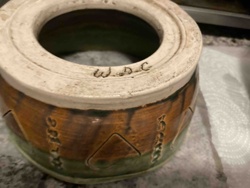
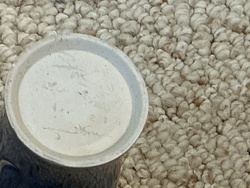
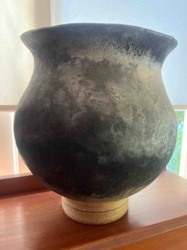
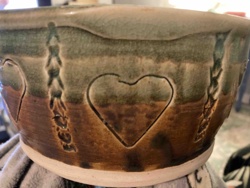
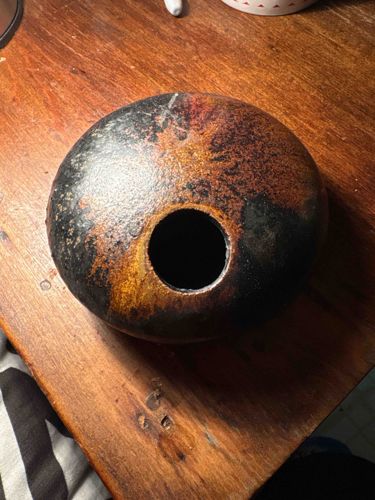
This item is a hand-thrown studio pottery vessel, characterized by its low-profile, compressed spherical or 'seed' form. The vessel features a central, small circular aperture at the top, likely intended as a bud vase. The surface decoration is indicative of Raku firing or a similar alternative firing process such as pit firing or horsehair raku. The color palette consists of deep carbon blacks, toasted ochre, and burnt sienna tones, which appear to be the result of smoke carbonization and reduction during the firing process. The texture of the clay body is somewhat coarse and pebbled, suggesting a high-sand or grog content typically used to withstand thermal shock. There is no visible glaze on the exterior, pointing toward a slip-trailed or smoked matte finish. The construction shows high-quality craftsmanship with a symmetrical profile and a clean, sharp edge at the rim of the opening. Notable condition indicators include localized scuffing and minor surface variations typical of the primitive firing method, though no structural cracks or major chips are visible from the top-down perspective. This piece reflects a late 20th-century to contemporary studio aesthetic, emphasizing earth tones and organic textures commonly found in American Craft movement or Japanese-inspired ceramics.
AI-Generated Appraisal Disclaimer
Estimated Value
$150 - $275
Basic Information
Category
Studio Ceramics / Art Pottery
Appraised On
April 7, 2026
Estimated Value
$150 - $275
Item Description
This item is a hand-thrown studio pottery vessel, characterized by its low-profile, compressed spherical or 'seed' form. The vessel features a central, small circular aperture at the top, likely intended as a bud vase. The surface decoration is indicative of Raku firing or a similar alternative firing process such as pit firing or horsehair raku. The color palette consists of deep carbon blacks, toasted ochre, and burnt sienna tones, which appear to be the result of smoke carbonization and reduction during the firing process. The texture of the clay body is somewhat coarse and pebbled, suggesting a high-sand or grog content typically used to withstand thermal shock. There is no visible glaze on the exterior, pointing toward a slip-trailed or smoked matte finish. The construction shows high-quality craftsmanship with a symmetrical profile and a clean, sharp edge at the rim of the opening. Notable condition indicators include localized scuffing and minor surface variations typical of the primitive firing method, though no structural cracks or major chips are visible from the top-down perspective. This piece reflects a late 20th-century to contemporary studio aesthetic, emphasizing earth tones and organic textures commonly found in American Craft movement or Japanese-inspired ceramics.
Related Tags
Get Your Items Appraised
Instant estimates of your treasures with AI-powered instant appraisals