Paleolithic Bifacial Chert Hand Tool
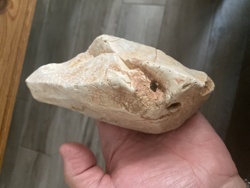
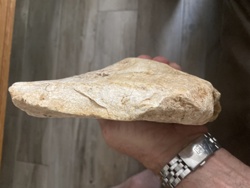
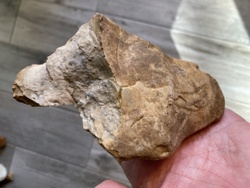
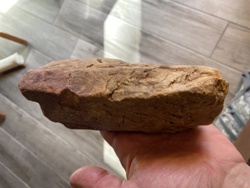
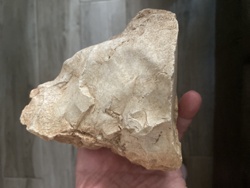
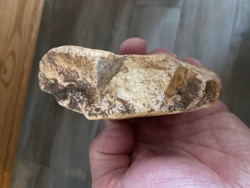
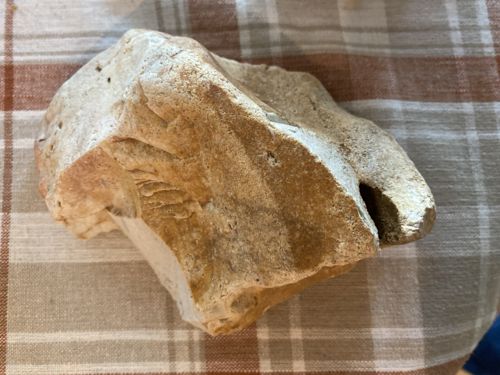
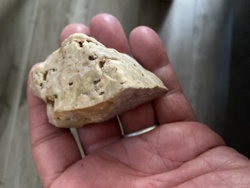
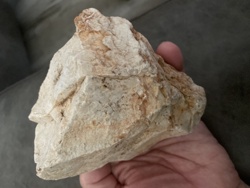
This specimen is a bifacial hand tool measuring approximately 5 inches by 4 inches, discovered in Guthrie, Oklahoma. It is composed of local chert, exhibiting a variegated color palette of creamy whites, ochre yellows, and earthy tans. Physicallly, the object demonstrates intentional flaking and percussion scarring consistent with Paleolithic lithic reduction techniques. The construction suggests a multi-purpose tool, functioning as a hand axe, chopper, or scraper. Notable features include a prominent ridge and a deep natural or worked notch on the right periphery, which may have served as a finger grip or for lashing. The surface shows a heavy desert varnish and calcified patina, indicating significant age and environmental exposure. While the user identifies it as 'portable rock art' or a 'face effigy,' such interpretations in archaeology are often categorized as pareidolia, though the intentional working of the stone for utilitarian purposes is evident. The condition appears stable with expected edge wear and micro-chipping from ancient use. There are no modern maker's marks, signifying its origin as a prehistoric lithic artifact. The craftsmanship displays deliberate thinning of the stone to create functional sharp edges while maintaining a heavy, ergonomic core for forceful impact.
AI-Generated Appraisal Disclaimer
Estimated Value
$40 - $80
Basic Information
Category
Prehistoric Lithic Artifacts
Appraised On
February 25, 2026
Estimated Value
$40 - $80
Additional Details Provided By Owner
User Provided Information
Paleolithic chert bi face hand axe chopper scraper tool portable rock art face effigy found in Guthrie OK measuring 5" x 4"
Item Description
This specimen is a bifacial hand tool measuring approximately 5 inches by 4 inches, discovered in Guthrie, Oklahoma. It is composed of local chert, exhibiting a variegated color palette of creamy whites, ochre yellows, and earthy tans. Physicallly, the object demonstrates intentional flaking and percussion scarring consistent with Paleolithic lithic reduction techniques. The construction suggests a multi-purpose tool, functioning as a hand axe, chopper, or scraper. Notable features include a prominent ridge and a deep natural or worked notch on the right periphery, which may have served as a finger grip or for lashing. The surface shows a heavy desert varnish and calcified patina, indicating significant age and environmental exposure. While the user identifies it as 'portable rock art' or a 'face effigy,' such interpretations in archaeology are often categorized as pareidolia, though the intentional working of the stone for utilitarian purposes is evident. The condition appears stable with expected edge wear and micro-chipping from ancient use. There are no modern maker's marks, signifying its origin as a prehistoric lithic artifact. The craftsmanship displays deliberate thinning of the stone to create functional sharp edges while maintaining a heavy, ergonomic core for forceful impact.
Get Your Items Appraised
Instant estimates of your treasures with AI-powered instant appraisals