AI Appraisal Estimate

AI-generated estimates · not official valuations

From the user

What was submitted

Photo and notes provided by the user — not generated by AI

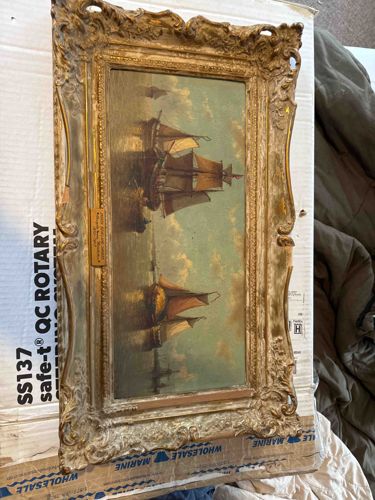
Submitted item photo
Submitted photo · May 19, 2026

User's notes

No additional notes provided.

AI analysis below

AI appraisal

AI analysis & estimate

AI-Generated · Verify before acting

Everything below is generated by AI for informational purposes only. AI can make mistakes — the AI may misidentify items or misattribute them (artist, maker, brand, designer, origin, era). This is not an official valuation and should not be used for insurance, sale, tax, estate, legal, or lending purposes — or any decision requiring a certified appraisal. It is not an authoritative claim about any person, brand, or rights holder — do not share or rely on it as a factual statement about a third party. Always consult qualified professionals before making financial decisions.

Read the full disclaimer

AI Identification

·Not independently authenticated·Verify before acting

Marine Nautical Oil Painting of Sailing Vessels in Ornate Gilt Frame

Fine Art - Paintings

AI Estimated Value

·Not an official valuation·Verify before acting

$1,800 - $2,500

As of May 19, 2026

AI Item Analysis

·AI can make mistakes·Verify before acting
This is an original marine oil painting on canvas or board, depicting several sailing vessels in calm waters under a hazy, cloud-filled sky. The composition features a primary two-masted ship with reddish-tan sails in the foreground, accompanied by smaller vessels in the mid-ground, executed in a traditional 19th-century maritime style. The color palette is dominated by muted earth tones, soft ochre, and pale blue-greens. The artwork is housed in a substantial and highly ornate Rococo-style gold-gilt frame, likely composed of wood and plaster gesso. The frame features deep-relief scrollwork, acanthus leaf motifs at the corners, and a beaded inner liner. Notably, a brass identification plaque is attached to the lower-center of the frame, which appears to provide the title of the work and the artist's name (possibly referencing 'Shipping in an Estuary' or a similar theme). In terms of condition, the frame shows significant signs of age and distress, including visible cracks in the gesso, several chips along the outer edges where the white plaster substrate is exposed, and uneven patina or 'shabby chic' wear to the gilding. The painting itself shows some surface accumulation and potential yellowing of the varnish consistent with mid-to-late 19th-century or early 20th-century origins. The craftsmanship of the frame suggests a high-quality production intended for an upper-mid-market gallery or residential setting.


AI Appraisal Report

·AI can make mistakes·Verify before acting
I have conducted a visual analysis of the marine oil painting depicting sailing vessels in an estuary. The work reflects the stylistic hallmarks of the British or Dutch Romantic maritime tradition, likely dating from the late 19th century. The brushwork in the sky and the handling of light on the sails demonstrate a professional level of technical proficiency. The ornate Rococo-style gilt frame is a period-appropriate 'statement' piece that significantly enhances the decorative appeal, though it shows moderate stability issues with visible gesso lifting and losses to the plaster substrate. From a market perspective, traditional marine art remains a staple for interior designers and collectors of maritime history. While the work is of high quality, the presence of significant frame damage and visible varnish yellowing on the canvas suggests the need for professional conservation, which slightly tempers the immediate liquid value. Comparable works of similar scale and subject matter regularly achieve prices in the $2,000 range at regional fine art auctions, particularly when housed in substantial period frames. Limitation on Authenticity: This appraisal is based strictly on high-resolution imagery. A definitive attribution to the artist named on the brass plaque remains tentative without physical inspection. To confirm authenticity and age, I would require an examination of the canvas reverse to check for period-appropriate oxidation of the wood stretchers, a UV fluorescence test to identify overpainting or hidden signatures, and a microscopic analysis of the craquelure pattern to ensure it is natural age-cracking rather than chemically induced. Provenance documentation or a gallery label on the verso would further substantiate the valuation.

Get your items appraised

Instant estimates of your treasures with AI-powered appraisals

Browse More Appraisals