AI identification & appraisal estimate

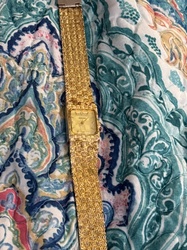
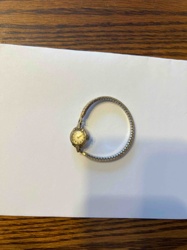
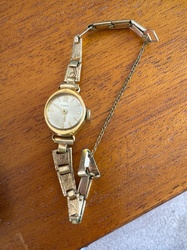
Vintage Gold-Tone LCD Digital Quartz Watch

Submitted photo of Vintage Gold-Tone LCD Digital Quartz Watch
Photo submitted by the user — not generated by AI

User's notes

Watch

These notes were written by the person who submitted this item. Appraiser.AI has not verified them, and the AI's identification and estimate may rely on them.

AI Estimated Value

Not an official valuation

$45.00 - $75.00

AI estimate as of April 17, 2026 · verify with a professional before acting

AI-Generated · Verify before acting

Everything on this page is generated by AI for informational purposes only. AI can make mistakes — the AI may misidentify items or misattribute them (artist, maker, brand, designer, origin, era). This is not an official valuation and should not be used for insurance, sale, tax, estate, legal, or lending purposes — or any decision requiring a certified appraisal. It is not an authoritative claim about any person, brand, or rights holder — do not share or rely on it as a factual statement about a third party. Always consult qualified professionals before making financial decisions.

This analysis also relies on unverified notes provided by the user, which may be incomplete or inaccurate and could affect the result.

Read the full disclaimer

AI Item Analysis

This is a vintage digital wristwatch, likely dating from the mid-to-late 1970s or early 1980s, an era defined by the 'Quartz Revolution.' The timepiece features a distinctive oversized, retro-futuristic cushion-shaped case with a gold-tone finish. The case is integrated with a matching three-link oyster-style bracelet, also in a gold-tone metal. The face of the watch consists of a small, horizontal Liquid Crystal Display (LCD) screen recessed within a black oval border. The word 'QUARTZ' is printed in white sans-serif lettering at the top left of the display window. Physically, the watch exhibits significant signs of age and wear. The gold plating shows extensive surface scratching, micro-abrasions, and a noticeable dulling of the original luster, particularly on the leading edges of the case and the flat surfaces of the bracelet links. There is evidence of 'brassing' or plating loss on some of the higher-friction areas, revealing a base metal underneath. The crystal/LCD cover appears to have minor scuffing around the edges. A single metal button or crown is visible on the right side of the case, typical for setting the time on early digital modules. The LCD screen currently appears blank, which could indicate a dead battery, a failed circuit, or bleeding of the liquid crystal, common in vintage modules. The chunky, utilitarian construction is characteristic of budget-friendly mass-market brands of the period, such as Texas Instruments, Timex, or generic department store labels.
AI Appraisal Report

I have conducted a visual examination of this vintage gold-tone LCD digital quartz watch. My assessment suggests the piece is a mass-market digital timepiece from the late 1970s to early 1980s. The aesthetic is quintessentially 'retro-futuristic,' featuring an integrated oyster-style integrated bracelet and a recessed LCD window. Physically, the watch is in 'Fair' condition. I observed significant 'brassing' where the gold plating has worn through to the base metal, particularly on the bezel and bracelet edges. The blank LCD screen is a critical factor; without a functional test after a battery replacement, I must assume the module may have experienced circuit failure or 'LCD bleed,' which is common and often irreparable in these early modules. The market for 1970s digital watches is currently bifurcated: high-end brands like Pulsar or Omega command significant premiums, while generic or budget-friendly brands like the one examined here remain accessible. Rarity is low as these were produced in high volumes, and collector demand is currently tempered by the visible plating loss and non-functional state. While the design appears authentic to the era, I must note that a definitive appraisal is limited by the digital format of this examination. To confirm authenticity and reach a higher valuation, I would require an in-person inspection to examine the internal module for manufacturer stamps (e.g., Texas Instruments or Casio) and to check for corrosion from old batteries. Verification of the movement's functionality remains the primary pivot point for its market value. Provenance documentation or original packaging would also provide a modest lift to its collectible appeal.

Keep exploring

More vintage watches & horology appraisals

Get your items appraised

Instant AI-powered appraisal estimates from a photo

Browse More Appraisals