AI estimate as of October 21, 2025 · verify with a professional before acting
AI-Generated · Verify before acting
Everything on this page is generated by AI for informational purposes only. AI can make mistakes — the AI may misidentify items or misattribute them (artist, maker, brand, designer, origin, era). This is not an official valuation and should not be used for insurance, sale, tax, estate, legal, or lending purposes — or any decision requiring a certified appraisal. It is not an authoritative claim about any person, brand, or rights holder — do not share or rely on it as a factual statement about a third party. Always consult qualified professionals before making financial decisions.
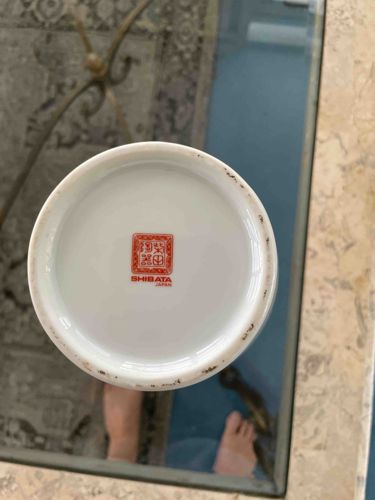
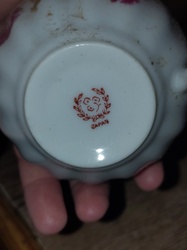
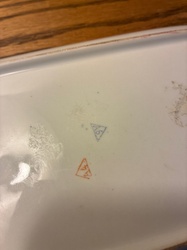
This item is the base of a white porcelain object, likely a vase, cup, or similar ceramic vessel, manufactured by Shibata in Japan. The overall color is a clean, bright white, indicative of fine porcelain. The base is circular and features a distinct red square maker's mark prominently centered on its bottom surface. Within this red square are intricate Japanese characters, suggesting a traditional or established brand identity. Below the red square, centered, are the stenciled words 'SHIBATA' in capital letters, followed by 'JAPAN' in smaller capital letters directly beneath it. The rim of the base, which is the part that would make contact with a surface, shows some noticeable wear and discoloration. There are several dark brown, almost black, smudges and specks around the outer edge of the base rim, indicating dirt accumulation, surface abrasion, or possibly small chips/roughness from age and handling. This wear pattern is consistent with an item that has been used or displayed over time. The craftsmanship appears to be of good quality, with a smooth, glazed finish on the main white surface, contrasting with the slightly rougher, unglazed or worn nature of the very bottom edge. The style points towards a post-WWII or mid-20th century production given the clear 'MADE IN JAPAN' type mark (though here it's just 'JAPAN' below the name). The clarity of the mark suggests a commercial production, likely for export. The visible condition issues are mostly confined to the base rim, which is common for such items.
AI Appraisal Report
I have carefully examined the provided image of this Shibata Japan porcelain base. The item presents as a white porcelain base, likely from a vase or similar vessel, featuring a clear red square maker's mark with Japanese characters and 'SHIBATA JAPAN' stenciled below. The porcelain itself appears bright and well-glazed, suggesting good initial craftsmanship.
From a condition standpoint, the main body of the base seems intact. However, I note significant wear and discoloration around the rim where it would rest on a surface. This includes dark smudges, specks, and potential abrasion, which are consistent with age, handling, and regular use. Such wear is common but does detract slightly from the overall aesthetic where visible.
Authenticity, based solely on this image, appears straightforward. The 'SHIBATA JAPAN' mark is typical of commercial porcelain produced in Japan, especially post-WWII for export. The clarity of the mark further supports its authenticity as a production piece from this maker. However, without handling the item, I cannot definitively assess the quality of the ceramic body beyond its visual appearance, nor can I check for chips, cracks, or repairs that might not be visible in this single image.
Regarding market conditions, Shibata porcelain, while well-made, is generally not considered a high-value collectible unless it's a particularly rare or artist-signed piece, or part of a complete, intricate set. Demand for general Shibata tableware or decorative items tends to be modest. This single base, especially without the rest of the object, has limited appeal to collectors. Rarity is low; items bearing similar 'Japan' marks are commonly found in the secondary market.
The primary factors impacting value are its incomplete nature (it's just a base), the commonality of the maker, and the visible wear on the rim. In-person examination would allow for a tactile assessment of the porcelain's quality, a more thorough check for hidden damage, and the identification of any unique characteristics not visible in the image. Provenance documentation would be useful to establish an exact manufacturing date or any special history, though it's unlikely for such a mainstream item. Given these considerations, I estimate the appraisal value to be in the range of $10 to $30.