Coarse-Grained Igneous Rock Specimen (Granite/Diorite)
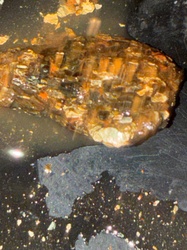
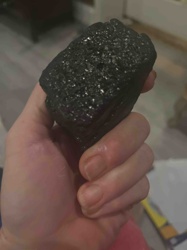
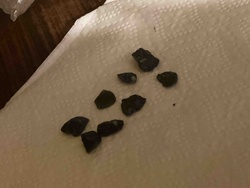
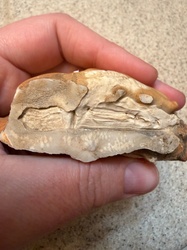
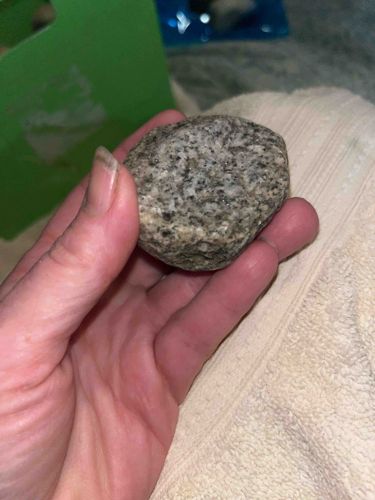
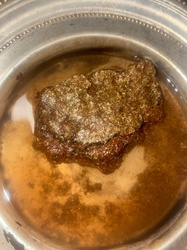
This item is a natural geological specimen, specifically a coarse-grained phaneritic igneous rock, likely granite or diorite. Physically, the specimen is approximately 2 to 2.5 inches in diameter, fitting comfortably within a human palm. It exhibits a salt-and-pepper coloration consisting of interlocking crystals in shades of light gray, white, and translucent beige (likely quartz and feldspar), interspersed with dark black or deep green flecks (likely hornblende or biotite mica). The texture is rough and crystalline, indicating slow cooling deep beneath the Earth's surface. The shape is sub-rounded to sub-angular, suggesting it may have been subjected to some degree of fluvial or glacial transport, which has softened its sharpest edges while maintaining an overall irregular geometry. There are no visible maker's marks, as it is a naturally occurring mineral formation rather than a manufactured object. The condition appears stable, with no obvious fractures or cleaving, though the surface shows typical natural weathering with a matte patina. Such specimens are ubiquitous in geological formations and are common examples of intrusive igneous rocks, often used in building materials or as educational teaching aids for mineralogy and geology students.
AI-Generated Appraisal Disclaimer
Estimated Value
$5 - $15
Basic Information
Category
Geological Specimens / Minerals
Appraised On
April 7, 2026
Estimated Value
$5 - $15
Item Description
This item is a natural geological specimen, specifically a coarse-grained phaneritic igneous rock, likely granite or diorite. Physically, the specimen is approximately 2 to 2.5 inches in diameter, fitting comfortably within a human palm. It exhibits a salt-and-pepper coloration consisting of interlocking crystals in shades of light gray, white, and translucent beige (likely quartz and feldspar), interspersed with dark black or deep green flecks (likely hornblende or biotite mica). The texture is rough and crystalline, indicating slow cooling deep beneath the Earth's surface. The shape is sub-rounded to sub-angular, suggesting it may have been subjected to some degree of fluvial or glacial transport, which has softened its sharpest edges while maintaining an overall irregular geometry. There are no visible maker's marks, as it is a naturally occurring mineral formation rather than a manufactured object. The condition appears stable, with no obvious fractures or cleaving, though the surface shows typical natural weathering with a matte patina. Such specimens are ubiquitous in geological formations and are common examples of intrusive igneous rocks, often used in building materials or as educational teaching aids for mineralogy and geology students.
Get Your Items Appraised
Instant estimates of your treasures with AI-powered instant appraisals